Delray Beach Custom Homes 2026: Coastal Contemporary Guide
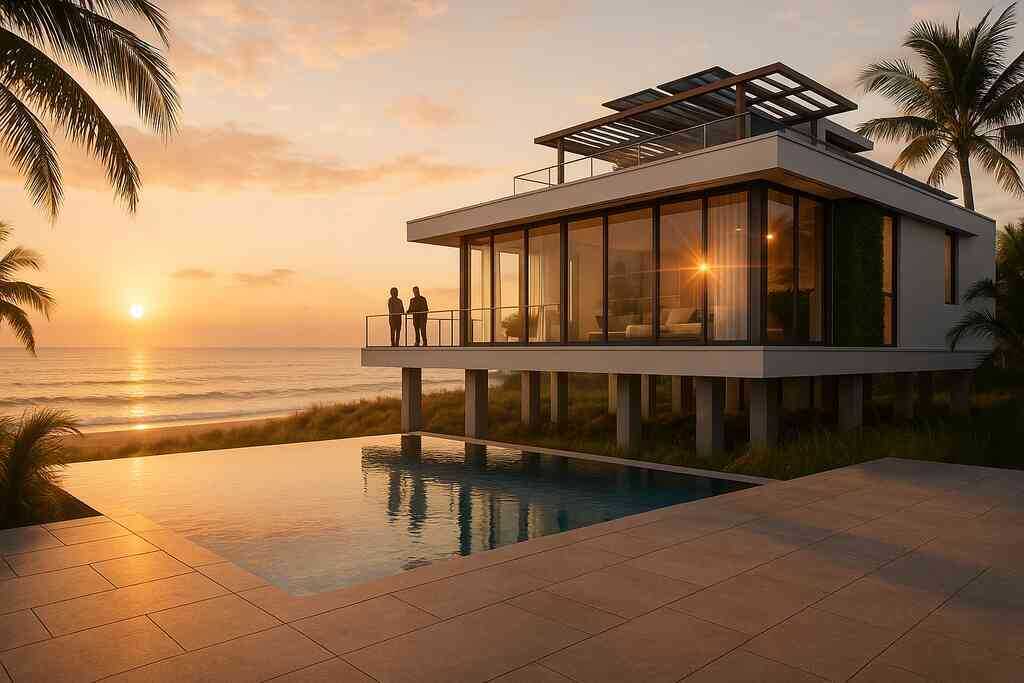
What Today’s Guide Covers
This overview breaks down the strongest design and construction trends shaping Delray Beach custom homes in 2026. We look at why coastal-contemporary architecture now leads the market, how rising code requirements influence engineering decisions, and which lifestyle features luxury buyers ask for most. Use it as a quick reference whether you are planning a ground-up build or simply tracking the local housing climate.
1. Coastal Contemporary Is the New Standard
Coastal contemporary design pairs clean modern lines with the toughness demanded by South Florida’s climate. The style keeps ornamentation light, focusing instead on proportion, texture, and resilient finishes.
Key markers you will see on new builds:
- Low-sloped or hidden roofs that channel wind instead of catching it
- Large overhangs and recessed terraces for permanent shade
- Bleached hardwood or sintered-stone cladding treated to resist salt spray
- Thin-profile aluminum railings and marine-grade stainless hardware
This minimalist look is not just about aesthetics. Fewer surface details mean fewer maintenance points, a major plus when sun, humidity, and storms test every exterior seam.
2. Building Envelopes Engineered for Category 5
Delray Beach sits inside the state’s most stringent wind zone, so the building shell is where contractors invest the most time.
Envelope Strategies
- Continuous load paths: From the ridge beam down to the pile cap, each connector is designed to transfer wind uplift safely into the ground.
- Impact glazing: Laminated, multi-layer glass resists flying debris while modern structural silicone keeps frames slim. Invisible mullions maintain the sought-after wall-of-glass effect.
- Dual-layer membranes: Self-adhered underlayments seal the roof deck, then high-wind tiles or standing-seam metal finish the surface. If the outer layer fails, the secondary membrane still sheds water.
- Mineral wool insulation: It will not absorb moisture and adds a fire barrier without the off-gassing issues of foam.
Foundation Solutions
- Driven concrete piles raise living areas above projected storm-surge levels.
- Pile caps tie into grade beams, creating a rigid grid that handles both vertical and lateral forces.
- Stem-wall vents equalize hydrostatic pressure so floodwater does not crack slabs.
- Landscape grading directs overflow into bioswales or permeable courtyards rather than toward the house.
3. Passive Cooling Meets Smart Technology
Energy costs and sustainability goals push every new home toward a net-zero target. Passive design does the heavy lifting first, then technology fine-tunes comfort.
Passive moves you will notice:
- Building orientation that aligns long façades east–west to control direct sun
- Operable clerestory windows set high to flush hot air without fans
- Deep roof overhangs that shade glass during peak solar hours
Smart systems completing the package:
- Dynamic glass that tints automatically, trimming solar heat gain without blinds
- High-SEER variable-speed HVAC sized precisely to the home’s thermal model
- Ventilated façade panels that create a cooling air gap behind cladding
- Battery-ready solar conduit pre-installed to avoid future roof penetrations
Together, these strategies cut reliance on mechanical cooling and prepare the house for rising utility rates.
4. Flexible, Multigenerational Floor Plans
Square footage numbers matter less than usable, convertible space. Luxury buyers now prioritize layouts that can shift with family needs or visiting guests.
Popular arrangements include:
- "Shadow" suites: a secondary master with separate entrance, ideal for aging parents or long-term visitors.
- Retractable wall systems: pocket sliders or folding panels that let a media room open to the living core when bigger gatherings require it.
- Lofted flex zones: mezzanines finished as a gym today, built with plumbing stubs so they can become an office bath later.
These moves deliver future-proof value without expanding the building footprint.
5. Interior Finishes That Balance Luxury and Longevity
A coastal location affects interior selections almost as much as exterior ones. Humidity, salt-laden air, and intense UV light all shorten the lifespan of conventional materials.
Trending finish choices for 2026:
- Engineered wide-plank oak with marine-grade finish instead of traditional site-finished wood
- Large-format porcelain panels mimicking travertine for spa bathrooms—zero sealing required
- Quartzite countertops over marble for better acid resistance in the kitchen
- Powder-coated aluminum interior trim in place of paint-grade MDF, preventing swelling around windows and doors
Each material serves a dual role: aesthetic indulgence and long-term durability.
6. Outdoor Rooms Become Everyday Rooms
Delray Beach living blurs the line between inside and out. Builders now design lanais, pool decks, and rooftop terraces as fully programmed spaces, not afterthoughts.
Essential features include:
- Motorized bug screens that disappear into ceiling pockets
- Outdoor kitchens plumbed for natural gas and finished in stainless steel cabinetry
- Mist-cooling lines integrated into soffits for mid-summer gatherings
- Flush-switch lighting scenes that sync patio fixtures with interior downlights
When executed well, these elements effectively add another climate-controlled “room” at a fraction of the cost of enclosed square footage.
7. Quick Reference Checklist for Owners and Designers
- Confirm wind-load calculations assume Category 5 gusts.
- Elevate finished-floor height at least one foot above the FEMA base flood standard.
- Specify impact-rated windows with a design pressure above local minimums.
- Include conduit for future solar and battery storage even if panels are not installed today.
- Design at least one flexible suite with its own entrance to support multigenerational living.
- Choose finishes rated for high humidity and UV stability.
- Provide landscape drainage that sends stormwater away from foundations.
Checking these boxes early keeps design intent aligned with code realities and long-term value.
Final Thoughts
Delray Beach’s custom home market continues to evolve rapidly. Stricter hurricane codes, shifting lifestyle priorities, and sustainability incentives all shape the new coastal-contemporary formula. Builders who merge engineering discipline with modern minimalism are delivering homes that feel effortless yet perform like fortified yachts.
By understanding the principles outlined here—resilient envelopes, passive cooling, flexible floor plans, and durable finishes—owners and design teams can create residences ready for both everyday enjoyment and the extreme events that define South Florida living.
Understanding Trends in Delray Beach Custom Homes 2026


Comments
Post a Comment