ADA Bathroom Remodeling in South Florida: Contractor Guide
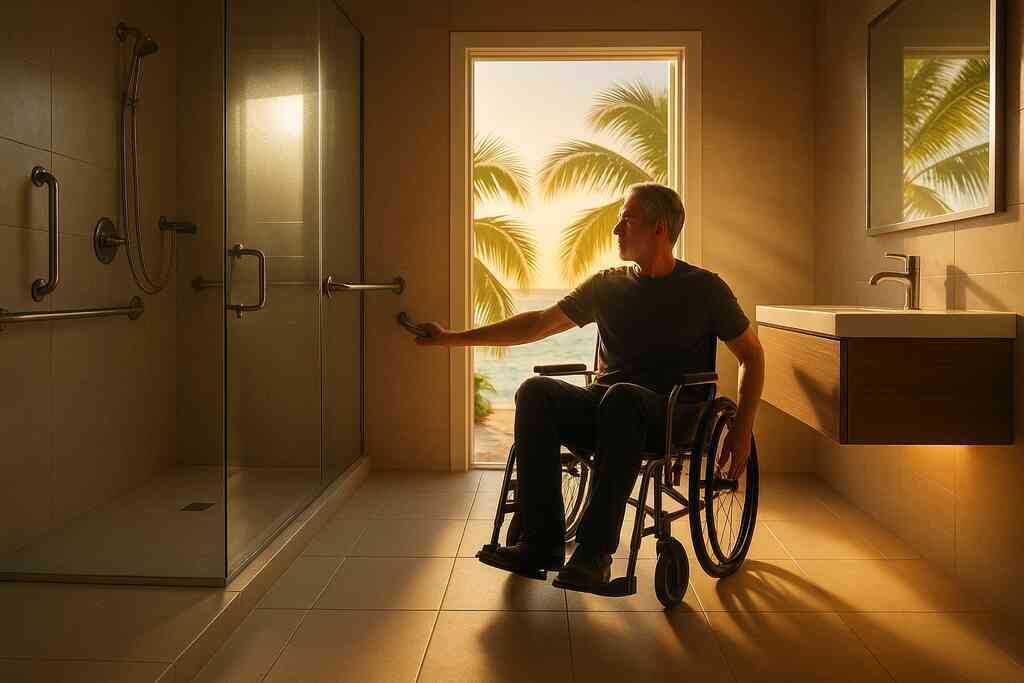
Making a Bathroom ADA-Ready in South Florida
Bathrooms are the most challenging room to navigate when mobility changes. South Florida contractors combine building-code fluency, climate-specific materials, and adaptive design to create spaces that meet the Americans with Disabilities Act (ADA) while still feeling like a spa. This guide walks through the major steps they follow so homeowners know what to expect before demolition starts.
1. Start With a Barrier-Free Audit
An ADA renovation is only as good as its initial assessment. Local contractors schedule an on-site audit that normally involves three voices:
- A licensed general contractor who knows local permitting rules
- An occupational therapist who observes how the client transfers, turns, and reaches
- A product specialist who previews fixtures such as grab bars or adjustable sinks
Together they measure door widths, sink heights, knee clearance, and the distance between obstacles. In humid coastal counties, they also check for slip hazards created by condensation and confirm that existing framing can accept marine-grade blocking for future grab bars.
Why the Audit Matters
- Confirms where structural changes are truly necessary
- Identifies humidity-related risks unique to the subtropics
- Reduces change orders because surprises are caught early
2. Translate Florida Building Code Into Everyday Language
Florida follows the 2020 Building Code with specific chapters for accessibility. Instead of handing clients a legal book, contractors create a concise checklist:
- Clear floor space: 30" × 48" minimum in front of each fixture
- Turning circle: 60" diameter for a full wheelchair spin
- Toilet location: 16–18" from centerline to side wall for side transfers
- Reach range: Controls between 15" and 48" above the finished floor
Local building departments may add their own interpretations, particularly in coastal zones. Experienced teams submit drawings for an informal plan check before permit application so any gray areas are resolved on paper, not in the field.
3. Plan Structural Changes for Real-World Maneuvers
Code minimums work on paper but can still feel cramped. Contractors often use a handheld laser scanner or LiDAR app to build a digital model of the existing bath. That model makes it easy to test:
- Door widening. A swing-clear hinge can reclaim almost 2" of width, but many homes still need a full rough-opening enlargement to 36".
- Five-foot turning radius. If a linen closet blocks the circle, walls may shift or the closet converts to open shelving.
- Zero-threshold shower. Continuous flooring simplifies roll-in access. South Florida builders slope the entire shower bay 1⁄8" per foot toward a linear drain to prevent ponding.
Because homes here sit on concrete slabs, recessing the shower pan may require trenching into the slab and re-running a short section of drain line. Crews schedule that work early so new waterproofing can cure before tile goes in.
4. Choose Materials That Survive Salt, Sand, and Steam
The coastal environment accelerates corrosion and mildew. Contractors specify:
- Marine-grade stainless steel fasteners for grab bars and seats
- Cement backer board instead of paper-faced drywall behind tile
- Large-format porcelain tile with a slip-resistant (≥0.42 DCOF) finish
- Epoxy grout that resists staining and mold
- Vinyl-wrapped wood blocking within walls to keep moisture from wicking
In addition, vents are upsized and often paired with humidity sensors so the fan runs automatically until the relative humidity drops below a set point. That single change extends fixture life and reduces the chance of slippery floors.
5. Integrate Smart Features for Independence
Technology can eliminate common mobility hurdles:
- Voice-activated lighting. Saying “Shower on” avoids hunting for switches.
- Thermostatic Bluetooth controls. Users set temperature before entering, preventing scalds.
- Motorized vanity lifts. Countertops move 6–8" up or down to serve seated and standing users.
- Emergency call buttons. Waterproof push pads or pull cords can ping a caregiver’s phone.
Low-voltage wiring and battery backups keep these features working during the summer storm season when brief power losses are common.
6. Focus on Details That Improve Daily Comfort
Accessible design is about nuance as much as dimensions:
- Contrasting tile borders outline the shower and help low-vision users judge depth.
- Tilt mirrors mounted 40" above the floor offer a clear reflection from a seated position.
- Lever faucets with 5" handles require minimal grip strength.
- Comfort-height toilets (17–19") reduce knee strain yet still allow safe transfers.
Contractors often mock up each element with cardboard cutouts or temporary fixtures so clients can test reach and sight lines before final installation.
7. Navigate Permitting and Inspection
Most South Florida municipalities require two to three inspections: rough framing, rough plumbing/electrical, and final. To avoid delays:
- The contractor submits product data sheets proving grab bars meet 250-lb loading.
- Blocking locations are photographed before walls close.
- A pre-tile flood test runs 24 hours to verify the pan is watertight.
Because building offices stay busy during hurricane-prep season, experienced teams request inspection slots a week ahead and keep contingency days in the schedule.
8. Provide Client Training and Maintenance Tips
Once the space passes final inspection, crews walk the homeowner through:
- Adjusting water temperate presets
- Cleaning recommendations for epoxy grout and slip-resistant finishes
- Testing the emergency alert system monthly
- Inspecting caulk lines every six months due to heat expansion
This handoff ensures the bathroom remains safe and functional well beyond the warranty period.
Key Takeaways
- Begin with a multi-disciplinary audit focused on individual mobility needs.
- Respect Florida’s accessibility code but aim for comfort beyond the minimums.
- Select corrosion-proof materials that stand up to coastal humidity.
- Use smart technology to reduce physical effort and increase safety.
- Plan permitting, inspection, and client training as seriously as the build itself.
A thoughtful process led by knowledgeable South Florida contractors turns an ordinary renovation into a lifetime investment in independence, safety, and style.
How South Florida Contractors Make Bathrooms ADA Ready


Comments
Post a Comment