Energy-Smart Upgrades for South Florida Homes in 2025
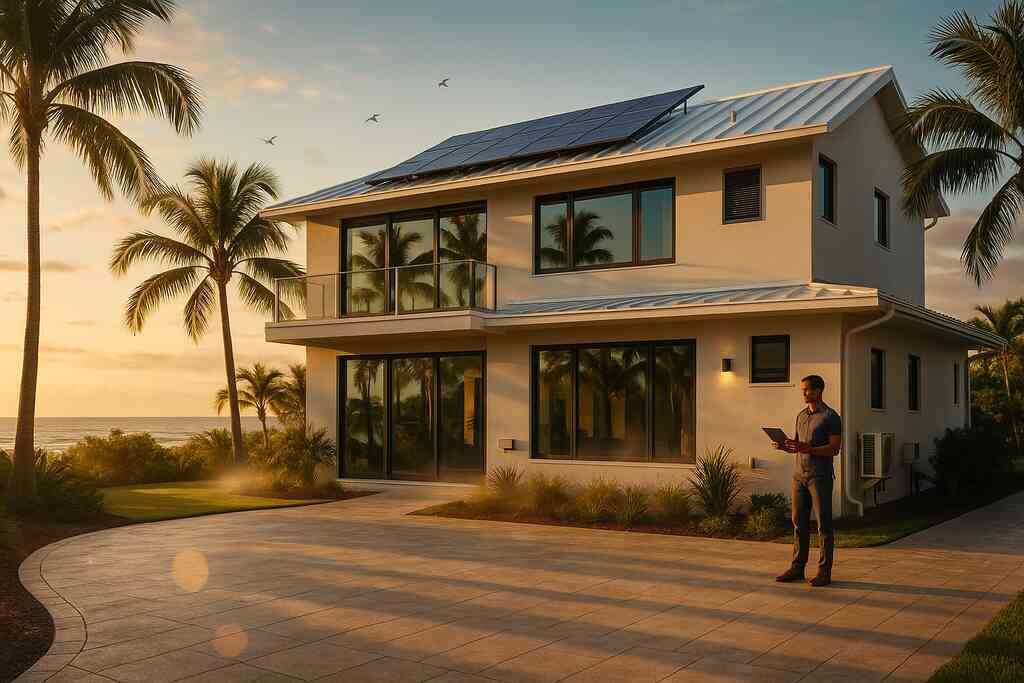
Kick-Start Your South Florida Home’s Energy Makeover
South Florida’s coastal heat, high humidity, and hurricane exposure create a unique efficiency puzzle. This guide walks through the upgrades that make the biggest impact in 2025—insulation, impact windows, code-ready construction, whole-home monitoring, and smarter HVAC controls.
1. Seal and Insulate Before Anything Else
Heat and moisture both travel on air currents. Stopping that flow is the least expensive path to lower bills.
- Air-seal first. Crews use foam or gasketing to close top plates, plumbing chases, and recessed-light gaps. A tight shell prevents humid attic air from reaching cool surfaces where it can condense and feed mold.
- Choose dense, moisture-tolerant products. Spray foam or blown-in cellulose fills odd cavities better than traditional fiberglass batts. Their higher density slows conductive heat while also muffling exterior noise.
- Add a radiant barrier. A foil surface under roof decking reflects up to 95 % of infrared heat, keeping attic temperatures dramatically lower on July afternoons.
Combined, those steps reduce HVAC runtimes within days and give rooms steadier temperatures all year.
2. Impact Windows: Protection With Payback
Impact-rated glazing is a must for hurricane safety, but the laminated glass offers unexpected energy dividends.
- Low-E coatings bounce solar heat. A microscopic layer blocks infrared radiation while allowing visible light, so interiors stay bright yet cooler.
- Gas-filled frames curb conduction. Argon or krypton between panes slows heat flow, valuable during steamy summers and the occasional winter chill.
- Tighter assemblies beat old aluminum sliders. New frames all but eliminate drafts, one of the quiet energy leaks that raise bills.
Tip: On west-facing walls, pair impact windows with deeper eave overhangs or exterior shutters. Passive shade cuts peak afternoon load without sacrificing the view.
3. Building Codes Are Marching Toward Net Zero
Municipalities across Palm Beach, Broward, and Miami-Dade have adopted step-up green codes that reward high performance. Key requirements now seen in permit offices:
- Tighter envelope testing. Blower-door targets verify real-world leakage so builders cannot rely on paperwork alone.
- Ventilation with recovery. Balanced fresh-air systems capture cooled energy before stale air exits, stabilizing indoor humidity.
- Solar-ready rooftops and conduits. Even if panels are not installed immediately, wiring paths and breaker space must be in place.
- High-efficacy lighting and low-flow fixtures. These straightforward swaps shrink electric and water demand at negligible extra cost.
Homeowners who renovate to the latest standard often unlock utility rebates and lower insurance premiums linked to resilience.
4. Watch Every Kilowatt With Real-Time Monitoring
“You cannot manage what you do not measure” is more than a cliché. Modern sensors clamp onto the main service panel, identify appliance signatures, and feed live data to a phone.
Benefits include:
- Finding hidden hogs. Many owners learn a single-speed pool pump rivals their air conditioner for annual consumption.
- Verifying contractor work. After a new mini-split or heat pump water heater is installed, monitoring confirms expected savings.
- Planning solar and storage sizing. Hour-by-hour curves reveal true peak demand so families can right-size battery backup.
During remodels, electricians can add sub-meters for solar production, EV charging, or tenant spaces. One dashboard then shows a complete energy picture.
5. HVAC Optimization in a Humid Climate
Cooling loads dominate South Florida bills, yet humidity control matters as much as temperature. An efficient system does three things well:
- Runs long and slow. Variable-speed compressors and air handlers remove more moisture per kilowatt than single-stage models that short-cycle.
- Uses zoning or smart dampers. Cutting airflow to spare bedrooms during the day trims runtime without sacrificing comfort at night.
- Pairs with a learning thermostat. Modern stats adapt schedules automatically, balance humidity setpoints, and alert owners to clogged filters or abnormal usage.
When selecting equipment, local pros size for latent load (moisture) rather than just square footage. Oversized tonnage leads to clammy interiors and higher overall energy use.
Maintenance Still Matters
Even the smartest system loses efficiency without routine care:
- Replace filters every 30–60 days during peak season.
- Clear condensate drains to prevent overflow and microbial growth.
- Wash outdoor coils with low-pressure water to remove salt spray that degrades heat transfer.
A service plan timed before summer pays back quickly by preserving SEER ratings and extending compressor life.
6. Bundling Upgrades for Maximum Return
The best results come from layering measures rather than chasing a single “magic” fix.
- Start with envelope work—sealing, insulation, and windows—so peak loads drop.
- Move to right-sized HVAC that matches the new, lower demand curve.
- Add monitoring to catch drift and guide behavior changes.
- Finish with renewables (solar, batteries, heat pump water heaters) once efficiency gains are banked.
Approached in that order, homeowners often trim total system size, lowering upfront costs while positioning the property for future net-zero performance.
Key Takeaways
- Air sealing and dense insulation remain the most cost-effective first step.
- Impact windows offer dual benefits: hurricane protection and year-round energy savings.
- South Florida’s evolving green codes make high performance less optional each year.
- Real-time monitoring turns raw data into actionable savings.
- Modern HVAC design focuses on humidity removal, variable speeds, and smart controls.
Efficiency is no longer a niche topic; it is the foundation of comfort, resilience, and long-term affordability for coastal living. By following the roadmap above, South Florida homeowners can enjoy cooler interiors, quieter rooms, and lower utility bills—while future-proofing against rising energy costs.
The Guide to Mastering Energy Efficiency in South Florida Homes


Comments
Post a Comment