Green Building South Florida: Practical Guide for Homeowners
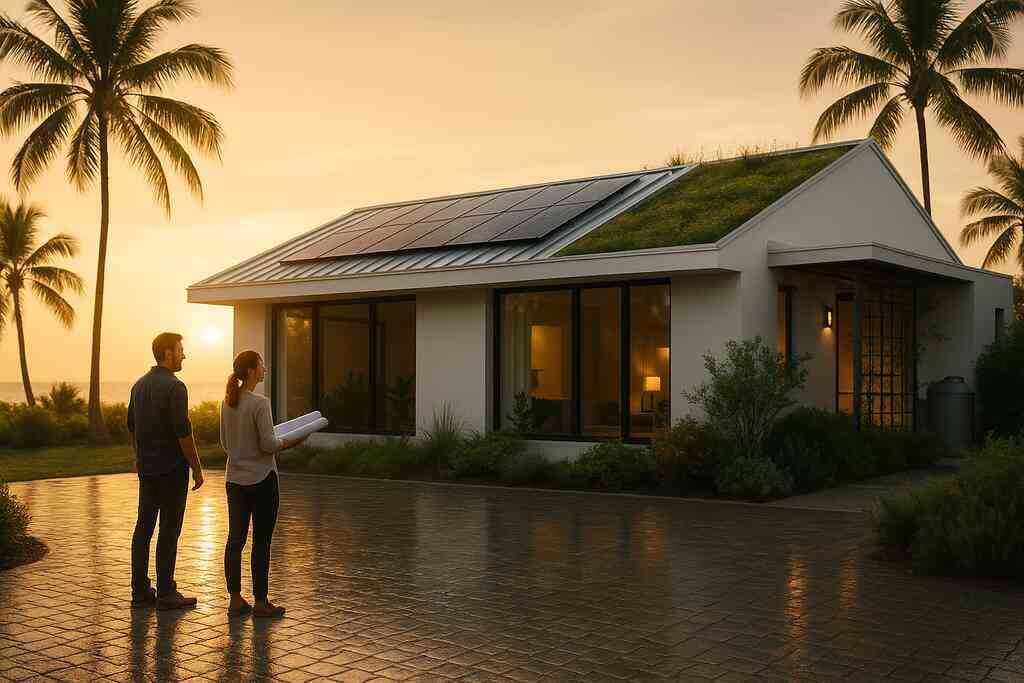
Why Green Building Matters in South Florida
South Florida architecture faces constant pressure from heat, humidity, and seasonal storms. Green building offers a path to better comfort, lower operating costs, and stronger climate resilience. Instead of relying on oversized air-conditioners or thick shutters alone, a well-planned sustainable home tackles problems at the source—through smarter orientation, efficient envelopes, and durable local materials.
Core Benefits at a Glance
- Lower utility bills – High-performance insulation, cool roofing, and passive shading reduce energy demand year-round.
- Improved indoor health – Low-VOC finishes and balanced ventilation keep airborne irritants in check.
- Storm preparedness – Impact-rated windows, reinforced roof connections, and proper water management protect against hurricanes and flooding.
- Higher resale value – Buyers increasingly search for documented efficiency and durability features.
- Regulatory advantages – Projects designed for Florida’s green building statutes often move faster through permitting and may qualify for local incentives.
Understanding the Local Climate
A sustainable strategy in Miami will differ from one in Denver or Seattle. South Florida’s subtropical conditions reward designs that:
- Block direct sun with deep eaves, shade trees, or exterior louvers.
- Ventilate naturally during cooler evenings—clerestory windows and screened courtyards encourage cross-breezes.
- Control moisture—vapor-open wall assemblies and dehumidification prevent mold growth.
- Handle heavy rain—permeable pavers, swales, and cisterns move water away quickly while reusing it for irrigation.
Selecting a Qualified Green Contractor
Certifications alone do not guarantee results, but they provide a useful filter when comparing firms. Look for teams that combine the following:
- LEED, WELL, or National Green Building Standard accreditation
- Documented experience with high-performance retrofits or new builds in coastal zones
- Transparent energy modeling that shows predicted versus actual performance
- Collaborative approach—the builder, architect, and key trades communicate inside a shared digital workspace to avoid change-order surprises.
Many homeowners start with a regional online directory of contractors. Enter your ZIP code, apply a “sustainable” filter, and review portfolios that match your style and budget. When interviewing candidates, ask how they plan to meet Florida Energy Code targets while addressing salt-spray corrosion, high humidity, and hurricane uplift forces.
Five High-Impact Strategies to Request
- Cool Roof Technologies
Light-colored metal panels or reflective membranes bounce solar radiation away, reducing attic temperatures by up to 30 °F on peak days. - Air-Sealed, Insulated Envelope
Continuous exterior insulation and taped sheathing minimize thermal bridges. A blower-door test verifies tightness before drywall goes up. - Solar-Ready Infrastructure
Even if you are not installing photovoltaic panels immediately, a conduit chase and roof reinforcement cost little during framing and save thousands later. - Variable-Speed HVAC with Smart Controls
Right-sized equipment paired with zoning dampers adapts to part-load conditions and keeps humidity under 50 percent without over-cooling. - Native and Drought-Tolerant Landscaping
Plants such as sea grape, coontie, and muhly grass thrive in sandy soils and resist salt spray. Drip irrigation tied to a rain sensor further curbs water use.
Making Sense of Florida’s Green Codes
Florida’s Building Code already mandates impact glass and wind-rated roofs in many coastal counties. The voluntary Florida Green Building Coalition (FGBC) standard adds point-based goals for energy, water, and site stewardship. A seasoned builder will translate chapter numbers into plain language—for example, R402.4 means the home must achieve a specified air-leakage rate confirmed by test. Rather than treating code as a hurdle, align design choices with it from day one:
- Specify continuous ridge vents plus soffit vents for balanced attic airflow.
- Use locally quarried shellstone or recycled concrete to score resource points and reduce shipping emissions.
- Plan rainwater harvesting sized for landscape demand; many municipalities now credit cistern capacity toward stormwater requirements.
Financing and Long-Term Value
Lenders and insurers have begun to quantify the reduced risk of resilient, efficient homes. Possible benefits include:
- Green mortgages that offer slightly lower interest rates for homes meeting third-party certifications.
- Insurance discounts for impact-rated openings or roof attachments verified by a wind-mitigation inspection.
- Higher appraised value—appraisers can list documented energy features on the Residential Green and Energy Efficient Addendum, supporting a premium price.
Realtors report that listings marketed as “high-efficiency” or “net-ready” frequently receive more showings and spend fewer days on market. Savvy buyers review utility histories and ask for certificates confirming low-VOC finishes or Energy Star appliances. By keeping receipts, test results, and warranty data in one digital folder, you make future due diligence easy and credible.
A Step-by-Step Roadmap for Homeowners
- Define priorities: comfort, storm safety, indoor air quality, or all three.
- Gather inspiration: note roof colors, window styles, or landscape ideas suited to South Florida’s vibe.
- Shortlist professionals: use a reputable contractor directory, filter for green expertise, and read customer reviews.
- Request an energy model: this computer simulation projects heating, cooling, and solar potential before ground breaks.
- Align budget with incentives: check county programs for solar, rainwater, or permeable driveway rebates.
- Monitor construction: schedule milestone walkthroughs—after framing, insulation, and mechanical rough-in—to ensure specifications are met.
- Document and maintain: keep manuals and maintenance schedules handy. A well-tuned high-performance home continues to save money for decades.
Key Takeaways
- Green building in South Florida is no longer a niche trend; it is a practical response to climate, economics, and buyer expectations.
- Success depends on a team that understands local codes and tropical conditions as well as global sustainability frameworks.
- Upgrading to reflective roofs, airtight envelopes, and native landscaping delivers immediate comfort plus long-term value.
- Organized documentation—energy models, blower-door results, material invoices—boosts appraisals and resale prospects.
Final Thoughts
Building or renovating with sustainability at the core offers a future-proof path for South Florida homeowners. Thoughtful design resists storms, tames utility bills, and protects indoor health, all while safeguarding the natural beauty that makes coastal living special. With clear goals and the right expert team, a green home becomes an attainable investment rather than an abstract ideal.
Understanding Green Building Mastery with South Florida Experts


Comments
Post a Comment