Net Zero Homes in South Florida: 2025 Contractor Expert Guide
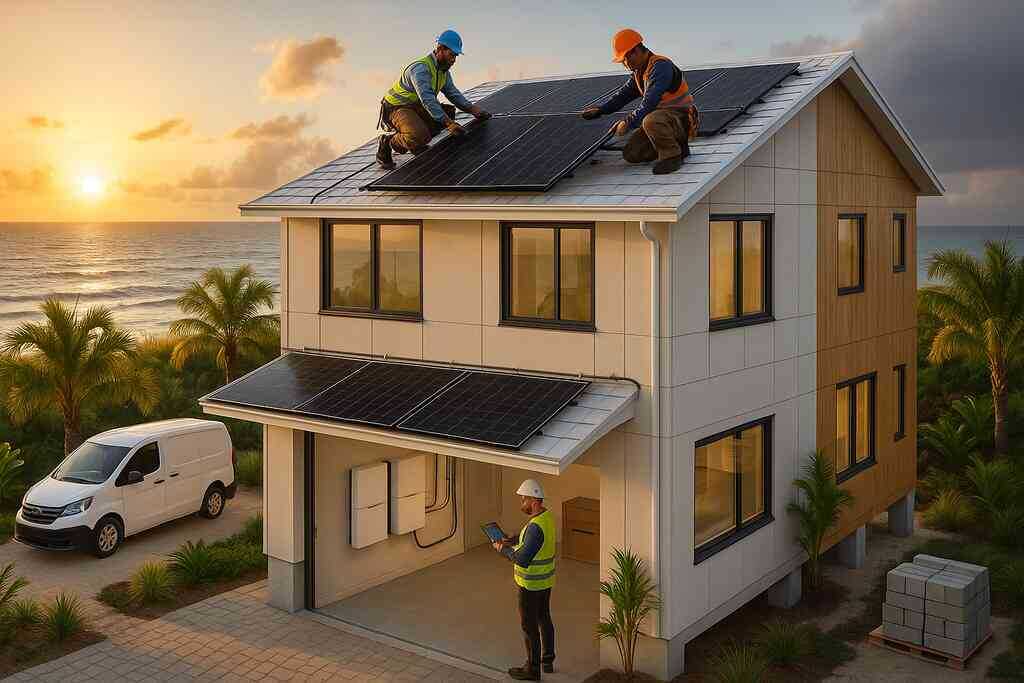
Building Net-Zero, Hurricane-Ready Homes in 2025
South Florida contractors face a unique design puzzle. Residents expect architecture that shrugs off Category-5 winds yet sips energy so efficiently the utility bill nearly disappears. This guide explains how leading builders and remodelers weave resilient coastal construction with net-zero performance—showing homeowners what to ask for and tradespeople what to deliver.
Why Resilience and Net Zero Now Go Hand in Hand
- Storm Security – A tight, well-insulated envelope doubles as the first line of defense against wind-driven rain. Continuous exterior sheathing, impact-rated glazing, and advanced flashing keep water out while stabilizing indoor temperatures during grid outages.
- Energy Independence – Solar arrays paired with battery storage maintain lighting, refrigeration, and medical equipment when power lines fail. A properly sized system also offsets annual consumption, achieving a true net-zero balance.
- Insurance and Appraisal – Carriers increasingly reward homes that exceed code. Fewer claims and lower risk profiles translate into premium discounts and stronger resale values.
Components of a High-Performance Coastal Envelope
Continuous Exterior Insulation
Contractors in Boca Raton and West Palm Beach favor mineral wool or foil-faced polyiso panels. Both materials drain quickly after heavy rain, resist termite damage, and deliver R-values above code minimums without stealing interior square footage.
Airtightness Verified by Testing
Blower-door targets of 1.5 ACH50 or lower are now common. Crews seal plate intersections with fluid-applied membranes, then retest before drywall to catch leaks while fixes remain simple and inexpensive.
Cool Roof Surfaces
High-albedo coatings reflect infrared radiation that would otherwise turn attics into ovens. Lower roof temperatures reduce cooling loads by 10 – 15 %, extend shingle life, and help photovoltaic panels operate more efficiently.
Passive Solar Design That Fits the Peninsula
South Florida enjoys abundant sun but also deals with steamy afternoons. Architects use these strategies to capture daylight without overheating:
• Deep south-facing overhangs shade glass from high summer angles while allowing winter sun to warm interior mass.
• Vertical fins or dense landscaping protect east and west façades from low morning and evening glare.
• Operable clerestory windows promote stack ventilation, pulling sea breezes through open living spaces at dusk.
A building information model tested with local weather files confirms that these measures can cut mechanical cooling runtime by 30 % or more before any solar panel is installed.
All-Electric Systems Simplify the Path to Net Zero
Electrification eliminates fossil-fuel lines that complicate storm preparation and inflate insurance costs.
Heat-Pump HVAC and Water Heating
Modern variable-speed heat pumps maintain 70 °F interiors even when humidity hovers near 90 %. Split-system heat-pump water heaters produce hot water for pennies a day and dehumidify the garage at the same time.
Induction Cooking
Induction delivers gas-like response without open flames, reducing indoor pollutants and lowering cooling loads because less waste heat enters the kitchen.
Smart Load Management
Whole-home energy monitors coordinate battery dispatch, EV charging, and major appliances. When storms approach, software raises the battery reserve to ride out potential outages.
Local Trades Converge Around Low-Carbon Materials
Concrete plants across the Gold Coast now offer mixes that cut Portland cement content with fly ash and ground glass pozzolan. Framing crews increasingly specify FSC-certified lumber and, where budgets allow, cross-laminated timber for floors and roof decks. Interior designers source recycled glass countertops and low-VOC finishes that stand up to humid salt air.
Renovations: Bringing Existing Homes to Net Zero
Most of the region’s housing stock predates current efficiency standards. Remodelers have developed a predictable roadmap:
- Audit and Model – Start with blower-door testing, duct leakage measurement, and an energy model that ranks priorities by payback and comfort.
- Seal and Insulate – Address attic air leaks, replace missing vapor barriers, and add exterior insulation during re-siding projects.
- Upgrade Windows and Doors – Impact-rated, low-e glass simultaneously improves safety and reduces solar heat gain.
- Right-Size Mechanical Systems – After envelope upgrades, oversized air conditioners are swapped for smaller variable-speed heat pumps.
- Add Solar + Storage – A roof refreshed with reflective underlayment and hurricane-rated mounts welcomes photovoltaic panels without voiding warranties.
What Homeowners Should Ask Prospective Builders
• How many blower-door tests are included, and what is the target ACH50?
• Which insulation and flashing products are specified to handle high humidity and salt spray?
• Is the roof designed as a unified system that integrates solar mounts, ventilation, and hurricane clips?
• What battery capacity will keep essentials running for 24–48 hours of outage?
• Does the contract include commissioning of mechanical systems and a year-one performance check?
The Road Ahead
By the end of 2025, net-zero homes are expected to represent a significant share of new coastal construction permits in Palm Beach, Broward, and Miami-Dade counties. Continuous improvement in heat-pump performance, declining battery prices, and stricter resilience codes all point toward full market normalization within the decade.
Contractors who master the intersection of airtight envelopes, passive design, and all-electric systems will lead this transition. Homeowners who prioritize these features today gain not only lower monthly costs but also peace of mind every hurricane season. The blueprint for a safer, cleaner, and more comfortable South Florida home is already here—it just needs to be built.
How South Florida Contractors Master Net Zero Homes in 2025


Comments
Post a Comment