Prefab Walls Propel South Florida Construction Efficiency
Quick Overview
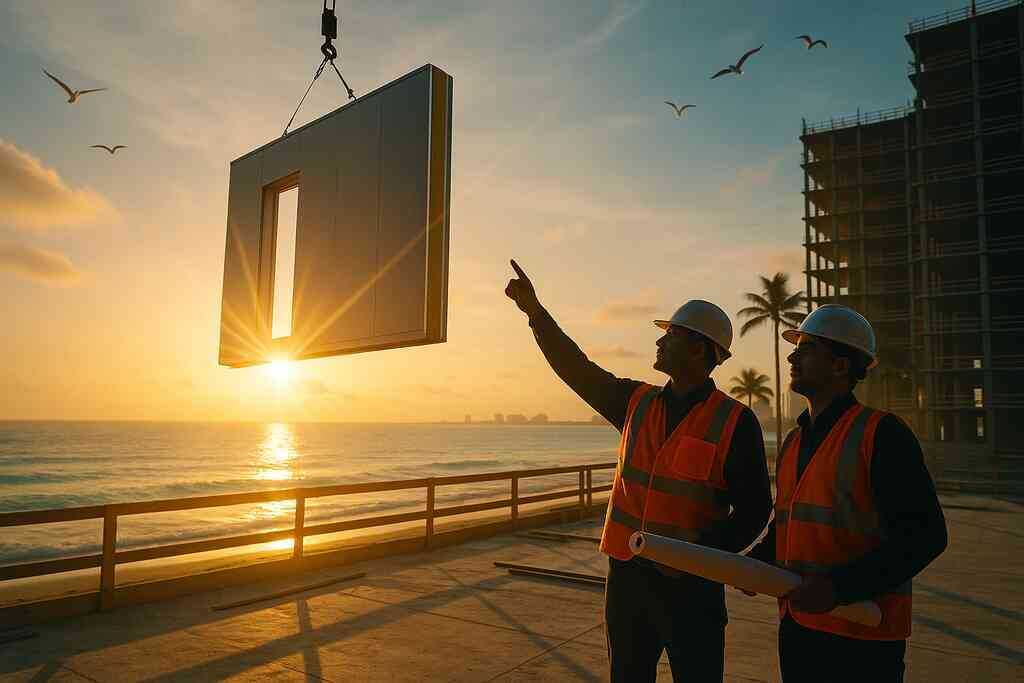
Prefab wall systems—also called panelized or modular walls—are manufactured in a controlled facility and delivered to the jobsite ready for installation. In 2025 they have become a favorite tool for contractors from Boca Raton to West Palm Beach who need to finish projects faster without giving up the polish demanded by coastal clients.
Why the Boca Raton Area Leads the Trend
Boca Raton is home to luxury subdivisions, boutique storefronts, and mid-rise condos built on tight urban lots. Schedules are aggressive and neighborhood boards watch noise, waste, and parking like hawks. Prefab walls give builders a reliable way to satisfy all parties:
- Panels arrive already sheathed, insulated, and cut for doors and windows.
- Cranes set an entire floor’s worth of walls in a single day, keeping disruption to a minimum.
- Less sawdust and fewer scrap piles make it easier to stay compliant with local cleanliness ordinances.
Developers also notice the branding advantage. Buyers touring a project framed with crisp, factory-precision walls equate that accuracy with overall quality and, by extension, higher property value.
How a Prefab Wall Is Built
- Digital design: Engineers convert the architectural drawings into a 3-D model that places each stud, header, and opening with millimeter precision.
- Factory fabrication: Automated saws and fastening stations cut and assemble the frame, apply sheathing, and inject or attach insulation.
- Integrated features: Electrical chases, blocking for cabinets, or even rain-screen battens can be added before the panel ever leaves the plant.
- Quality control: Every piece passes a checklist for square, plumb, and moisture content—standards that are hard to hit on a humid coastal jobsite.
- Delivery and set: Panels arrive labeled and sequenced. A small crew positions the first corner, verifies layout, and then the crane handles the heavy lifting while workers bolt panels to the slab or podium.
Key Advantages for South Florida Contractors
Faster Schedules
Time is money, especially during the summer thunderstorm cycle. Traditional block or stick framing can be delayed by afternoon rain that turns the site into mud. Prefab walls land, stand, and get dried-in before daily showers hit. Many contractors report framing phases trimmed by 30–50 percent.
Predictable Budgets
Material prices for concrete block, rebar, and labor have jumped in recent years. With prefab, most of the cost is locked in when the purchase order is signed. Fewer onsite variables mean fewer surprise change orders.
Higher Hurricane Resilience
Modern panel systems are engineered for the 180-mph wind zones that cover much of Southeast Florida. Continuous sheathing, glued joints, and factory-installed hold-downs create a diaphragm that resists racking better than site-built framing. Some plants even test sample panels in cyclic pressure chambers that mimic repeated gust loading.
Lighter Structural Loads
Light-gauge steel or structural insulated panels (SIPs) weigh considerably less than masonry, which can open the door to slimmer foundations and rooftop amenities. For coastal high-rises, every pound saved at the perimeter can be used for additional balconies or green roofs.
Energy Performance
• Continuous insulation eliminates the thermal bridges of conventional stud walls.
• Foil facers and radiant barriers reflect intense solar gain, reducing cooling demand during 95-degree afternoons.
• Airtight seams curb outside humidity, helping HVAC systems maintain comfortable indoor dew points.
Energy raters reviewing completed homes consistently note lower blower-door numbers and reduced peak load calculations—both valuable metrics for buyers comparing long-term ownership costs.
Labor Savings and Safety
A panelized project typically needs half the number of framers on site. That eases the skilled-labor crunch and shrinks general liability exposure. Crews spend less time on ladders cutting above their heads and more time guiding panels from the ground with taglines, a safer workflow.
What Owners and Architects Should Know
- Early coordination is critical. Structural, MEP, and interior design teams need to review the panel manufacturer’s shop drawings before fabrication.
- Transport limits panel size. Narrow streets in historic coastal towns may restrict trailer lengths. Most suppliers can break large elevations into smaller segments without sacrificing strength.
- Fire and acoustic ratings. Tested assemblies are available for 1-hour and 2-hour walls as well as STC 50 and higher party walls in condo towers.
- Finishing flexibility. Panels accept stucco, brick veneer, fiber-cement, or lightweight concrete skins. Interior faces come ready for drywall or can be shipped with gypsum already attached.
Choosing a Prefab-Experienced Contractor
South Florida now hosts dozens of builders who have completed multiple panelized projects. Vet prospects by asking:
- How many panel jobs have you completed in the past 24 months?
- Which manufacturers do you partner with and why?
- Can you provide references for a project similar in size and occupancy?
- How will you handle onsite storage, crane logistics, and sequencing?
A contractor who answers clearly and can show punch-list data from prior builds is more likely to deliver the speed and precision you expect.
Future Outlook
With building codes pushing tighter envelopes and storm resistance, the momentum behind prefab walls shows no sign of slowing in 2025. Manufacturers are experimenting with carbon-sequestering concrete skins and smart-sensor studs that report moisture levels in real time. As these innovations reach scale, South Florida’s contractors will be positioned to deliver even stronger, cleaner, and more energy-efficient structures.
Key Takeaways
• Boca Raton’s high-end market demands quick, clean construction that prefab walls supply.
• Factory fabrication controls cost, quality, and hurricane performance better than jobsite methods.
• Panels improve energy efficiency, reduce labor requirements, and shorten schedules.
• Success hinges on early design coordination and hiring a contractor experienced with panelized workflows.
Prefab wall technology is no longer a niche experiment; it is a proven path to faster, more resilient buildings along Florida’s wind-swept coast. For owners, architects, and builders alike, mastering it now will pay dividends in every project that follows.
Why South Florida Contractors Embrace Prefab Walls Near Boca


Comments
Post a Comment