South Florida Construction Trends: A Neighborhood Guide
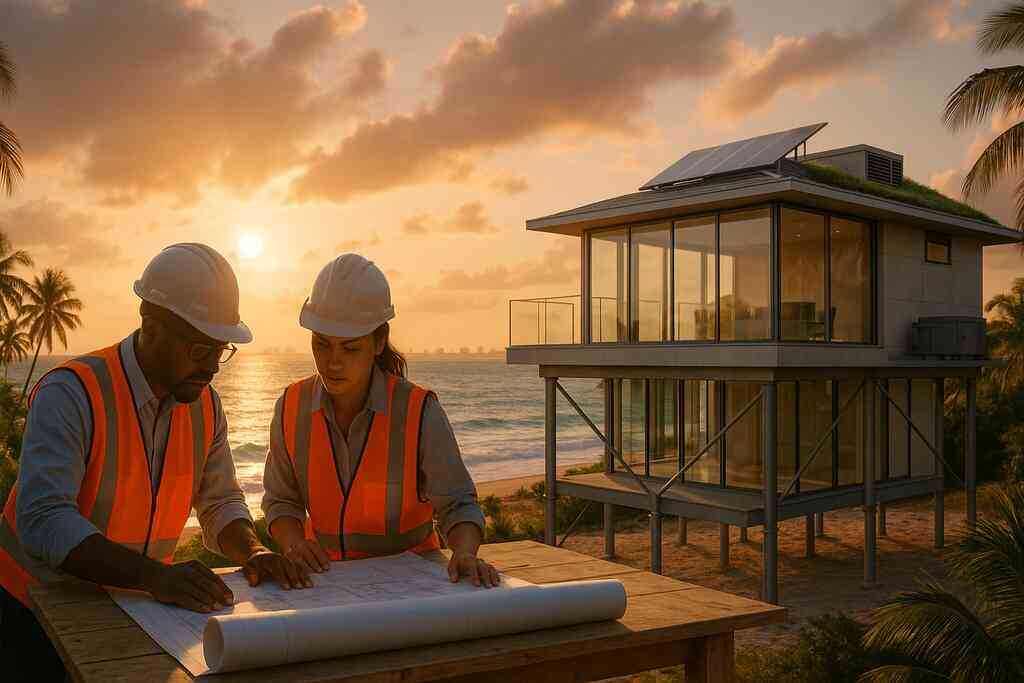
A quick look at why local comparisons matter
South Florida construction trends can shift from one neighborhood to the next. Wind-load maps, flood elevations, limestone pricing, and even permit backlogs change with each city line. Knowing those micro-differences before you hire a builder helps you protect budgets, meet code the first time, and shorten approval cycles.
This overview breaks down:
- Key cost and permitting contrasts between Boca Raton and West Palm Beach
- Hurricane-resilient materials most architects are specifying in 2025
- Practical tips for vetting contractors based on hyperlocal data
Boca Raton vs. West Palm Beach: two cities, two playbooks
Design pressures in Boca Raton
- Architectural review boards favor Mediterranean-revival façades—stucco, barrel tile, coral stone trim.
- Strict coastal setbacks demand helical or driven pilings that elevate additions without encroaching on dune lines.
- Historic districts require extra plan sheets showing window muntin profiles, adding two to three weeks to permit review.
Construction realities in West Palm Beach
- The city’s form-based code promotes mixed-use podium towers. That pushes concrete pours to nighttime to limit traffic closure fees.
- Adaptive-reuse incentives encourage keeping original brick and timber. Crews must coordinate with preservation inspectors at each structural milestone.
- Higher downtown land values translate to vertical density. Elevator cores and post-tension slabs become the go-to structural systems, influencing both labor skill sets and insurance requirements.
What the comparison means for owners
- Schedule buffers differ. A Boca Raton remodel might lose days to design review; a West Palm high-rise can stall on concrete delivery windows. Plan contingencies accordingly.
- Material allowances diverge. Coral stone lintels are easy to source in Boca but pricey inland. Reclaimed heart-pine joists, common in West Palm warehouses, rarely meet Boca’s coastal durability standards.
- Labor pools vary. Finish carpenters familiar with Mediterranean millwork cluster in south county, while form-work and tilt-wall crews stay near downtown jobs. Selecting the wrong contractor for a locale increases change-order risk.
2025 hurricane-resilient materials gaining traction
South Florida’s latest building code cycle places even tighter limits on wind uplift and water intrusion. Three product categories dominate specifications this year:
1. Fiber-cement siding
It withstands wind-borne debris and resists rot—ideal for homes within one mile of the coast. Current pricing sits about 12–15 % above vinyl, yet owners recoup that through lower repaint frequency and insurance discounts.
2. Autoclaved aerated concrete (AAC)
AAC block is light enough to reduce foundation loads but dense enough to achieve two-hour fire ratings. The material’s R-value of roughly 1.25 per inch helps meet energy targets without thick furring walls.
3. Galvanized light-gauge steel framing
Termite immunity and flood durability have pushed steel studs into mainstream residential use. Crews appreciate the straightness, which cuts down on drywall shimming and saves labor hours.
Neighborhood nuances still apply. Near brackish inlets, some engineers prefer pressure-treated glulam that flexes under torsion loads. Inland, cross-laminated timber (CLT) panels offer rapid dry-in during the short winter dry season.
How to vet a contractor with hyperlocal insight
Check license and insurance first
Florida requires state or county certification for general contractors. Verify active status and limits high enough to cover project scope. Never rely on a screenshot—confirm directly with the licensing board.
Compare review patterns by ZIP code
A builder with sparkling testimonials in Coral Springs may struggle with Delray’s coastal regulations. Filter feedback by neighborhood to see how crews perform under specific local ordinances.
Ask for recent permit numbers
Permits filed within the last 12 months reveal whether the firm is actively navigating current code updates. A gap in filings could indicate outdated compliance knowledge.
Request supplier letters
Material distributors will confirm payment history. Stable credit lines suggest the contractor can secure scarce items—impact windows, rebar, or pumice aggregate—without costly delays.
Timing your project around South Florida’s supply cycle
- Hurricane season (June–November). Roofers and window installers are in peak demand. Prices climb 8–12 % compared with winter quotes.
- Dry season (December–February). Short rain windows make it ideal for slab pours and stucco. Permit offices also see lighter traffic after the holiday rush.
- Spring shoulder (March–May). Best chance to lock in labor before summer storm prep dominates schedules.
Material availability moves in parallel. Limestone from local quarries can become scarce after extended summer flooding. Checking aggregate lead times against your slab pour date prevents mid-project price spikes.
Putting it all together
Comparing South Florida construction trends at the neighborhood level is no longer optional. Micro-differences in wind maps, zoning overlays, and material logistics directly affect cost, schedule, and long-term durability. By studying local permit data, specifying hurricane-resilient materials, and vetting contractors who thrive under your specific city rules, you set the stage for a smoother build and a sturdier structure—no matter which side of the county line you call home.
Staying informed today saves rework tomorrow. Use these insights to draft clearer scopes, negotiate smarter allowances, and protect your investment from the first blueprint to the final punch list.
Comparing South Florida Construction Trends Near You


Comments
Post a Comment