South Florida Contractor Guide to Choosing Healthy Green Paint
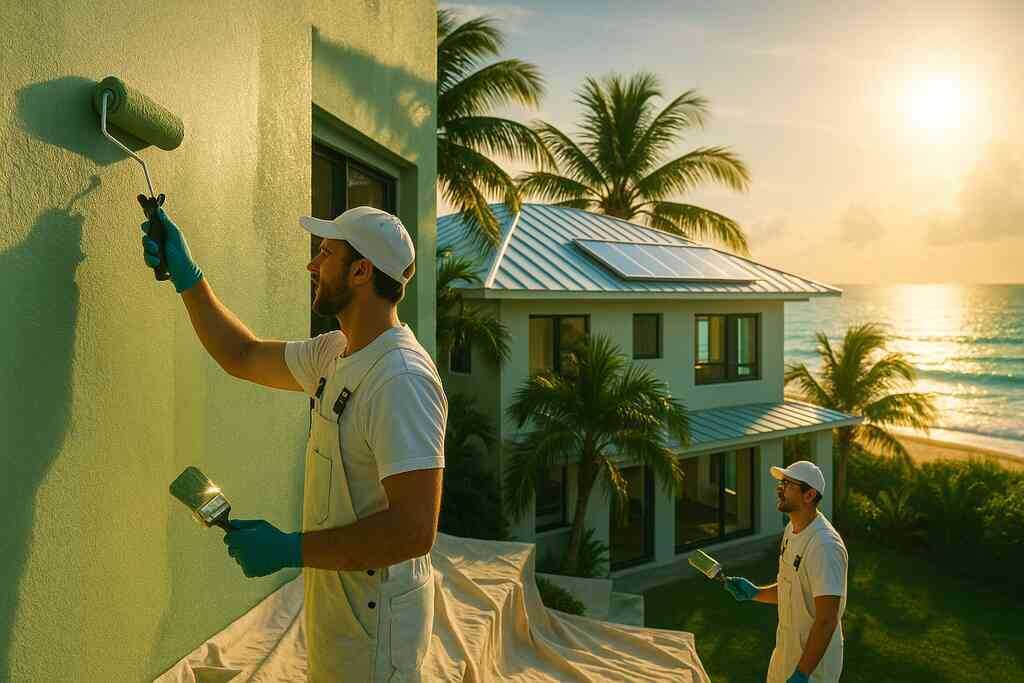
Why Eco-Friendly Paint Has Moved Front and Center
Homeowners along the Gold Coast are no longer satisfied with color alone. They want coatings that limit indoor pollutants, curb cooling costs, and hold up against salt-laden breezes. Low- or zero-VOC "green" paints answer all three needs when they are specified and applied correctly. This overview explains the factors professional contractors weigh before they pick up a brush.
The Health Case: Fewer VOCs, Freer Breathing
Volatile organic compounds evaporate into indoor air as paint cures. In South Florida’s subtropical climate, windows often stay closed while air-conditioning runs, allowing VOCs to linger. Contractors who prioritize wellness now choose formulas labeled at or below 50 g/L VOCs for interiors, and under 100 g/L for exteriors. Several premium lines offer 0 g/L base paints; however, tint can raise the final number, so pros double-check the colorant system before approval.
Benefits most often cited by experienced crews:
- Noticeably milder odor during and after application.
- Quicker re-occupancy of freshly painted rooms.
- Less risk of triggering asthma or allergy symptoms in sensitive occupants.
The Climate Challenge: Heat, Humidity, and Salt
Humidity
Afternoon relative humidity can exceed 80 percent. Moisture trapped beneath a coating leads to blistering or mildew. Contractors therefore look for:
- Vapor-permeable acrylic or siloxane binders that let walls "breathe".
- Mildew-resistant additives that do not rely on harsh biocides.
- Manufacturer data showing test results at 90 percent humidity or higher.
Salt Air
Homes within a mile of the Atlantic face constant sodium chloride exposure. Sodium ions accelerate corrosion on metal fixtures and can work their way under paint edges. Pros mitigate the risk by:
- Washing surfaces with a mild TSP-free detergent to remove salt deposits.
- Specifying primers with verified salt-spray resistance (1,000-hour ASTM B117 is a common benchmark).
- Sealing end-grain wood and fastener heads with spot primer before the first full coat.
UV Intensity
South Florida receives stronger ultraviolet radiation than most of the continental U.S. Organic pigments fade faster, so contractors lean on earth-oxide and ceramic pigments, plus elastomeric topcoats rated for 98 percent UV reflectivity. On stucco, solar-reflective microspheres can lower wall temperature by 5–10 °F, easing HVAC workload.
Matching Finish to Project Type
| Project Situation | Recommended Green Paint Profile |
|---|---|
| Luxury interior with fine millwork | Zero-VOC alkyd emulsion for a glass-smooth finish without solvent smell |
| Child’s bedroom remodel | Certified asthma-and-allergy-friendly matte acrylic, scrub-rated at least 1,500 cycles |
| Beach-side stucco repaint | Waterborne elastomeric topcoat, 15-mil dry film thickness, permeance <10 perms |
| Metal balcony rails | Low-VOC two-part waterborne epoxy primer followed by UV-stable polyurethane |
Cost Considerations in 2025
Eco formulations once carried a steep premium. Price gaps have narrowed as raw materials scale up. Contractors typically budget:
- 10–15 percent higher material cost for zero-VOC interior wall coatings.
- 20 percent premium for reflective roof or stucco systems that incorporate ceramic spheres.
Labor seldom changes; surface prep, masking, and drying times mirror conventional coatings. When a paint extends the repaint cycle from five years to seven, long-term cost of ownership often falls below that of economy products.
Reading a VOC Label the Florida Way
Most cans show an EPA target, but South Florida professionals go further:
- Confirm the number is "as tinted" not just "untinted base".
- Look for third-party certifications such as GREENGUARD Gold or MPI X-Greenguard. These programs test emissions at 75–80 percent humidity, closer to local conditions.
- Check that mildew-cide ingredients comply with Florida Department of Environmental Protection guidelines for wastewater discharge, important when cleaning brushes or power-washing residue.
Proper Application: Where Green Goals Succeed or Fail
Even the healthiest paint will disappoint if applied incorrectly. Contractors follow these field habits:
- Schedule exterior work after 9 a.m. but before 3 p.m. to avoid dew and late-day storms.
- Monitor surface—not air—temperature. Paint film can skin over while substrate stays damp.
- Use a moisture meter on stucco; readings must drop below 12 percent before priming.
- Respect manufacturer spread rates. Thicker is not always better; trapped solvent in heavy coats can spike indoor VOC readings.
Maintenance Tips for Homeowners
Once walls and trim are complete, small steps preserve the finish:
- Wipe salt spray off exterior doors monthly with fresh water.
- Keep interior humidity near 50 percent; a dehumidifier works well during the rainy season.
- Touch up nicks quickly—exposed substrate absorbs moisture and undermines surrounding film.
Finding Qualified Crews
Directories dedicated to licensed South Florida contractors now let users filter by "low-VOC" or "green" credentials. When comparing listings, look for:
- Proof of liability insurance and workers’ compensation.
- Photos of recent projects in coastal neighborhoods—real evidence of salt-air success.
- Clear mention of product lines carried; reputable painters are transparent about their spec sheets.
Key Takeaways
- Low- and zero-VOC paints support healthier interiors, a priority when windows stay closed against heat.
- Salt, humidity, and UV intensity demand coatings engineered for vapor permeability, mildew resistance, and fade control.
- Upfront material costs run modestly higher, but extended repaint cycles and reduced cooling loads offset the difference.
- Success hinges on proper prep, climate-aware scheduling, and strict adherence to manufacturer spread rates.
- Verified eco-focused contractor directories make it easier than ever to align sustainable goals with proven craftsmanship.
When contractors balance wellness, durability, and coastal realities, green paint becomes more than a color choice—it acts as a year-round ally against South Florida’s toughest conditions.
How South Florida Contractors Select Green Paint Near You


Comments
Post a Comment