South Florida Contractors’ 2025 Smart Home Integration Guide
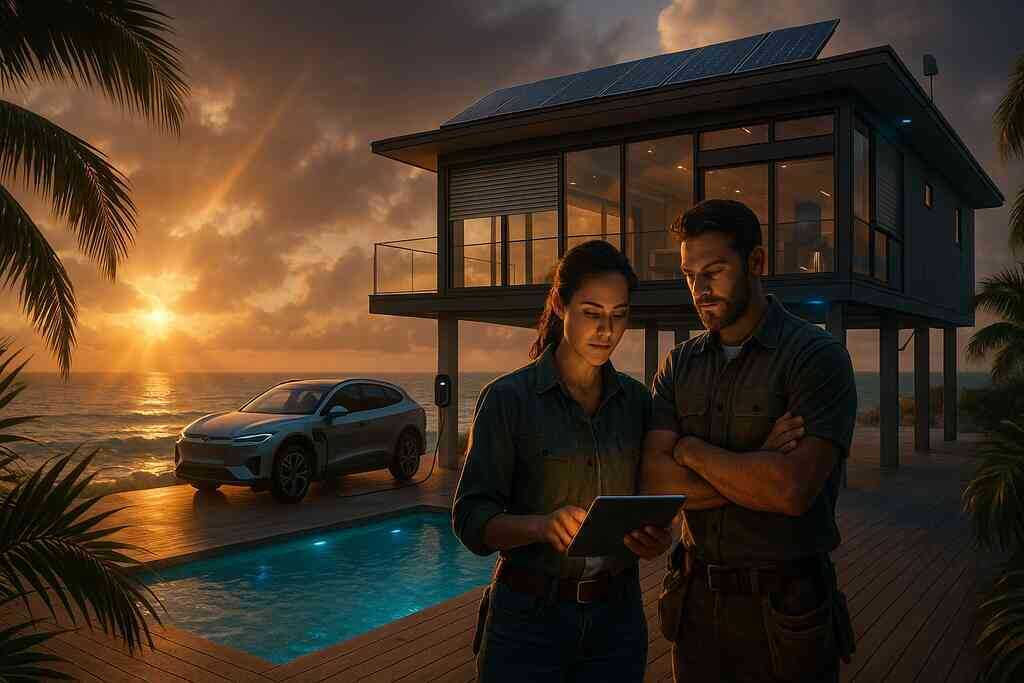
Why Construction Pros Now Speak IoT Fluently
When South Florida’s building boom met an explosion of connected devices, every general contractor had to add firmware fluency to the toolbox. Owners no longer request a simple security panel; they expect whole-home apps, voice scenes, and remote diagnostics baked into the walls. Project managers therefore review API road maps next to electrical schedules, and electricians pull low-voltage raceways alongside traditional conduit so future sensors can slide in without demolition.
Key adjustments now seen on nearly every job:
- Label every smart junction box on as-built drawings for quick troubleshooting.
- Reserve closet space for network racks and battery modules before framing.
- Run fiber or Cat-6A homeruns to heavy-usage zones such as media rooms and offices.
These small steps reduce callbacks, speed warranty work, and separate a tech-savvy builder from the pack.
Turning Efficiency Claims Into App-Based Proof
Insulation, windows, and HVAC still matter, but software now decides whether those assets reach peak performance. Integrating thermostats that learn occupancy, lighting that tunes output by lumen, and meters that show real-time consumption pushes a project into true energy-efficient home automation.
Successful teams follow a three-phase process:
- Design for sensors, not just equipment. Dehumidifiers, return-air plenums, and floor registers receive paired humidity and temperature probes so algorithms can react to South Florida’s damp heat.
- Commission in steps. After mechanical startup, technicians run 48-hour data captures, adjust setpoints, and only then hand the dashboard to the owner. This staged approach avoids the common “everything worked until we moved in” complaint.
- Document ROI. Contractors export utility comparisons from the automation platform, giving homeowners concrete proof that the added budget delivers monthly savings.
Meeting Luxury-Condo Expectations
High-rise buyers want flawless connectivity from the moment they badge into the lobby. Builders therefore coordinate with automation consultants during schematic design, not after drywall. Items now locked into condo specs include:
- Fiber risers with redundant pathways to each unit.
- In-wall Wi-Fi 6E access points disguised under paintable covers.
- VLAN segmentation that lets the HOA isolate individual residences while still supporting building-wide amenities.
Customization peaks in penthouses overlooking the Atlantic. Motorized glass walls must sync with climate-responsive blinds; fragrance diffusers and circadian lighting scenes trigger automatically when the owner’s phone pings geofencing software. When executed smoothly, these invisible perks add tangible resale value and glowing word-of-mouth.
Building Connectivity That Survives Hurricanes
Storm shutters and surge strips feel quaint in 2025. Today’s resilience strategy blends hardened structure with hardened data links.
Protecting the Backbone
- Fortified network cabinets: Rated for 155-mph wind pressure and outfitted with filtered ventilation.
- Roofing with integrated antenna mounts: Keeps repeaters beneath uplift-resistant panels so alerts stay online when gusts climb.
- Surge-protected conduit runs: Cameras, shutter motors, and water sensors share isolated chases that dump transients before they reach delicate boards.
Seamless Battery Backup
Lithium-iron phosphate racks now slip into climate-controlled closets the same way tankless heaters once did. When utility power drops, the smart gateway islands the home in milliseconds, keeping pumps, medical equipment, and security devices alive. Cloud analytics then send performance reports to both owner and builder, streamlining any warranty replacement.
Mastering Smart HVAC for Tropical Humidity
Temperature alone doesn’t equal comfort on the Gold Coast; moisture control is king. The latest smart thermostats integrate dew-point prediction, variable blower logic, and whole-home dehumidification staging. Field crews follow these best practices:
- Size equipment for latent load, not just sensible heat.
- Install dedicated humidity sensors in return air and at least one interior zone.
- Link thermostats to motorized fresh-air dampers, allowing the system to pull in cooler, drier night air when available.
- Program alerts that notify both homeowner and service contractor if relative humidity creeps above 60 percent for more than two hours.
Owners notice fewer odors, sharper indoor air quality scores, and—perhaps most important during summer—dry furniture and artwork.
Coordinating Trades Without Chaos
Technology adds subcontractors, but communication can stay simple. Leading builders embrace the following workflow:
- Central specification sheet. A living document tracks device firmware, IP addresses, and warranty contacts. Everyone from painters to tile setters knows where not to drill.
- Weekly integration huddles. Electricians, HVAC techs, and automation programmers meet for 15-minute stand-ups, limiting the classic “I thought you were providing that outlet” standoff.
- Digital closeout package. Final PDFs include QR codes on the breaker panel directing owners to user manuals, Wi-Fi passwords, and recommended update intervals.
Three Emerging Trends to Watch
- Matter standard adoption. The new interoperability language is finally stabilizing multi-brand ecosystems. Contractors who certify staff early will slash configuration hours.
- AI-driven predictive maintenance. Gateways now flag failing compressors or door actuators before audible symptoms appear, turning emergency calls into scheduled visits.
- Water analytics. Ultrasonic flow sensors map usage fixture by fixture, alerting owners to pinhole leaks and contributing valuable data for insurance discounts.
Final Takeaway
In 2025 a successful South Florida contractor commands both structural know-how and digital fluency. By planning for connectivity at the same moment as concrete, documenting every smart component, and designing resilience into both hardware and cloud services, builders turn smart home headaches into a signature selling point. Homeowners receive the sleek convenience they crave, and construction pros secure fewer callbacks, stronger referrals, and a future-proof reputation in one of the nation’s most demanding markets.
How South Florida Contractors Decode Smart Home Hurdles 2025


Comments
Post a Comment