South Florida Contractors & 2025 Wind Codes Compliance Guide
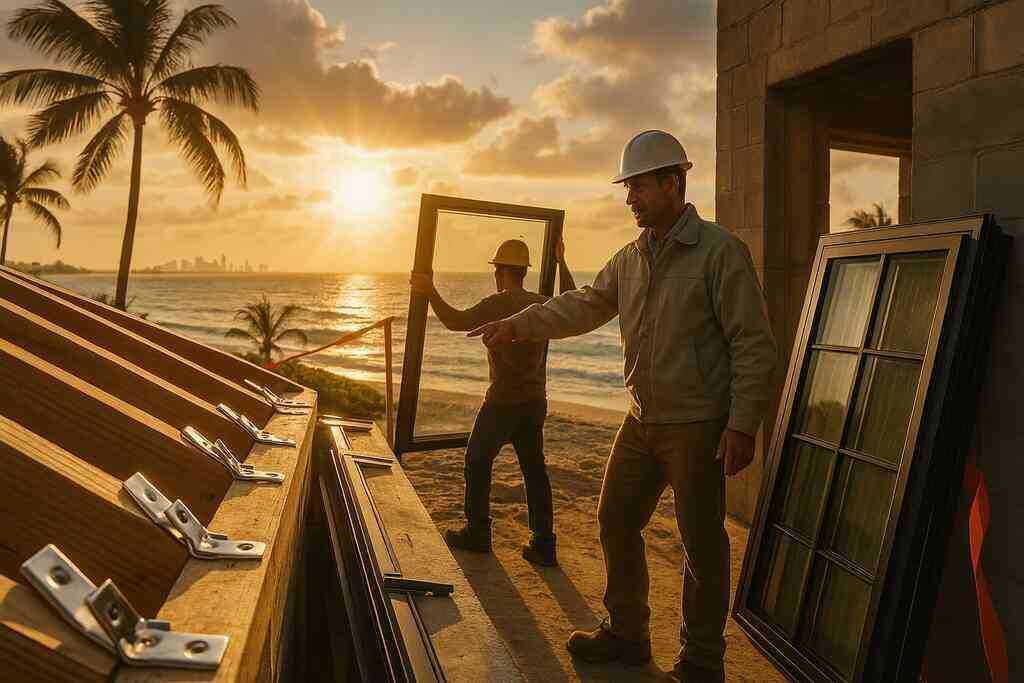
Navigating Wind Codes in South Florida — 2025
South Florida contractors work under the most demanding wind-resistance rules in the country. This guide explains how crews interpret the 2025 Florida Building Code, stay ready for Miami-Dade inspections, and meet rising homeowner expectations—all while keeping schedules and budgets under control.
Why Wind Codes Keep Tightening
Hurricane intensity and urban density both continue to rise across the peninsula. Each new storm season reveals fresh data on roof uplift, wall racking, and debris impact. Code writers respond by refining pressure tables, clarifying exposure categories, and mandating stronger load-path hardware. Knowing the why behind these updates helps field teams apply the how with confidence.
Inside the High-Velocity Hurricane Zone (HVHZ)
Miami-Dade and Broward counties sit in the HVHZ, a special chapter of the Florida Building Code that layers additional requirements onto the statewide baseline. Key elements include:
- Higher design wind speeds—many neighborhoods are rated 175 mph or more.
- Strict product-approval lists for windows, doors, roofing, and fasteners.
- Enhanced corner and edge nailing patterns to resist uplift.
- Mandatory secondary water barriers on most steep-slope roofs.
Because each lot carries its own pressure coefficients, successful contractors study local wind maps before the first footing is poured.
Force Multipliers That Pay Off
A “force multiplier” is any detail that dramatically increases overall resilience for little added cost. In 2025 the most popular choices are:
- Ring-shank nails and self-tapping screws — Provide higher withdrawal resistance than smooth-shank options without slowing crews.
- Continuous load-path connectors — Factory-galvanized straps, clips, and hold-downs transfer wind forces from roof to foundation.
- Secondary water barriers — Peel-and-stick membranes or foam adhesives keep the deck dry even if shingles fail.
- Corrosion-resistant finishes — Stainless or hot-dipped coatings extend service life in salt-air zones.
- Impact-rated fenestration — Laminated glass stops debris and lowers insurance premiums.
Selecting Miami-Dade–approved SKUs eliminates guesswork at inspection time and reduces warranty calls later.
Continuing Education: The Competitive Edge
Code cycles shift every three years, but South Florida jurisdictions often adopt amendments mid-cycle. Forward-thinking builders schedule classroom hours just like job walks. Popular training topics this year include:
- Reading updated wall-zone pressure charts.
- Proper installation of ASTM E1996 impact assemblies.
- Field verification of nail spacing with stress-rated gauges.
- Document control for electronic plan review portals.
Superintendents who invest in these courses catch errors early, cutting rework and keeping projects on track when labor is tight.
What Homeowners Now Expect
Buyers arrive at design meetings armed with research on hurricane resistance, energy efficiency, and insurance discounts. Common requests include:
- Impact windows with low-E coatings to combine safety and energy savings.
- Composite or concrete roof tiles that withstand 200 mph uplift while reflecting heat.
- Generator-ready electrical panels protected by NEMA-rated enclosures.
- Flood-resistant materials in ground-floor areas, such as closed-cell spray foam and fiber-cement trim.
Contractors who present balanced options—strength plus comfort—win bids faster and generate referrals.
Field Strategies for Clean Inspections
An organized jobsite passes sooner and costs less. Experienced crews rely on a simple pre-inspection checklist:
- Verify approved product numbers stamped on every clip, anchor, and window.
- Photograph truss strapping before sheathing hides it.
- Confirm corner nail spacing with a marked ruler.
- Seal roof deck seams with tape or foam per manufacturer specs.
- Stage documentation in a waterproof box at the entry.
These steps build trust with officials and speed the certificate of occupancy.
Shaping National Standards
Because the region faces regular Category 4 and 5 events, South Florida builders often become informal advisors to manufacturers and policy makers. Real-world feedback from diverse building types—masonry cottages, high-rise condos, and mixed-use campuses—guides product testing and future code language. In effect, local contractors are beta-testing the next generation of national resilience requirements.
Key Takeaways for 2025 Projects
- Study micro-climate wind maps, not just county averages.
- Use Miami-Dade–approved connectors and fasteners as your default spec.
- Schedule ongoing code education for every supervisor.
- Offer dual-purpose upgrades that deliver both strength and energy savings.
- Maintain meticulous photo records to sail through final inspections.
Adopting these habits keeps projects compliant, profitable, and—most important—safe when the next storm crosses the horizon. While regulations will continue to evolve, disciplined preparation ensures South Florida contractors stay a step ahead.
How South Florida Contractors Navigate Wind Codes 2025


Comments
Post a Comment