10 HVAC Innovations Transforming Comfort in South Florida
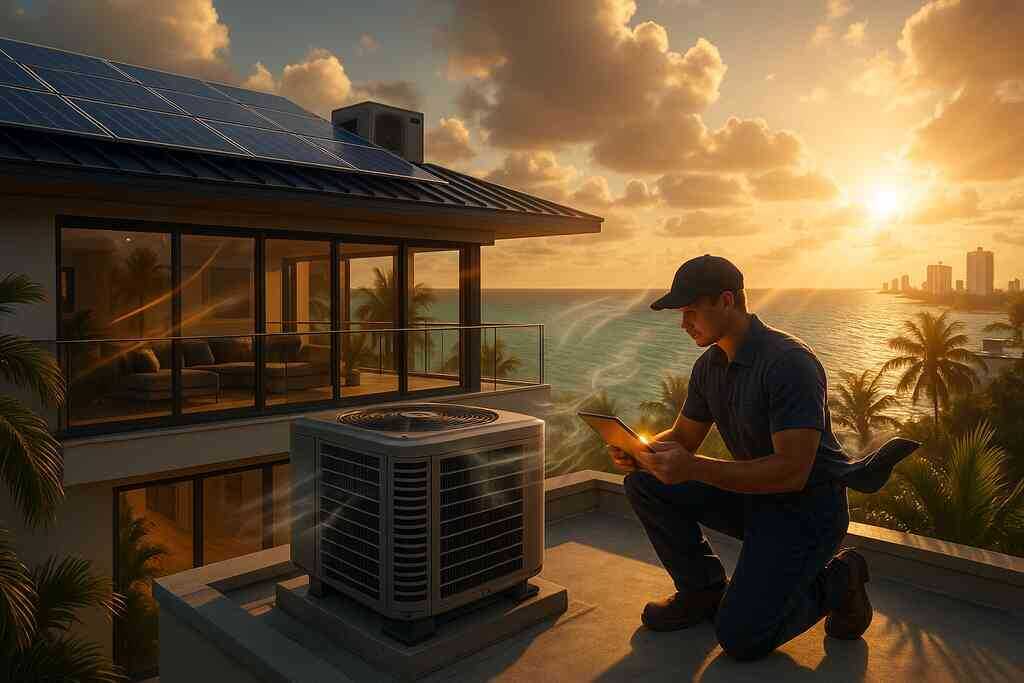
Why HVAC Innovation Matters in South Florida
South Florida’s humid subtropical climate makes air-conditioning more than a convenience—it is a year-round necessity. Builders, remodelers, and homeowners are therefore watching the HVAC sector closely for solutions that deliver cooler interiors, lower power bills, and dependable operation during hurricane season. The overview below highlights ten innovations that are having the greatest impact on comfort, energy use, and long-term resilience in 2026.
1. Predictive Maintenance Analytics
Machine-learning dashboards now sift through compressor amperage, coil temperatures, and airflow data every minute. When the numbers drift out of range, the platform alerts a technician long before a homeowner notices warm air. Early warnings reduce emergency calls, shorten repair times, and help contractors plan service routes more efficiently.
Key takeaway: By catching faults early, predictive software extends equipment life and prevents costly weekend breakdowns.
2. Variable Refrigerant Flow (VRF) Systems
Unlike conventional split systems that turn fully on or off, VRF units modulate capacity in small increments. Indoor zones receive only the cooling or heating they need, which cuts energy use on mild winter days and keeps humidity in check during steamy nights.
Where it shines: High-end remodels and multifamily buildings where occupants have different comfort preferences room by room.
3. High-SEER Heat Pumps Built for Coastal Air
Modern inverter-driven heat pumps achieve Seasonal Energy Efficiency Ratios (SEER) in the mid-20s while using corrosion-resistant coatings on coils and fasteners. These materials withstand salt spray and afternoon thunderstorms common along the Gold Coast.
Practical tip: When comparing models, look for coastal-rated outdoor units with factory-applied epoxy or phenolic coatings rather than after-market sprays.
4. Smart Thermostats Tuned for Humidity Control
Today’s smart stats do more than follow setpoints; they factor dew point, runtime history, and utility rate schedules into every cycle. Some models coordinate with whole-home dehumidifiers or adjust fan speed automatically to wring extra moisture from the coil.
Benefit: Lower indoor humidity lets occupants raise the temperature one or two degrees without sacrificing comfort, shaving energy use by roughly 3-5 % per degree.
5. Enhanced Duct Sealing and Testing
Local codes now cap duct leakage well below older standards, and builder adoption of aerosolized sealants is spreading fast. By pressurizing the system during construction and injecting a polymer mist, crews seal joints from the inside out—even the hidden ones buried in soffits.
Bottom line: Tight ducts can improve overall system efficiency by 10 % or more and eliminate hot spots at the ends of long runs.
6. Dedicated Outdoor Air Systems (DOAS)
A DOAS supplies conditioned, dehumidified outside air directly to living spaces, while a smaller, separate system handles sensible cooling. This split approach suits large custom homes that host frequent gatherings or include workout rooms where fresh air demand spikes.
Health angle: By managing ventilation and humidity independently, DOAS reduces mold risk and improves indoor air quality without driving up cooling loads.
7. UV-C and Bipolar Ionization for Cleaner Coils and Air
Ultraviolet-C lamps mounted inside air handlers keep evaporator coils free of biofilm. Bipolar ion generators further reduce airborne particles and volatile organic compounds. Together they maintain heat-transfer efficiency and support healthier breathing environments.
Maintenance note: UV lamps lose intensity after roughly one year; replacing them on schedule preserves both hygiene and performance gains.
8. Hurricane-Ready Mounting and Anchoring Systems
Updated wind-uplift codes demand robust condenser stands, stainless hardware, and lateral bracing. New quick-disconnect platforms make it faster to remove a unit if a major storm threatens, protecting the investment and allowing rapid re-installation afterward.
Why it matters: A secure condenser avoids costly refrigerant loss or cabinet damage should debris become airborne during a tropical event.
9. Integrated Energy Recovery Ventilators (ERVs)
ERV cores transfer both heat and moisture between outgoing and incoming air streams. In South Florida, that means exhausting stale, humid indoor air while pre-drying the fresh supply. The result is balanced ventilation with minimal impact on cooling loads.
Design hint: Position ERV ducts short and straight; every extra elbow adds static pressure that fan motors must overcome.
10. Cloud-Based Commissioning and Warranty Tracking
Construction teams increasingly embed equipment serial numbers, airflow readings, and refrigerant weights into a shared digital log at startup. Homeowners, builders, and manufacturers can all verify that the system met design intent on day one.
Long-term payoff: Documented commissioning supports warranty claims, simplifies future upgrades, and keeps property values high.
How Builders and Homeowners Can Capitalize
- Start early. Coordinate HVAC design with insulation, window selection, and solar-gain modeling before plans are finalized.
- Insist on testing. Duct leakage verification, blower-door checks, and airflow balancing are as important as granite countertops when it comes to livability.
- Budget for smart controls. Upfront costs are modest compared with the savings gained through optimized runtimes and humidity management.
- Schedule preventive service. Even the most advanced system needs filter changes, coil cleaning, and firmware updates to stay in peak condition.
Final Thoughts
South Florida’s climate will always challenge mechanical systems, yet today’s HVAC innovations give residents more control, lower bills, and healthier air than ever before. Whether you are breaking ground on a high-rise in Fort Lauderdale or renovating a bungalow in Delray Beach, integrating these ten technologies can help deliver on the promise of year-round comfort and resilience.
Top 10 HVAC Innovations Shaping South Florida Living
Comments
Post a Comment