5 Essential HVAC Strategies for South Florida Homes
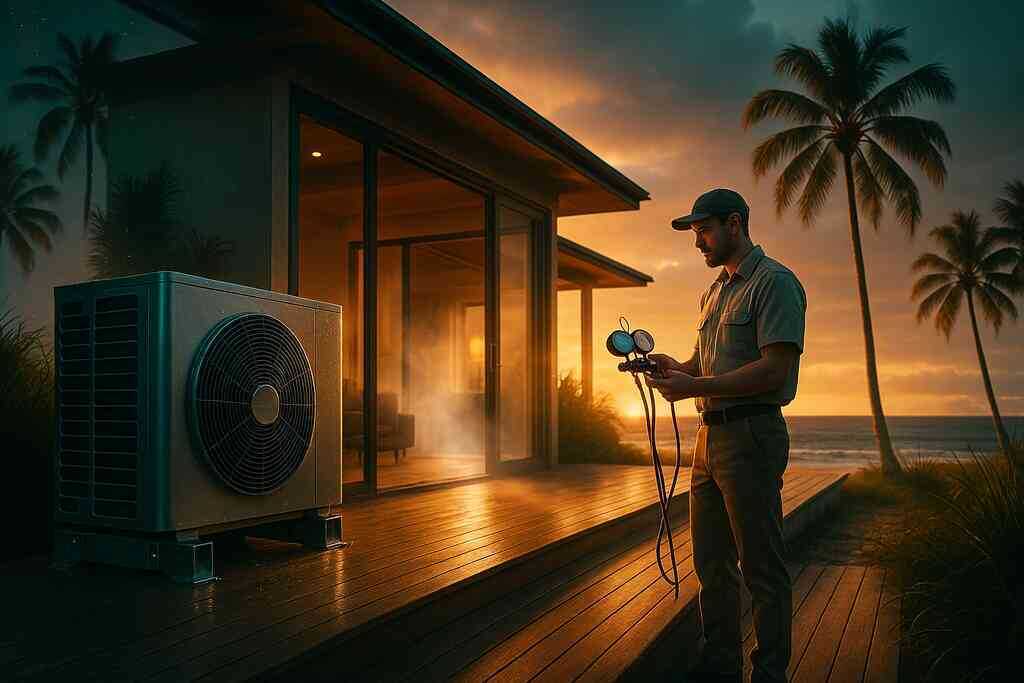
South Florida’s year-round heat, soaring dew points, and salt-laden breezes make cooling systems work harder than almost anywhere else in the country. This guide breaks down five proven strategies local experts rely on to keep homes comfortable, efficient, and storm-ready.
1. Design Around the Coastal Climate
The first rule is acknowledging that the Atlantic and Gulf shape every engineering decision.
- Higher latent loads – Warm ocean air carries more moisture. Systems must remove water vapor as aggressively as they drop temperature.
- Salt corrosion – Sea spray can pit aluminum fins and rust hardware. Epoxy-coated coils, stainless fasteners, and elevated condenser pads add years to a unit’s life.
- Hurricane exposure – Outdoor equipment must withstand wind-borne debris. Proper anchoring and wind-rated enclosures are code requirements, not options.
Planning for these realities from day one costs far less than retrofitting after a storm or a premature coil failure.
2. Work Only With a Licensed South Florida Contractor
Florida’s Building Code is strict because the stakes are high. Licensed professionals bring three advantages:
- Code mastery – From hurricane strapping to minimum efficiency ratings, they know the details that keep inspectors—and insurance adjusters—happy.
- Insurance protection – A valid license comes with liability and workers’ compensation coverage. If a crane lift goes wrong, homeowners are not on the hook.
- Continuous training – State rules require ongoing education. Pros stay current on evolving refrigerants and variable-speed technology, protecting you from obsolete equipment choices.
Choosing unvetted labor may shave a few dollars off the quote, but it can void manufacturer warranties and create costly compliance headaches.
3. Demand Precise Load Calculations
Thumb rules like “one ton per 400 square feet” do not work in Boca Raton or Delray Beach. Proper sizing starts with a full Manual J evaluation that factors:
- Wall and roof insulation values
- Window orientation and shading
- Infiltration rates from wind pressure
- Occupancy and appliance heat gain
The payoff is significant. A right-sized system runs longer, steadier cycles, wrings out more humidity, and avoids the short-cycling that drives up bills and wear. It also allows contractors to target higher Seasonal Energy Efficiency Ratios (SEER) without overspending on excess capacity.
Choosing High-SEER Equipment
Once the load number is set, aim for equipment that exceeds today’s code minimums. In 2026, 15.2 SEER2 is the statewide floor, but many South Florida specialists recommend 17–20 SEER2 variable-speed heat pumps. The incremental cost often qualifies for utility rebates and pays back quickly through lower kilowatt-hour charges.
4. Adopt Future-Proof Refrigerants Now
Global-warming-potential (GWP) rules are phasing out legacy blends like R-410A. New systems increasingly rely on R-32 or R-454B, both with lower environmental impact and higher operating pressures. Key considerations:
- Certified technicians only – These refrigerants require updated gauges, charging charts, and safety practices.
- Proper airflow – Higher pressures demand clean, unrestricted ductwork to avoid efficiency losses.
- Leak detection – Because some next-generation blends are mildly flammable, electronic sniffers and careful brazing are mandatory.
Installing a compliant unit today shields homeowners from an expensive refrigerant swap midway through the equipment’s life cycle.
5. Schedule Preventive Maintenance From Day One
A new system’s warranty can stretch to 10 or even 12 years, but only if routine service milestones are met. A solid maintenance plan in South Florida should include:
- Semiannual coil cleaning to remove salt and pollen
- Refrigerant charge verification before the peak summer load
- Blower wheel inspection and balancing
- Drain-line flushing to stop algae clogs that trigger shutdowns
Most reputable contractors offer flat-rate maintenance agreements. They cost far less than an emergency call on the hottest afternoon in August, and they catch minor issues—like a failing capacitor—before they become holiday-weekend breakdowns.
Quick Checklist for Homeowners
- Check the contractor’s Florida license number and insurance certificates.
- Ask for a copy of the Manual J summary before approving equipment size.
- Specify epoxy-coated coils and stainless hardware if you live within five miles of the coast.
- Confirm that the quoted system uses a refrigerant with an approved low-GWP classification.
- Lock in a maintenance agreement that includes two service visits per year.
Final Thoughts
South Florida’s beauty comes with climate challenges that punish generic HVAC designs. By respecting coastal conditions, working with licensed experts, insisting on precise load calculations, choosing forward-looking refrigerants, and committing to preventive care, homeowners can enjoy cool, dry indoor comfort while holding energy costs in check. Following these five strategies will keep your system running smoothly through 2026 and well beyond.
Top 5 Strategies for HVAC Excellence with Florida Experts


Comments
Post a Comment