Advanced Energy Retrofits in South Florida Homes Explained
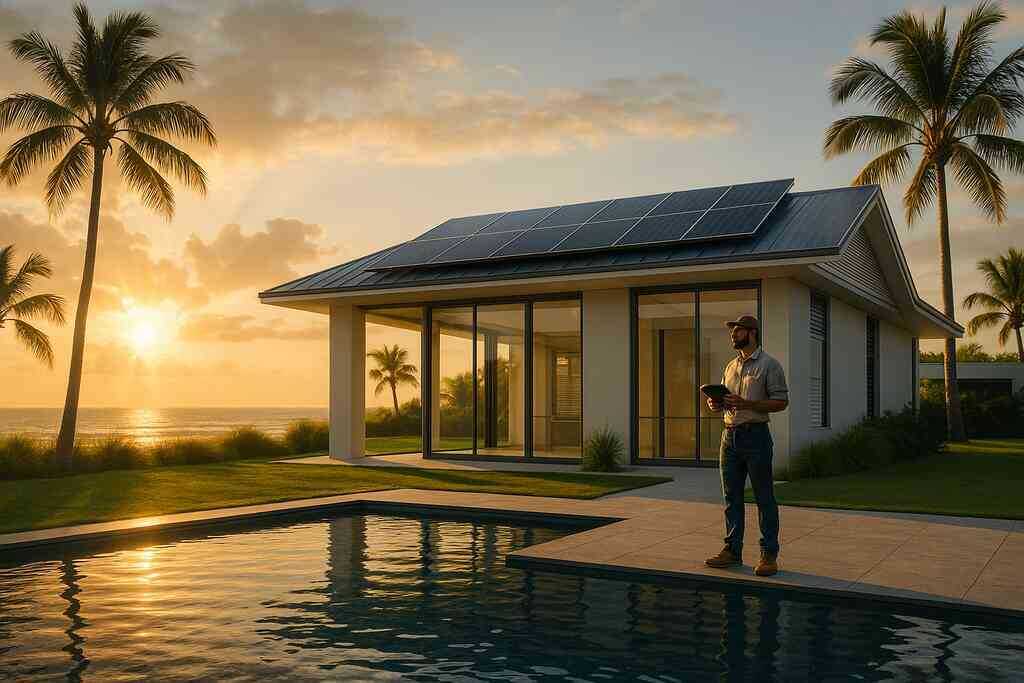
Coastal Efficiency Without Compromise
South Florida homeowners are embracing advanced energy retrofits to tame humidity, cut soaring utility bills, and strengthen hurricane resilience. This guide breaks down the core strategies local builders and remodelers use to deliver high-performance living spaces in 2026.
Why Energy Retrofits Matter on the Coast
Living between the Atlantic and the Everglades offers sun, salt, and frequent storms. Those same conditions punish poorly sealed walls and overworked air-conditioners. A thoughtfully planned retrofit can:
- Reduce annual cooling costs by double-digit percentages.
- Guard framing and wiring from moisture-driven decay.
- Maintain a safe, comfortable indoor climate during power interruptions.
- Boost resale value by aligning with fast-growing green-home demand.
Climate-Responsive Design Principles
Humid subtropical zones have unique needs. Successful contractors start with three pillars:
- Moisture management – keep bulk water out, let trapped vapor escape.
- Heat control – reflect intense sunshine and block thermal bridges before reaching interior surfaces.
- Air quality – balance tight envelopes with continuous, filtered ventilation to control pollutants and indoor humidity.
Envelope First: Seal, Insulate, Protect
A well-built shell remains the cheapest long-term upgrade because every mechanical system that follows can be downsized.
Air Sealing
- Apply high-quality tapes at roof and wall sheathing seams.
- Install gaskets under plates and around penetrations.
- Confirm workmanship with a blower-door test; top crews consistently reach 3 ACH50 or below.
Insulation Strategies
- Continuous exterior insulation over wall sheathing breaks the heat bridge created by studs.
- Hybrid roof decks—rigid foam above plywood, spray foam below—defend against wind-driven rain and attic heat.
- Closed-cell spray foam at rim joists prevents termite-friendly condensation in crawlspaces.
Hurricane-Rated Windows & Doors
Impact-resistant glazing paired with insulated frames prevents pressure spikes while trimming solar heat gain. Low-E coatings tuned for the region reject infrared but allow visible light, preserving daylighting without raising cooling loads.
Smarter HVAC and Ventilation
Once the envelope is tight, mechanical systems can be right-sized for efficiency and comfort.
Variable-Speed Heat Pumps
Modern heat pumps handle both cooling and mild-winter heating with impressive coefficients of performance. Variable-speed compressors ramp gently, slashing start-up spikes and maintaining steadier indoor humidity.
Dedicated Dehumidification
Even the most efficient heat pump may not remove enough latent heat during mild, sticky evenings. A standalone dehumidifier integrated into the return plenum keeps relative humidity below the mold-friendly 60 % threshold without overcooling the house.
Balanced Fresh-Air Systems
Energy recovery ventilators swap heat and moisture between incoming and outgoing air, delivering code-required ventilation with minimal energy penalty. MERV-13 filters capture coastal allergens, salt particles, and airborne spores.
Solar and Storage: Making Sunshine Work Harder
South Florida averages more than 2,800 hours of sunlight annually. Converting that resource into reliable, storm-ready power is now mainstream.
- Roof-integrated photovoltaic (PV) panels reduce uplift risk and maintain a sleek profile.
- Microinverters or DC optimizers maximize production when scattered clouds shade parts of the array.
- Battery storage keeps essential circuits—refrigeration, lighting, medical devices—alive during grid outages, a growing priority after recent hurricane seasons.
- Heat-pump water heaters running on daytime solar surplus cut water-heating costs by up to 70 %.
Choosing the Right South Florida Contractor
Finding a team that understands both energy science and coastal codes is critical. When interviewing prospects, ask for:
- Recent blower-door and duct-leakage test reports from completed projects.
- Proof of continuing education on Florida Building Code energy chapters.
- Local references where you can verify comfort, humidity control, and post-hurricane performance.
- Collaboration with third-party energy raters to document results.
Red Flags to Avoid
- Reliance on rule-of-thumb HVAC sizing without load calculations.
- Promises of drastic savings without diagnostic testing.
- Lack of familiarity with vapor-permeable weather barriers or continuous exterior insulation.
Quick Cost Perspective
While every property differs, most full-scope retrofits fall into three investment tiers:
| Scope | Typical Focus | Typical Payback |
|---|---|---|
| Tune-up | Sealing, LED lighting, smart thermostat | 2–4 years |
| Deep-energy | Envelope upgrades, high-efficiency HVAC | 6–10 years |
| Net-zero ready | Above plus PV and storage | 10–15 years |
These timelines shrink as energy prices climb and incentive programs expand. More important, homeowners enjoy quieter interiors, steadier temperatures, and fewer moisture headaches from day one.
Key Takeaways
- A tight, insulated envelope is the foundation of every successful coastal retrofit.
- Variable-speed heat pumps, dehumidifiers, and balanced ventilation ensure comfort without wasting energy.
- Solar-plus-storage solutions turn abundant sunshine into reliable resilience.
- Choosing a contractor who verifies performance builds lasting value and peace of mind.
Upgrading an existing South Florida house to advanced standards is no longer experimental. With the right strategy and team, it becomes a straightforward path toward lower bills, healthier air, and a stronger home ready for the realities of coastal living in 2026 and beyond.
Decoding Advanced Energy Solutions by South Florida Experts


Comments
Post a Comment