Green Concrete: Low-Carbon Mixes for South Florida Jobs
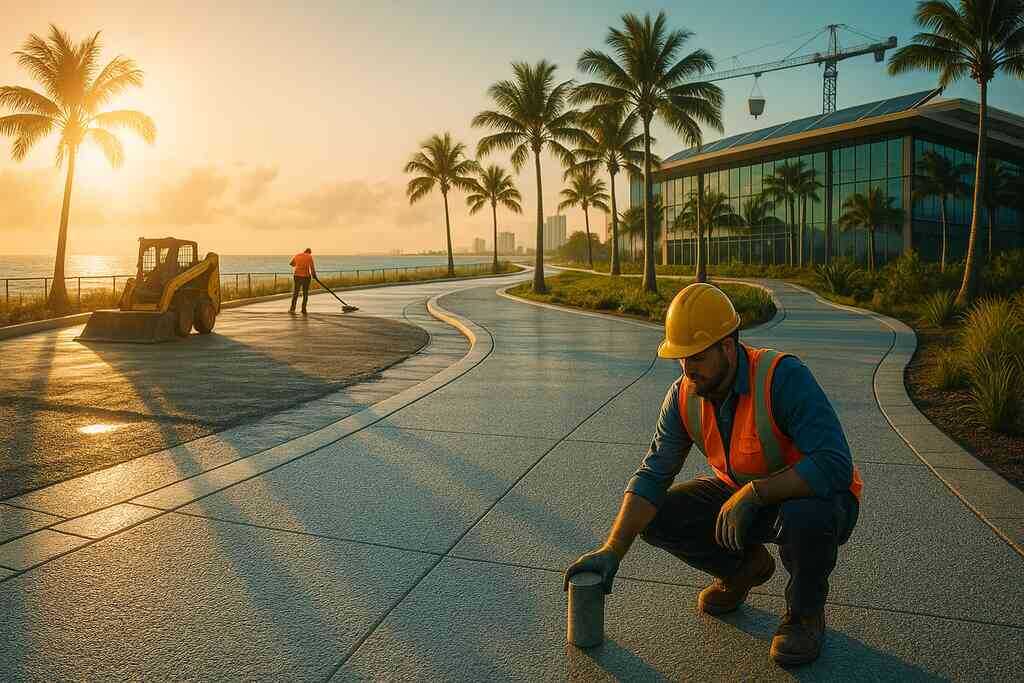
Understanding Green Concrete
South Florida crews pour miles of slabs, columns, and pavers every month. Until recently the standard mix relied on pure Portland cement, quarried stone, and large volumes of fresh water. Each cubic yard carried a heavy carbon footprint and did little to address flooding or heat-island issues. Green concrete changes that equation. It is an umbrella term for mixes that cut embodied carbon, conserve resources, or solve local environmental challenges while still meeting the structural demands of a coastal, high-humidity climate.
Why the Switch Matters in 2026
- Rising insurance premiums are now directly tied to a building’s resilience profile. Concrete that resists salt, heat, and storm surge lowers risk.
- Municipal procurement rules award points for materials with verified life-cycle reductions. Missing those points can cost contractors public projects.
- Buyers, tenants, and tourists increasingly judge properties by sustainability metrics. A certified low-carbon slab is becoming as marketable as a waterfront view.
Core Strategies Behind a Greener Mix
1. Supplementary Cementitious Materials (SCMs)
Replacing a portion of Portland cement with fly ash, ground granulated blast-furnace slag, natural pozzolans, or finely milled recycled glass can cut binder emissions up to 40 percent. SCMs also slow hydration, which actually improves long-term strength in South Florida’s warm climate.
2. Recycled Aggregate
Demolition rubble is crushed, screened, and graded to create coarse and fine aggregate that rivals virgin limestone. Using it keeps concrete trucks lighter on the road, reduces tipping fees, and closes a local waste loop that once sent debris to distant landfills.
3. Carbon-Cured or CO₂-Mineralized Concrete
New curing chambers inject captured carbon dioxide into fresh precast units. The gas mineralizes into calcium carbonate, locking carbon away while boosting early compressive strength. Some ready-mix plants are piloting the same process for on-site pours.
4. Permeable and Pervious Pavements
By increasing void space, crews create slabs that let stormwater filter through instead of sending it to overworked drains. The approach protects aquifers from saltwater intrusion and earns credits under regional stormwater permits.
Performance in a Coastal Climate
Skeptics sometimes assume sustainable mixes sacrifice durability; field data shows the opposite when designs are adjusted for South Florida’s unique loading and exposure:
- Chloride resistance: Slag and silica fume densify the paste, slowing salt penetration and reinforcing steel corrosion.
- Heat control: SCMs cut the peak hydration temperature, reducing thermal cracking in thick mat foundations.
- Moisture cycling: Recycled aggregate often exhibits higher absorption, but dosage adjustments and water-reducing admixtures keep shrinkage within code limits.
Practical Mix-Design Tips for Field Teams
- Begin with a performance specification instead of a prescriptive one. State required strength, slump, and exposure class, then let the ready-mix supplier achieve those targets with the greenest formulation.
- Request trial batches and rapid chloride permeability tests. Short lead times can still fit within standard project schedules.
- Use ASTM C94 limits on maximum temperature at discharge, especially in summer. A chilled mix and reflective curing blankets protect early-age strength.
- Pair low-carbon concrete with low-VOC sealers. This maintains indoor air quality for multifamily and hospitality projects.
Cost Considerations
Material prices are only part of the story. When lifecycle impacts are monetized—energy savings, lower maintenance, and reduced disposal—green concrete is often net-cheaper. Contractors also cite:
- Permit acceleration: Some building departments fast-track projects with documented carbon savings.
- Insurance credits: Underwriters now issue modest premium reductions for high-performance envelopes, including salt-resistant slabs.
- Marketing value: Developers can charge higher rents or sales prices when concrete sustainability is verified by third-party PCR (product category rule) summaries.
Common Pitfalls and How to Avoid Them
- Over-substitution: Excess fly ash may delay set time beyond jobsite tolerances. Maintain a balanced binder ratio or use accelerators.
- Poor moisture control: Recycled aggregate holds more water; account for absorption during batching to avoid lower strength or surface dusting.
- Inadequate testing: Every recycled source is different. Establish a consistent sampling plan so gradation and contaminants stay within spec.
Implementation Roadmap for Contractors
- Audit current mixes to establish a baseline for cement content, embodied carbon, and cost.
- Identify regional SCM suppliers; transportation distance affects both emissions and delivered price.
- Conduct pilot pours on non-critical elements—sidewalk panels, equipment pads, or mock-ups—before committing to full structural placement.
- Train finishers on any changes in workability. Some low-carbon mixes exhibit faster stiffening or distinct bleed patterns.
- Document results—strength curves, permeability, carbon savings—and package the data for owners, insurers, and permitting officials.
Looking Ahead
Technologies move fast. By 2026, lithium-based nano-silica, electrically cured slabs, and algae-grown calcium compounds are advancing from lab to field. The common thread is that each aims to deliver strength and service life with fewer greenhouse gases. Contractors who learn the fundamentals now will adapt far more easily as specifications tighten.
Key Takeaways
- Green concrete is not a single product but a set of design tools—SCMs, recycled aggregate, carbon curing, and permeability control—that together reduce carbon and improve performance.
- South Florida’s salt, heat, and storms make the region ideal for demonstrating the resilience benefits of low-carbon mixes.
- Early coordination among designers, suppliers, and field crews avoids the most common quality issues.
- Project teams that quantify and publish their carbon reductions gain a measurable edge in public bids, real-estate marketing, and risk management.
Engineers and builders who master these methods help protect the coast while winning work. The next slab poured can be both stronger and lighter on the planet—proof that sustainability and profitability now share the same foundation.
What Is Green Concrete For South Florida Contractors


Comments
Post a Comment