Green Concrete Trends Boost Coastal Builds in South Florida
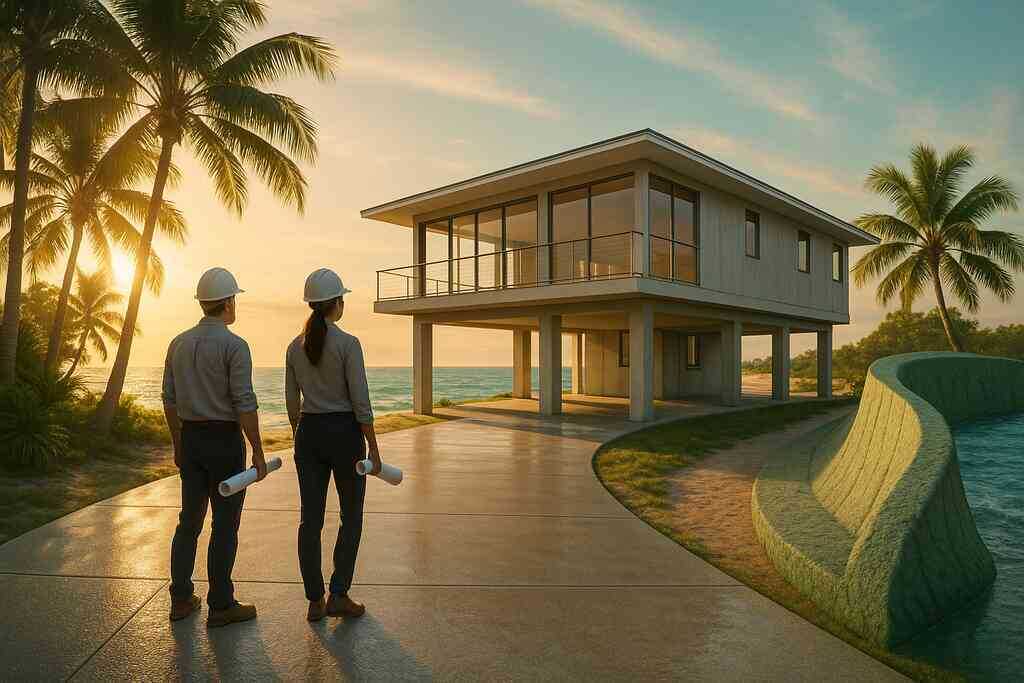
Climate-Ready Concrete for a Coast That Never Sleeps
Sunny weather and salt-laden breezes define South Florida living, yet they also punish foundations, seawalls, and driveways. New green concrete mixes are rewriting the playbook for builders who work where rising tides and stronger storms are part of daily planning. This overview explains why climate-resilient concrete matters, which mix designs are gaining traction, and how local contractors are turning research into long-lasting projects.
Why Durability and Low Carbon Footprints Go Hand in Hand
Concrete is both the backbone of the built world and a major source of embodied carbon. Traditional Portland cement requires high-temperature kilns that release large amounts of CO₂. Coastal owners then face added costs when salt water attacks reinforcing steel, leading to spalling and early repairs. Green concrete tackles both problems at once:
- Lower emissions – Alternative binders use industrial by-products or mineral activators that cure without energy-intensive firing.
- Higher service life – Mixes engineered for chloride resistance slow down corrosion, keeping structures safe for decades longer.
- Regulatory alignment – Updated building codes across South Florida already reward materials that withstand hurricane winds and salt spray while shrinking carbon footprints.
Key Mix Technologies Shaping 2026 Job Sites
1. Supplementary Cementitious Materials (SCMs)
Fly ash, slag, and silica fume replace a portion of Portland cement, cutting CO₂ output and refining pore structure. Denser concrete means fewer pathways for chlorides to reach rebar.
2. Geopolymer and Alkali-Activated Binders
These chemistries rely on aluminosilicate reactions rather than calcium silicate hydration. They harden at ambient temperatures, resist acid attack, and routinely hit compressive strengths of 8,000 psi—well above many coastal design loads.
3. Carbon-Cured Concrete
Injecting captured CO₂ into fresh mixes triggers mineralization that locks carbon into solid calcium carbonate. The reaction improves early strength, allowing faster formwork removal and tighter schedules.
4. Recycled Aggregate and Ground Glass
Locally sourced crushed concrete and post-consumer glass lower demand for virgin limestone. They also lighten mix color, boosting solar reflectivity and reducing urban heat.
5. Bio-Based Fibers and Self-Healing Additives
Cellulose or basalt fibers add crack control without the embodied energy of steel mesh. Encapsulated bacteria and mineral pellets activate when moisture enters a crack, forming new calcium compounds that seal the gap.
Economic Upside: Beyond First-Cost Comparisons
Up-front material prices for advanced blends can run 5–15 percent higher than standard mixes. Over a structure’s life, however, owners often come out ahead because:
- Maintenance cycles lengthen – Extended time between resurfacing or patching means fewer labor calls.
- Insurance premiums may drop – Carriers factor in wind uplift ratings and corrosion resistance.
- Tax incentives – Several Florida municipalities now offer property tax abatements or expedited permitting for projects using documented low-carbon materials.
- Energy savings – Light-colored or permeable pavements lower surrounding temperatures, trimming air-conditioning loads.
The Contractor’s Role as Innovation Accelerator
South Florida builders operate at the front lines where lab data meets real-world humidity, heat, and salt. Their crews provide critical feedback on pumpability, set times, and finish quality. Three field practices stand out:
- Customized admixture dosing – Ambient temperatures can top 95 °F by mid-morning. Contractors fine-tune water-reducers and hydration stabilizers to prevent flash setting.
- Salt-spray mock-ups – Test panels receive artificial seawater cycling before a mix is approved for bulk pours. This step catches potential durability issues early.
- Job-site carbon tracking – Tablets and cloud software log material volumes and mix IDs so total embodied carbon per cubic yard is documented for code compliance.
Finding Trusted Green Concrete Specialists
Homeowners and developers no longer need to guess which team can deliver a permeable driveway in Boca Raton or a carbon-cured pool deck in Boynton Beach. A regional contractor directory now filters firms by:
- State license class and insurance status
- Core competencies such as geopolymer placement or recycled aggregate sourcing
- Distance from a given ZIP code
- Verified project photos and client references
Browsing profiles shows whether crews own specialized pumps, understand finish nuances of high-slag mixes, or partner with ready-mix plants that certify low-carbon outputs. A shortlist can then be invited to review site plans and propose tailored solutions.
Practical Tips Before Commissioning a Project
- Specify performance, not brand names. Ask for minimum chloride permeability, compressive strength, and global warming potential (GWP) values rather than a particular product line.
- Insist on sample pours. A small test slab reveals surface finish and curing rate under actual weather conditions.
- Plan for curing logistics. Many eco-mixes require tight moisture control during the first seven days. Budget for curing blankets, fogging, or spray-on membranes.
- Coordinate with structural engineers early. Some alternative binders reach design strength more slowly; rebar size or spacing may need minor adjustments.
- Document everything. Keep mix tickets, mill certificates, and carbon accounting sheets. Future buyers, insurers, and code officials appreciate clear records.
Looking Ahead
Coastal construction in 2026 is no longer about choosing between resilience and sustainability. Green concrete delivers both, offering longer life under salt stress while trimming CO₂ at the source. South Florida’s contractor community, backed by material scientists and forward-looking codes, continues to refine mixes that stand up to hurricanes without standing in the way of environmental goals.
Whether you are raising a seawall, pouring an elevated slab, or refreshing a patio, the tools for a climate-smart build are already on the market. A bit of homework—matching project needs with the right contractor and mix design—turns emerging technology into everyday reliability.
Green Concrete Innovations with South Florida Contractors


Comments
Post a Comment