Prefab Walls in South Florida: Codes & Contractor Guide
Comparing Prefab Walls With Traditional Construction
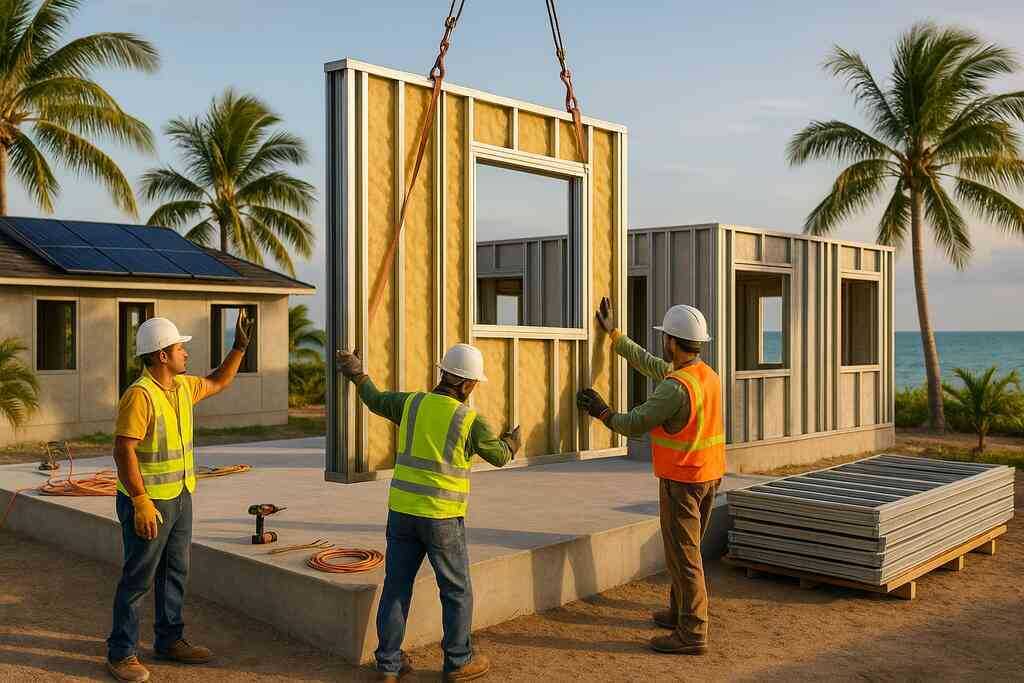
South Florida builders have long relied on concrete block for wind resistance, yet a new generation of prefabricated wall systems is changing that default. Factory-built panels arrive on site cut to the millimeter, lift into place with a small crane, and close in a shell within days instead of weeks. This overview explains why prefab walls suit the coastal climate, how they stack up on cost and schedule, and what to look for when choosing a contractor in 2026.
Why Prefab Excels in Humid, Windy Conditions
- Tighter envelopes. Panels are fabricated in controlled environments, so joints are straighter and gaps smaller. That means less outside air sneaks in, reducing the strain on year-round air-conditioning.
- Built-in moisture management. Modern wall cassettes incorporate vapor barriers, drainage mats, and sealed penetrations before they ever leave the factory. This helps walls dry quickly after a summer downpour and discourages mold.
- Engineered wind resistance. Manufacturers design each panel set around the site’s exact wind-load map. Reinforced hold-downs, uplift clips, and corrosion-resistant screws are integrated rather than added later, giving inspectors clear documentation during plan review.
- Faster storm recovery. Because the structure locks up sooner, critical finishes such as roofing, windows, and HVAC can be installed earlier. That compressed timeline shrinks the exposure window between rough framing and weatherproofing.
Common Panel Types on the Florida Market
| System | Core Materials | Typical R-Value | Notable Pros |
|---|---|---|---|
| Light-gauge steel wall panels | Galvanized studs, exterior sheathing, mineral wool | R-14 to R-20 | Non-combustible, termite proof |
| Structural insulated panels (SIPs) | OSB skins, EPS or polyiso core | R-24 to R-30 | High insulation, minimal thermal bridging |
| Insulated concrete forms (ICFs) | Hollow EPS blocks filled with concrete | R-22 plus thermal mass | Familiar to concrete crews, excellent sound control |
Each option can achieve the required hurricane impact ratings when detailed correctly. The right choice depends on design goals, budget, and a contractor’s in-house expertise.
Cost and Schedule: What the Numbers Show
Builders now publish side-by-side studies that compare panelized walls with concrete block for a 2,500-sq-ft custom home. Results vary by county, yet several trends appear consistently:
- Labor drops 25-40 %. Fewer onsite hours offset the premium for factory fabrication.
- Crane and staging add 2-4 %. Panels require a small mobile crane and clear set-down areas, costs that must be factored early.
- Overall shell cost is often within ±5 %. Savings on labor and waste disposal usually balance higher material invoices.
- Schedule compresses by two to three weeks. Earlier dry-in dates reduce carrying costs for construction loans and protect interior trades from weather delays.
Homeowners who view proposals on a total-project basis—rather than focusing on a single line item—tend to see prefab as cost-neutral but speed-positive.
Navigating the Coastal Code Maze
Stricter wind, impact, and water-intrusion rules define South Florida permitting in 2026. Prefab manufacturers have responded with:
- Third-party test reports for ±200 mph wind pressures.
- Pre-engineered connection plates stamped by Florida Professional Engineers (PEs).
- Factory-applied corrosion protection that meets high-salt-spray exposure levels.
- Documentation packets organized for local digital permitting portals.
Even with this groundwork, every municipality interprets the Florida Building Code a little differently. Early coordination with a contractor who submits prefab projects regularly can prevent last-minute plan revisions for anchor spacing, fire separation, or fastener coatings.
What to Ask a Prospective Contractor
- How many prefab wall projects have you completed in the past two years?
- Which panel systems do you install most often, and why? Experience with one material does not always transfer to another.
- Can you share a detailed schedule that highlights off-site fabrication, delivery windows, and crane days? This reveals whether the team truly understands sequencing.
- What is your process for digital coordination? Builders fluent in BIM or panel-specific software catch clashes between plumbing chases and factory punchouts before production.
- Who handles structural engineering and local shop-drawing approvals? Clear responsibility avoids finger-pointing if a city reviewer asks for revisions.
A contractor who answers confidently and supplies real project photos—not just manufacturer brochures—usually signals genuine proficiency.
Tips for a Smooth Prefab Build
- Lock the design early. Panel fabrication starts weeks before ground breaking, so late window changes can be expensive.
- Reserve crane access. Tight urban lots may need temporary street closures; plan permits in advance.
- Verify utility rough-ins. Electricians and plumbers must align conduit and pipe locations with pre-cut panel openings.
- Inspect at the factory if possible. Many suppliers welcome owner-builder visits. Catching an error on the line beats field modifications.
- Protect panels on arrival. Although wrapped, bundles should be stacked on level ground with airflow underneath to prevent trapped moisture.
The Bottom Line
Prefab wall systems no longer live on the fringe of South Florida construction. When paired with experienced contractors, they deliver competitive costs, shorter build times, and envelopes that outperform block in energy and moisture control. Careful vetting of the builder’s modular skill set, upfront design discipline, and diligent code coordination are the keys to unlocking those benefits. For homeowners and architects seeking hurricane-ready structures without months of masonry noise, panelized walls offer a forward-thinking alternative that is ready for mainstream adoption in 2026.
Compare Prefab Walls with South Florida Contractors


Comments
Post a Comment