South Florida Coastal Building Codes: Practical Guide
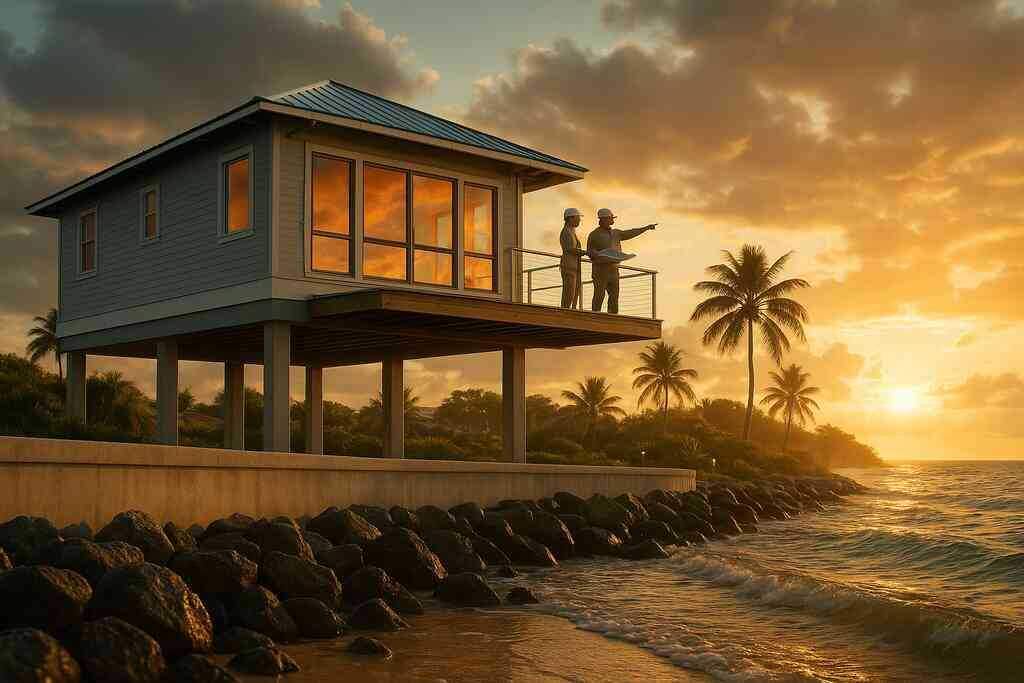
Understanding Coastal Codes in South Florida
Building close to the Atlantic brings constant salt spray, king-tide flooding, and the threat of hurricanes. Because of those risks, every city from Boca Raton to West Palm Beach enforces a layered set of coastal regulations. This guide unpacks the main rules that homeowners, designers, and builders must satisfy in 2026.
1. Why These Codes Exist — and Why They Differ Block to Block
Coastal codes are written to keep people safe, preserve dunes and mangroves, and protect public dollars that underwrite federal flood insurance. They are not uniform:
- State baseline: Florida statutes set the Coastal Construction Control Line (CCCL) and require wind-resistant design across the peninsula.
- County add-ons: Palm Beach County amends those rules with stricter freeboard and debris-impact standards.
- City refinements: Boca Raton, Delray Beach, and West Palm each overlay additional setbacks or riverfront provisions.
If a property straddles two zones, the more restrictive rule almost always applies.
2. Flood-Zone Elevation Requirements — Getting the Number Right
Inspectors compare your proposed finished-floor height to FEMA’s current Base Flood Elevation (BFE) plus any local freeboard. In practice:
- AE Zone: Finished floor must sit at BFE + 1 ft minimum. Vent openings equal to 1 sq in per sq ft of enclosure are mandatory if the space is enclosed.
- Coastal A Zone: Same height rule as AE, but breakaway-wall design is encouraged, and structural connections face higher wind/surge calculations.
- VE Zone: Pilings driven to stable soil, open foundations, and breakaway walls are non-negotiable. Utilities and exit stairs must clear the BFE.
Tip: Secure a certified elevation certificate before design development. Adjusting heights later is far costlier than starting correctly.
3. Setbacks and the Coastal Construction Control Line
The CCCL protects beach dynamics. Permanent structures must stay landward of that line and additional municipal buffers:
- Boca Raton: 30 ft seaward dune buffer plus view-corridor limits on hard fencing.
- Delray Beach: Variable buffer tied to annual dune surveys; pools often require a minor site plan review.
- West Palm Beach riverfront: Horizontal distance may shrink, but bulkhead height increases, and living-shoreline plantings become a permit condition.
Variance boards rarely grant relief unless a builder proves zero additional erosion and keeps all work above the design storm elevation.
4. Wind-Load Design: Lessons from Recent Storms
Miami-Dade wind maps govern most coastal projects even north of the county line:
- Ultimate design wind speed: 170–180 mph in exposed Category D terrain.
- Connections: Stainless or hot-dip-galvanized hurricane ties at every truss and rafter seat.
- Openings: Large missile impact-rated glass or tested shutters certified under TAS 201/202/203.
Fasteners must remain outside the corrosion zone of dissimilar metals. Regularly replace temporary bracing; inspectors cite loose lumber as a repeated failure cause.
5. Materials That Survive Salt, Sun, and Surge
- Concrete: Use Type II or Type V sulfate-resistant mix; specify 4,000 psi minimum with a 0.45 water-cement ratio.
- Reinforcement: Epoxy-coated rebar in slabs and grade beams within 3 mi of the coast.
- Wood framing: Southern yellow pine or spruce-pine-fir No. 2, treated to AWPA UC4B for ground contact and UC3B for above-ground exposed.
- Fasteners: 316 stainless near splash zones; 304 stainless or ASTM A153 hot-dipped elsewhere.
- Exterior finishes: Fiber-cement siding, synthetic stucco with high-impact basecoat, or porcelain cladding on ventilated rainscreens.
6. Inspection Strategy: Passing the First Time
South Florida building departments publish inspection sequences online. The most common trip-ups involve:
- Missing shear-wall nailing patterns.
- Incorrect anchor-bolt spacing in the first three courses of block.
- Vent screens too small for enclosed AE-zone crawl spaces.
- Mechanical equipment mounted below required elevation.
Create a pre-inspection checklist. Photograph concealed work—especially strap layouts and anchor bolts—so inspectors can verify compliance even after concrete or drywall hides the details.
7. Insurance and Resale Implications
Underwriters now demand documentation:
- Elevation certificate stamped by a surveyor.
- Product-approval sheets for windows, doors, and roofing underlayments.
- Confirmation of sealed electrical components below BFE.
Homes that supply this paperwork often command higher resale values, because buyers know coverage will remain affordable.
8. Quick-Reference Compliance Checklist
- [ ] Obtain current FEMA FIRM and local wind map.
- [ ] Order boundary + topographic survey and elevation certificate.
- [ ] Overlay CCCL, municipal buffers, and utility easements.
- [ ] Design foundations for zone-specific requirements (AE, A, VE).
- [ ] Specify impact-rated openings and corrosion-resistant hardware.
- [ ] Detail mechanical, plumbing, and electrical equipment above BFE.
- [ ] Assemble product-approval files for permit submittal.
- [ ] Schedule phased inspections EARLY; photograph concealed work.
- [ ] Retain copies for insurance and future resale.
Final Thoughts
Coastal construction in South Florida is challenging but manageable when codes are treated as design tools instead of roadblocks. Start with accurate site data, respect local overlays, and choose materials proven against wind, water, and salt. By following the steps above, both homeowners and builders can reduce delays, protect investments, and help coastal communities remain resilient for decades to come.
Guide to Coastal Codes by South Florida Contractors
Comments
Post a Comment