South Florida Coastal Home Design Trends & Innovations 2026
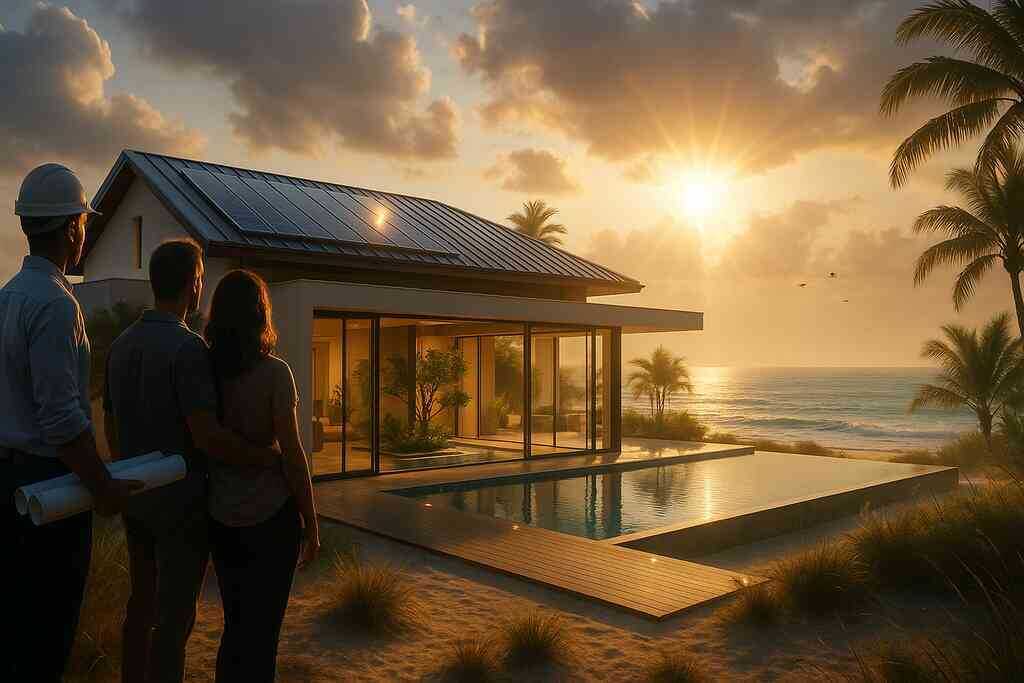
South Florida: America’s Living Design Lab
Few regions force residential designers to juggle heat, salt, and hurricanes the way South Florida does. That pressure cooker turns every new project into a full-scale experiment, and the solutions developed here often define national coastal standards a few seasons later. This overview highlights the most influential ideas shaping 2026 construction and renovation in Palm Beach, Broward, and Miami-Dade counties.
Why Local Innovation Matters Beyond the Peninsula
- Real-time climate testing – Homes built on the Atlantic and Gulf sides meet storm events that rival laboratory stress rigs. When a roof assembly or glazing system survives a direct hit in Fort Lauderdale, manufacturers can market the same detail with hard data to builders in the Carolinas or Texas.
- Fast feedback loops – Permitting officials, engineers, and contractors work only a few miles apart. That short distance speeds up post-storm assessments and code updates, reducing the lag between prototype and policy.
- Market demand for resilience – Insurance deductibles and property values rise or fall on wind-pressure ratings. Homeowners are willing to pay for proven technology, giving innovators a strong commercial incentive to refine rather than merely comply.
Partnering Early With a General Contractor Network
Choosing a design visionary is only half the battle. A project reaches its potential when a qualified contractor joins the table before the ink dries on schematic drawings.
Key advantages of early collaboration
- Permit accuracy – Licensed contractors speak the same language as local building departments, preventing costly plan redlines.
- Material lead times – Impact-rated glass, custom louvers, and recycled aluminum railings can carry long manufacturing queues. Early orders shave months off schedules.
- Detail integrity – Builders who understand continuous-load paths and corrosion control protect the architect’s intent rather than value-engineering critical items out late in the game.
Traits to verify when vetting teams
- Active state and county licenses covering both structural and finish scopes.
- Proof of General Liability and Workers’ Compensation policies sized for waterfront projects.
- A portfolio showing Category 5 window systems, elevated slabs, or LEED/FGBC certifications.
Biophilic Architecture Moves Indoors and Out
Designers across Boca Raton and Delray Beach are pairing hard-edge storm protection with softer wellness cues.
Indoor climate gardens
Central courtyards act as “lungs,” drawing shaded air through multistory voids. Operable skylights exhaust heat at night, trimming HVAC loads without mechanical fans.
Natural acoustic controls
Preserved moss panels line media rooms and home offices, dampening echo while filtering airborne VOCs that off-gas from marine-grade sealants.
Celebrated drainage
Instead of hiding gutters, rain chains feed sculptural cisterns or koi ponds. Residents visually connect cloudbursts to usable graywater, building everyday awareness of resource cycles.
Local material palettes
- Reclaimed Dade County pine offers termite resistance and rich coloring without importing exotic hardwoods.
- Oolitic limestone sourced within South Florida reduces transport emissions and blends seamlessly with the coastal vernacular.
- Teak or ipe detailing in moderation provides durability on decks but is often certified by sustainable forestry programs.
Hurricane-Resilient Construction Tactics for 2026
Enhanced continuous-load paths
Stainless straps, epoxy-set anchor rods, and ring-shank nails ensure roof uplift transfers straight to foundation footings. Builders now model load distribution in 3D software to catch weak links before framing starts.
Self-healing membranes
Polymer films embedded with microcapsules seal minor rips after flying debris impact, extending roof life even if crews cannot reach the site immediately after a storm.
Insulated concrete forms (ICFs)
ICF shells achieve high wind ratings, R-values above 22, and quick install times. Foam stays in place as permanent insulation, and concrete cores act as thermal mass—ideal for power outages.
Laminated smart glass
Multi-layer panes incorporate nanofilm that blocks over 90 percent of UV radiation while resisting large-missile impacts. An optional electrochromic layer tints automatically, cutting glare during peak sun hours.
Embedded structural sensors
Piezoelectric nodes installed inside walls report moisture intrusion or vibration anomalies to a homeowner app. Early warnings allow minor repairs instead of major tear-outs.
High-Performance Building Envelopes
Energy codes in South Florida prioritize both cooling efficiency and humidity control.
- Ventilated rain screens keep cladding surfaces several degrees cooler, reducing conductive heat gain.
- Spray-applied closed-cell foam at roof decks creates an unvented attic, minimizing dew-point issues in air-conditioned spaces.
- Phase-change drywall absorbs latent heat in the afternoon and releases it overnight, smoothing interior temperature swings.
Outdoor Living 2.0
Coastal lifestyles blur interior and exterior zones, but durability standards keep rising.
- Operable glass walls now integrate wind-rated mullions, so residents can pocket panels most of the year yet lock them tight before a storm.
- Raised pool shells double as surge breakwaters when sited between the house and shoreline.
- Micro-orchards—compact citrus or mango groves—serve as shade canopies and edible landscaping while meeting municipal setback rules.
Practical Steps for Homeowners Planning a 2026 Project
- Define performance priorities first. Decide whether storm resistance, net-zero energy, or wellness features take top billing; this order frames every budget choice.
- Request assembly mock-ups. Viewing a built section of wall or window corner helps confirm look, feel, and maintenance demands.
- Document post-occupancy data. Sensors and energy dashboards provide proof that design goals are met, informing future maintenance and potential resale value.
- Plan for adaptation. Even the best codes trail climate trends. Leave conduit paths for future photovoltaics or battery storage, and select cladding systems that can accept additional insulation without full tear-offs.
Looking Ahead
South Florida will stay on the front line of climate-responsive architecture. By blending engineering rigor with biophilic warmth, today’s specialists are crafting homes that shelter occupants from extreme weather while reconnecting them to sky, breeze, and coastal ecology. Owners who engage an experienced design-build team early, prioritize resilient assemblies, and celebrate natural systems can expect spaces that feel timeless, perform reliably, and set a benchmark other coastal regions will follow for years to come.
Exploring Innovative Design Trends with Florida Specialists


Comments
Post a Comment