South Florida Contractors: Mastering Coastal Building Codes
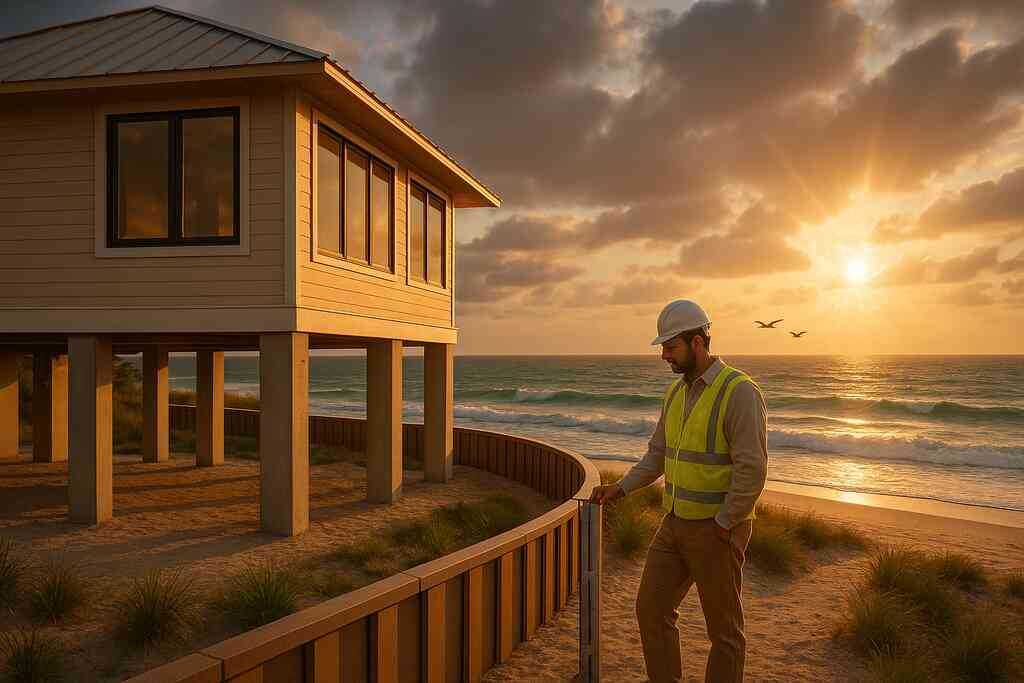
Building on the Beach Without Breaking the Rules
Coastal construction in South Florida is exhilarating—until the permitting file lands on the desk. This guide explains how experienced local contractors read, interpret, and satisfy the region’s uniquely strict building codes while still delivering homes that feel like effortless resort retreats.
Why Coastal Code Compliance Is Non-Negotiable
South Florida sits inside the High Velocity Hurricane Zone (HVHZ). Wind gusts can top 180 mph, storm surge can reach second-story windows, and salt spray corrodes unprotected metal in months. The Florida Building Code (FBC) answers those threats with mandates for impact-rated openings, continuous load paths, corrosion resistance, and elevated finished-floor heights.
Ignoring even a small section of the code triggers stop-work orders, delays closings, and voids insurance coverage. Conversely, a thoroughly documented, code-compliant build earns:
- Lower windstorm premiums once a proper mitigation inspection is filed.
- Faster lender approvals because structural risk is reduced.
- Higher resale value thanks to verifiable durability.
The Four Pillars of Coastal Compliance
1. Florida Building Code, 8th Edition (2026)
Every contractor begins with the statewide baseline. Chapters 16 and 20 spell out wind design pressures, roof uplift resistance, and corrosion-proof connections. In the HVHZ, most prescriptive options disappear; engineered calculations are expected.
2. Miami-Dade Notice of Acceptance (NOA)
Many assemblies—roof tiles, windows, doors, anchors—must carry a current NOA or equivalent product-approval report. The NOA links a specific installation method to a tested pressure rating. Field crews must follow that method exactly: the same nail type, pattern, embedment depth, and sealant.
3. FEMA Flood Regulations
Oceanfront or Intracoastal lots typically fall inside a Special Flood Hazard Area. A licensed surveyor supplies an Elevation Certificate, confirming slab height above Base Flood Elevation. Enclosures below design flood level must use breakaway walls or flood vents, and mechanical equipment must sit on elevated platforms.
4. Local Amendments and Bulletins
Cities such as Miami, Fort Lauderdale, and Boca Raton issue supplements that tighten the baseline code—often with little publicity. Effective contractors subscribe to municipal email bulletins, attend quarterly code-official roundtables, and maintain a searchable archive of interpretations for quick reference on site.
Step-by-Step: How a Veteran Builder Moves from Concept to C.O.
Concept & Feasibility
- Zoning Review – Confirms height limits, setbacks, and shoreline construction control lines.
- Preliminary Wind Study – An engineer models site exposure (open terrain vs. protected) to estimate roof and wall pressures early.
- Flood Map Check – Identifies required finish-floor elevation and potential foundation type.
Design Development
- Structural Engineer selects connectors, sheathing thickness, and uplift hardware matched to calculated pressures.
- Architect integrates impact-rated windows, flood vents, and corrosion-resistant cladding from the outset—avoiding costly redesign later.
Permitting Package
A complete submission typically includes:
- Signed and sealed architectural, structural, mechanical, electrical, and plumbing drawings.
- Product approvals for every exterior component.
- Energy calculations acknowledging elevated wind-load glazing.
- Recorded Notice of Commencement (required before inspections can be scheduled).
Field Execution & Documentation
- Pre-Pour Photo Log – Crews photograph strap and hold-down locations before concrete or drywall hides them.
- Daily Weather Checks – High winds can compromise fresh adhesive or sprayed insulation; work may pause when gusts exceed 30 mph.
- Third-Party Engineering Visits – Many municipalities now require private engineers to verify tie-downs, curtain-wall anchorage, and roof dry-in before city inspectors arrive.
- Cloud-Based Recordkeeping – Time-stamped photos, material invoices, and inspection reports live in a shared folder so lenders and owners can review progress remotely.
Final Inspection & Certificate of Occupancy (C.O.)
After mechanical systems test out and landscaping meets stormwater rules, the city issues the C.O. A separate wind-mitigation inspection follows for insurance purposes, confirming all impact openings, roof-to-wall connections, and secondary water barriers.
Common Code Missteps—and How Pros Avoid Them
| Misstep | Consequence | Pro action |
|---|---|---|
| Substituting a window with no matching NOA | Field rejection, delayed closing | Verify approval numbers on delivery tickets and cartons before installation |
| Forgetting sill pan flashing under sliders | Hidden leaks, framing rot | Add manufacturer-recommended pan flashing detail to drawings and pre-install checklist |
| Using interior-grade fasteners on coastal exterior trim | Rapid corrosion, warranty claims | Stock only Type-316 stainless or ceramic-coated screws for exposed applications |
| Placing A/C compressors at grade in V-zones | Equipment loss, code violation | Mount on engineered platforms above design flood elevation |
Choosing the Right Contractor
A polished website is not enough. A true coastal specialist will:
- Present recent inspection reports showing passed HVHZ structural stages.
- Provide sample photo logs demonstrating thorough documentation.
- List preferred vendors for impact glass, uplift hardware, and marine-grade finishes.
- Hold regular training sessions so superintendents stay current with 2026 code amendments.
When interviewing, ask how the firm tracks code changes. The best answers involve internal databases, direct relationships with building officials, and participation in professional associations.
The Payoff: Homes That Weather the Worst
A South Florida house built to the letter of the coastal code looks almost identical to one that is not—until a hurricane arrives. Uplift-rated roofs stay attached, impact glass remains intact, and elevated slabs shrug off floodwater. Owners return after the storm to sweep the patio instead of filing major insurance claims.
That resilience is no accident; it is the result of disciplined, code-driven construction from day one. By partnering with contractors who treat compliance as a craft, not a chore, coastal residents secure both peace of mind and long-term property value.
Key Takeaways
- The HVHZ demands engineered solutions for wind, water, and corrosion.
- Miami-Dade NOAs dictate specific installation methods that must be followed precisely.
- Early coordination among architect, engineer, and builder prevents expensive mid-build changes.
- Detailed photo documentation and third-party inspections accelerate approvals and insurance underwriting.
- Contractors who continuously monitor code updates deliver safer, more valuable homes.
Staying ahead of the ever-evolving coastal code may feel daunting, yet hundreds of successful projects prove it is entirely achievable. With the right expertise and a proactive mindset, building beside the Atlantic can be as secure as it is beautiful.
How South Florida Contractors Navigate Complex Coastal Codes


Comments
Post a Comment