South Florida Homes: Choosing Builder-Grade or Custom
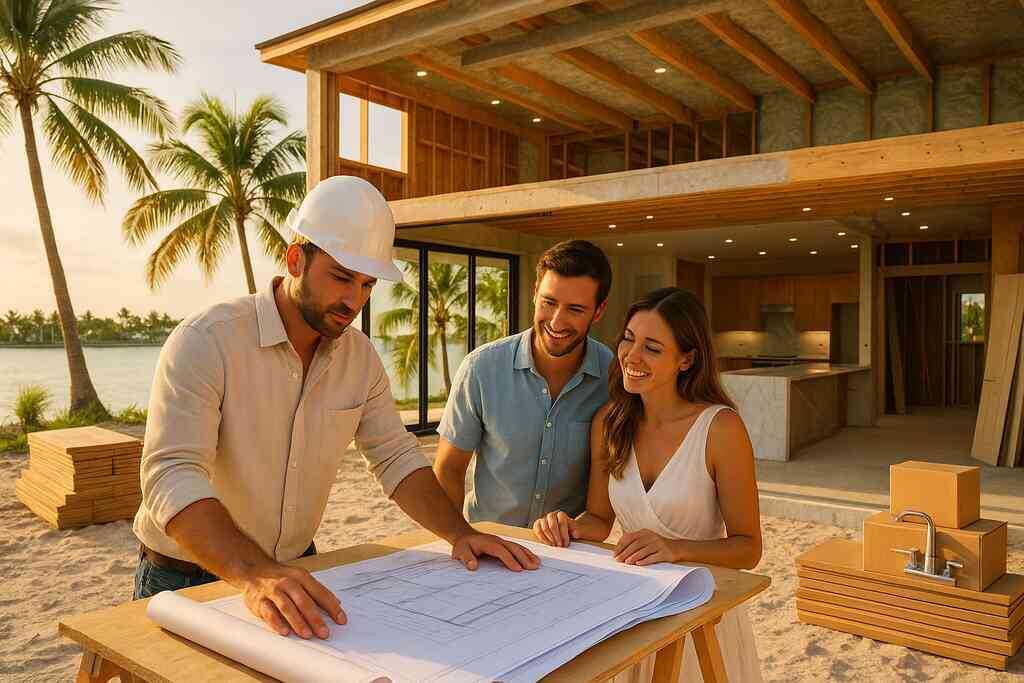
Builder-grade packages promise speed and a predictable price tag, yet many coastal buyers quickly ask whether a custom build—or a custom-level renovation—will serve them better. This guide looks at the trade-offs through a South Florida lens, where humidity, high-velocity winds, and salt spray complicate what might be a simple choice in milder climates.
What “Builder-Grade” Really Means
A production builder uses standardized floor plans, pre-selected materials, and repeatable construction details. That efficiency lowers overhead, but it also locks in decisions long before the slab is poured.
Typical builder-grade characteristics:
- Hollow-core interior doors and basic chrome hardware
- Commodity cabinets with thin-veneer faces and limited finish options
- Low-tier porcelain or level-one granite counters
- R-value insulation that meets minimum code but not much more
- A single HVAC zone sized for average conditions rather than true load calculations
These items work, yet they leave little flexibility for owners who value acoustics, energy efficiency, or sophisticated design.
South Florida’s Climate Challenges
Coastal parcels from Miami to Boynton Beach battle moisture on several fronts: horizontal rain, salt-laden air, and relentless UV exposure. Materials that pass muster in a dry inland suburb often show early failure here—think swollen MDF trim or pitted door hardware. Custom specifications let owners swap those vulnerable elements for:
- Solid tropical hardwood doors that resist warping
- Marine-grade stainless or powder-coated hardware
- Closed-cell spray foam in roof decks for higher moisture control
- Multi-zone HVAC with dehumidification settings tuned to each floor
By designing around microclimate data—prevailing winds, solar orientation, and flood elevation—a custom builder reduces future repair cycles and insurance claims.
The Hidden Cost of Allowances
Many production contracts include allowances for flooring, lighting, or plumbing fixtures. The number may look generous until the client visits a showroom and discovers the allowance covers only entry-level selections. Upgrades must then be paid out of pocket, often at retail pricing.
A transparent custom proposal, in contrast, lists finished unit prices up front. Owners can change line items, but they do so with full knowledge of cost impact before construction starts. That clarity minimizes late-stage change orders—the number-one cause of budget creep on South Florida projects.
Quick Tip
If an allowance is unavoidable, request that the builder supply the material list showing square footage, linear footage, or fixture counts assumed. You can then verify whether the allowance reflects real marketplace pricing.
Cost per Square Foot—A Useful but Limited Metric
Shoppers love to compare homes by cost per square foot, yet the number becomes skewed the moment a project requires impact glass, deeper pilings, or elevated finished-floor heights. Waterfront lots in Boynton Beach, for example, may need augered piles forty feet deep. That line item adds little square footage but pushes the average cost sharply upward.
A better analysis pairs cost per square foot with life-cycle value:
- Lower insurance premiums from Miami-Dade-rated roof systems
- Energy savings from high-performance windows and spray-foam insulation
- Reduced maintenance when using composite exterior trim or stainless fasteners
Over a 10- to 15-year horizon, the custom package can pencil out ahead even if the day-one price tag looked higher.
Hurricane-Resistant Standards: Code Minimum vs Custom Maximum
Florida Building Code now requires impact-rated openings in most coastal areas. Still, there is a gap between “code minimum” and “Miami-Dade large-missile” performance. Custom builders often specify:
- ¾-inch laminated glass with a higher design-pressure rating
- Stainless steel anchors instead of electro-plated fasteners
- Continuous structural load paths verified by third-party engineers
Those upgrades add resilience, shorten post-storm downtime, and safeguard resale value. Insurance carriers take notice, offering discounts that amortize the upfront premium.
Lifestyle Flexibility
Production plans rarely deviate from their original layouts because each change disrupts the builder’s assembly-line rhythm. Need a wider kitchen, a home office with extra soundproofing, or a first-floor in-law suite? Every deviation triggers an addendum fee—if the builder agrees at all.
Custom design starts with your program: how you entertain, work, or retreat. Open-concept spaces can be paired with hidden pocket doors for acoustic control. Secondary wet bars might be positioned to capture an intracoastal sunset. These features transform a house from floor-plan number 37B into a tailored living environment.
When a Hybrid Approach Makes Sense
Not every buyer has the appetite for an all-custom build. In many communities, a smart compromise is to purchase a well-located builder-grade home, then schedule targeted upgrades with a local renovation contractor:
- Replace builder cabinets with moisture-resistant plywood boxes and marine hinges.
- Add a standing-seam metal roof during re-roof season to leap ahead of code changes.
- Upgrade to multi-pane impact sliders that improve airtightness and indoor-outdoor flow.
- Install a whole-house dehumidifier plumbed to exterior drains, sparing the HVAC from heavy humidity loads.
Because these elements do not require structural rework, they can often be executed while you occupy the space.
Key Questions to Ask Any Contractor
- How are allowances structured, and what products are assumed in those figures?
- Will the estimate show separate line items for impact glass, roof tie-downs, and pile depth?
- Are you using Miami-Dade-approved components, or simply products that "meet code"?
- What is the plan for moisture management—both vapor and liquid water?
- How will change orders be priced and communicated?
Clear answers establish trust and protect both schedule and budget.
Bottom Line
Builder-grade homes can deliver quick occupancy and predictable financing. In South Florida, however, climate stressors and evolving hurricane codes often expose the limitations of one-size-fits-all construction. A custom build—or a staged custom upgrade plan—lets owners match their home to the environment, their lifestyle, and long-term cost expectations. The smartest path is to weigh upfront savings against durability, insurance, and daily comfort, then choose the mix of standard and custom features that delivers the best overall value.
Builder Grade vs Custom Set by South Florida Contractors
Comments
Post a Comment