South Florida HVAC Strategies for Efficiency and Resilience
Cooling Comfort Built for Coastal Life
South Florida’s heat and humidity can turn even a brand-new air-conditioning system into an underperformer if it is not designed for the region’s unique conditions. This overview explains how experienced local contractors balance energy efficiency, salt-air durability, and healthy indoor air—so your home stays cool without surprise breakdowns or soaring utility bills.
1. Understand the Climate Before Buying Equipment
The typical summer day in Palm Beach County brings temperatures above 90°F with outdoor humidity over 70 percent. That combination creates a latent load—the moisture your air conditioner must remove in addition to sensible heat. A unit sized only for temperature will short-cycle, leave rooms clammy, and waste electricity. Reputable contractors therefore:
- Run room-by-room Manual J load calculations, not rough square-foot rules.
- Recommend high-SEER, variable-speed heat pumps that throttle down during mild hours yet ramp up when storms push humidity inside.
- Add whole-house dehumidifiers if the structure’s envelope or lifestyle (frequent cooking, large aquariums, etc.) keeps indoor RH above 55 percent.
2. Protect Outdoor Units From Salt and Storms
Sea breezes carry salt that corrodes condenser fins, cabinet panels, and even fasteners. To keep equipment running beyond the usual 8- to 10-year coastal lifespan, seasoned installers specify:
- Powder-coated or marine-grade aluminum coils that resist pitting.
- Stainless-steel screws and base pans to prevent galvanic reactions.
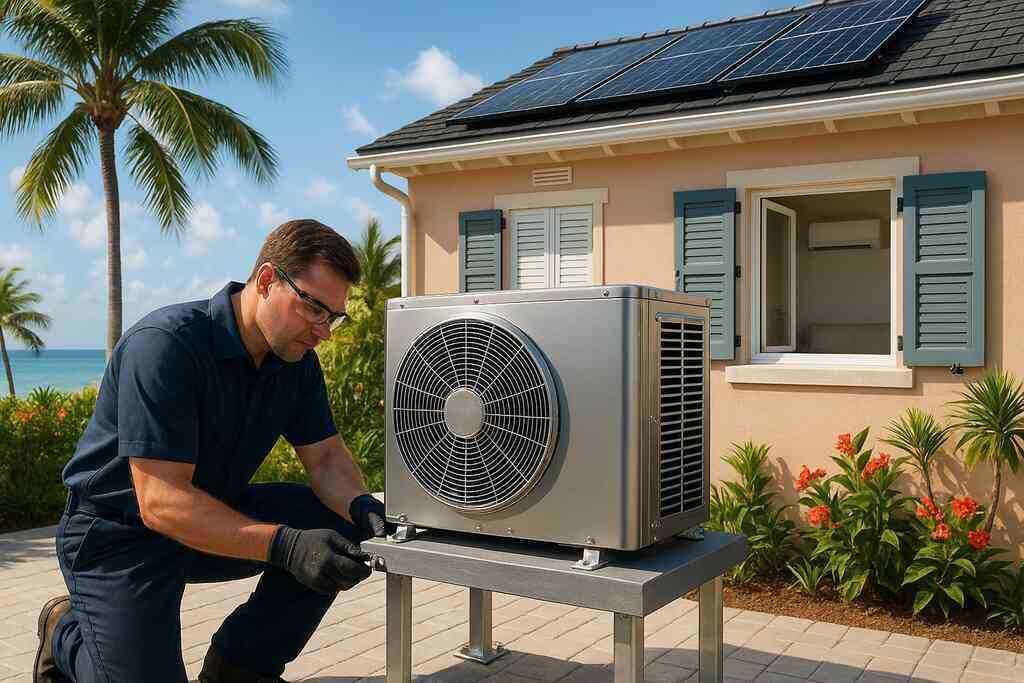
- Elevated hurricane-rated stands that allow floodwater to pass underneath and make coil rinsing easier.
A quick garden-hose rinse every few weeks knocks salt crystals off fins. During annual maintenance, technicians follow a checklist that includes alkaline coil cleaners and inspection of sacrificial anodes where fitted. These small tasks preserve heat-transfer efficiency and delay costly compressor failures.
3. Address Ductwork—Often the Hidden Energy Leak
Florida attics can hit 130°F by afternoon. Any supply duct running through that space must be properly sealed and insulated; otherwise the system loses cooling before the air even reaches living areas. Common upgrades include:
- R-8 duct insulation instead of the code-minimum R-6.
- Mastic-sealed joints tested with a duct blaster to verify less than 5 percent leakage.
- Converting to a sealed, conditioned attic by moving ductwork inside the building envelope when reroofing or renovating.
Improved airflow not only cuts energy use but also balances rooms that were formerly too hot or too cold.
4. Balance Ventilation and Filtration for Indoor Health
High humidity fosters mold, dust mites, and bacterial growth. Simultaneously, today’s tighter homes trap cooking by-products and cleaning chemicals. South Florida HVAC pros create a clean-air strategy that ties into the cooling system:
- Mechanical fresh-air intakes with MERV-13 filters dilute indoor pollutants while capturing pollen.
- Energy-recovery ventilators (ERVs) pre-condition incoming air, so the main AC does not shoulder the entire moisture load.
- UV-C lights or photocatalytic oxidizers inside air handlers slow bio-film on coils, maintaining heat-transfer efficiency and protecting respiratory health.
5. Match Controls to Rapid Weather Swings
A cloudburst can drop outdoor temperatures 15°F in minutes. Basic thermostats respond slowly, leading to overcooling then reheating. Smart controls designed for humid climates rely on separate temperature and humidity setpoints. Features worth requesting include:
- Adaptive algorithms that learn how quickly your home gains heat.
- Integrated dehumidification mode that continues low-speed fan operation even when the compressor cycles off.
- Wi-Fi alerts for blocked condensate drains—common during pollen season—that can cause ceiling leaks if ignored.
6. Work With a Contractor Who Understands Permit and rebate Nuances
Municipalities from Boca Raton to Jupiter enforce hurricane wind-load calculations, equipment tie-downs, and energy code paperwork. A contractor who handles the entire submittal package prevents project delays and secures available utility rebates for high-efficiency units. Ask for:
- Proof of active state and county licenses.
- Photographs of recent installations in similar coastal settings.
- A line-item proposal that lists equipment model numbers, SEER2 ratings, and warranty terms.
7. Plan Routine Service—The Least Expensive Insurance
Even the best hardware suffers in the tropics if ignored. Schedule two professional tune-ups each year: one before the cooling season ramps up and another after hurricane season ends. A typical maintenance visit covers:
- Coil cleaning and salt neutralization.
- Refrigerant charge verification with digital gauges.
- Static pressure measurement to catch duct restrictions early.
- Inspection of surge protectors and float switches.
Keeping detailed service records protects manufacturer warranties and gives future buyers confidence when it is time to sell.
Key Takeaways
- Size equipment for both heat and humidity—not just square footage.
- Choose corrosion-resistant materials and raise condensers above flood level.
- Seal and insulate ducts; move them inside the conditioned space when possible.
- Combine ventilation, filtration, and smart controls for healthy, efficient air.
- Use licensed contractors familiar with South Florida codes and rebates.
- Maintain the system twice a year to avoid performance decline.
South Florida’s climate punishes poorly planned HVAC systems, yet it rewards smart design with lower bills and greater comfort. A thoughtful strategy that blends efficiency, resilience, and indoor health ensures your home remains an oasis no matter how high the heat index climbs.
HVAC Strategies from South Florida Contractors Near You


Comments
Post a Comment