Eco Roof Coatings Reviewed by South Florida Contractors
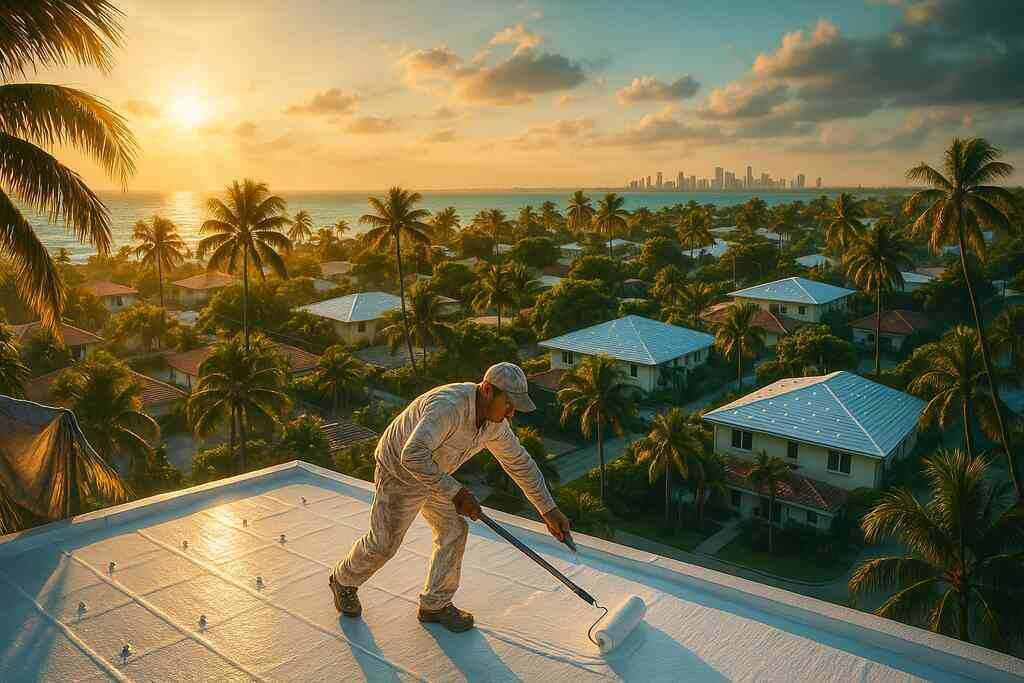
Eco Roof Coatings Reviewed by South Florida Contractors
Eco roof coatings have moved from a niche product category to a standard specification across South Florida construction projects. Contractors, homeowners, and municipal planners alike are recognizing that sustainable roofing materials do more than reduce energy bills — they also address the region's unique climate challenges, from intense UV exposure to tropical storms and salt-laden air.
This overview breaks down what eco roof coatings are, how South Florida contractors evaluate and apply them, and why the momentum behind sustainable roofing shows no signs of slowing in 2026.
Why South Florida Is Leading the Sustainable Roofing Shift
South Florida's climate creates roofing conditions that most of the country simply does not face. Rooftop surfaces absorb extreme heat, endure hurricane-force winds, and battle persistent humidity and algae growth. Traditional dark roofing materials compound the problem by contributing to urban heat islands that raise neighborhood air temperatures.
Neighborhood associations, insurance carriers, and local governments have all started responding. Satellite heat mapping data has made the rooftop heat island problem impossible to ignore. Many coastal communities are now mandating solar-reflective finishes on new and replacement roofs.
Boca Raton served as an early proving ground. Commercial property managers there documented double-digit reductions in peak cooling costs after switching to cool roof systems. That real-world data convinced neighboring municipalities and eventually influenced statewide procurement language to include Energy Star certified roof coatings as a baseline standard.
What Makes an Eco Roof Coating Worth the Investment
Not every product that carries a green label delivers meaningful results. South Florida contractors evaluate eco coatings based on several performance criteria:
- Solar reflectance index (SRI): Higher values indicate better heat deflection. Coatings with ceramic microbeads achieve some of the strongest reflectance numbers.
- Elastomeric flexibility: Quality coatings stretch and recover without cracking, which matters greatly in a region where thermal expansion and wind stress cycle constantly.
- Moisture barrier performance: Coatings must resist water intrusion from both driving rain and persistent humidity without trapping moisture beneath the membrane.
- Algae and mildew resistance: South Florida's humidity creates ideal conditions for biological growth. Coatings with antimicrobial additives maintain reflectance performance over time.
- Adhesion strength: Field crews run pull tests to verify that coatings bond properly to the substrate. Poor adhesion dramatically shortens service life.
Contractors also check mil-thickness during application, not just at final inspection. If film build falls short of manufacturer specs, solar reflective performance drops and warranty eligibility may be voided.
Low VOC Formulations and Indoor Air Quality
Families living near the Atlantic coast have come to expect low odor during renovation projects. Older roofing sealants off-gassed heavily, leaving unpleasant fumes beneath soffits for days after application. Modern low VOC roof sealants have largely solved that problem.
Water-borne polymer formulas cure faster and produce far less off-gassing than solvent-based predecessors. Homeowners with asthma or respiratory sensitivities particularly benefit from this shift. Delray Beach contractors have made low VOC sealants their default choice, aligning with indoor air quality rating programs that residential projects increasingly pursue.
That said, proper ventilation during curing remains important. Responsible contractors tape return vents, run portable exhaust fans, and schedule application windows that take advantage of favorable wind direction. Even the cleanest product benefits from good site management.
Hurricane Resistance and Eco Roofing: A Combined Approach
Sustainability and storm resilience are no longer separate conversations in South Florida. Structural engineers now integrate reflective membrane systems with upgraded fastening schedules and sealed ridge vents. The goal is a roof assembly that deflects heat, sheds water efficiently, and stays intact under significant wind uplift loads.
Moisture barrier coatings designed for coastal properties are formulated to flex under wind pressure rather than crack or delaminate. Lower deck temperatures — a direct result of reflective coatings — also reduce the thermal expansion and contraction cycles that weaken fastener connections over time.
Practical Takeaways for Homeowners and Property Managers
If you are planning a roof replacement or major repair in South Florida, a few practices are worth keeping in mind:
- Request product data sheets and verify that coatings carry Energy Star or Cool Roof Rating Council certification.
- Ask your contractor to document mil-thickness readings during and after application.
- Prioritize low VOC products if occupants will remain in the building during work.
- Confirm that the selected system is compatible with your specific roofing substrate, whether metal, modified bitumen, or concrete.
- Consider the full lifecycle cost, not just the upfront price. Energy savings, reduced maintenance, and potential insurance benefits often justify the premium.
South Florida's roofing industry in 2026 reflects a genuine shift toward systems that perform under pressure while reducing environmental impact. Eco roof coatings are a practical, well-documented part of that shift — and the contractor community's experience with them continues to grow.
Review of Eco Roof Coatings with South Florida Contractors


Comments
Post a Comment