Prefab vs. Masonry: A 2026 Guide for South Florida Builds
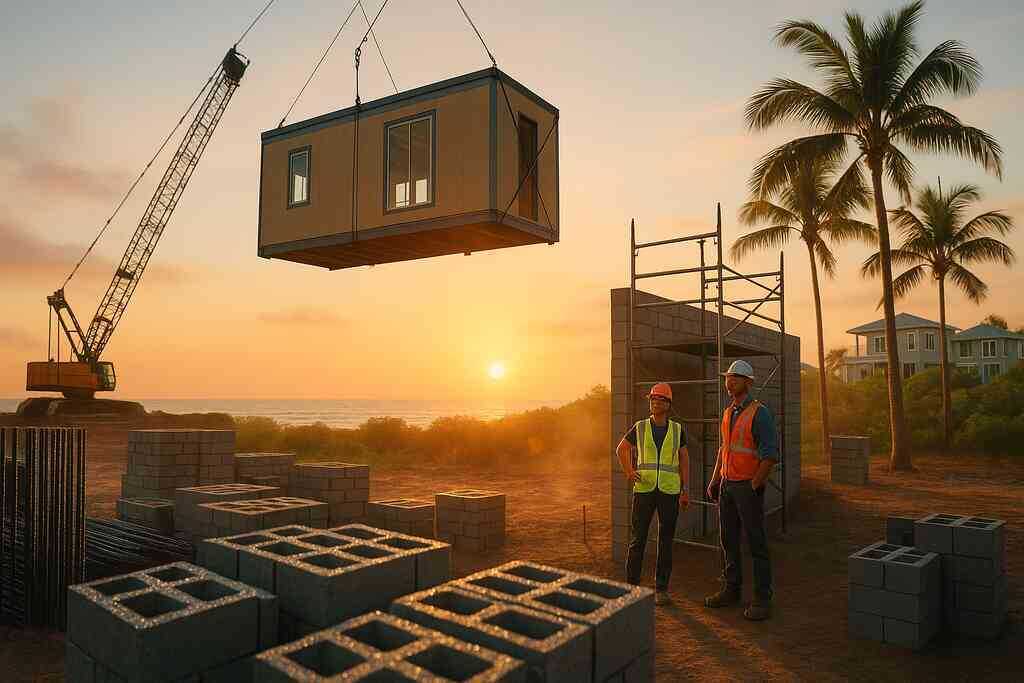
South Florida’s builders face a recurring question: should the next project rise from traditional concrete block or arrive on-site as a factory-built prefab system? This 2026 overview unpacks how local contractors weigh cost, speed, code, and long-term performance when choosing between the two.
The Core Difference in Plain Terms
• Masonry (CMU): Concrete blocks stacked and mortared on the jobsite.
• Prefab (Panelized or Modular): Walls or volumetric modules built in a factory, shipped, and quickly assembled on foundations.
Each method can meet hurricane-zone codes, but the path to get there—and the pressures on schedule, labor, and financing—look different.
Why Prefab Is Gaining Ground in South Florida
- Schedule Compression – Panelized wall sections arrive pre-plumbed, pre-wired, and sometimes even with windows installed. Crews can “dry-in” a single-family shell in a matter of days, a key advantage during summer storm cycles.
- Controlled Labor Environment – Carpenters and electricians work under roof instead of full sun. That helps factories retain talent at a time when field labor is scarce.
- Predictable Quality – Jig tables, automated saws, and third-party inspections reduce dimensional errors that often drive rework costs on traditional builds.
- Weather Risk Mitigation – Less time with open framing exposed to rain lowers the chance of mold or material damage claims.
Where Concrete Block Still Shines
- Cultural Trust – Many homeowners grew up seeing CMU homes withstand hurricanes. That familiarity continues to influence lending and resale confidence.
- Thermal Mass & Sound Control – Solid block walls dampen street noise and stabilize indoor temperatures, which can cut HVAC cycling.
- Fire and Impact Ratings – While prefab assemblies can meet the same code, inspectors still point to masonry’s decades of field data in the region’s toughest conditions.
- Architectural Flexibility on Facades – Stucco over block remains a staple look from Miami to West Palm.
Cost per Square Foot: A Closer Look
Actual numbers float with material markets and finishes, but recent bids often place a dried-in shell in these ranges:
- CMU: moderate base price, rising with intricate bands, parapets, and scaffold logistics.
- Panelized prefab: slightly higher factory charge but fewer on-site labor hours.
When analysts tally scaffolding, weather delays, and extended general-conditions costs, many projects end within a 5% swing either way. The deciding factor usually shifts to schedule or lender preference, not raw material cost.
Logistics and Site Realities
• Urban Infill Lots – Narrow streets may limit crane access for volumetric modules, nudging owners back to block or smaller panel sets.
• Barrier Islands – High wind exposure can make lighter prefab units easier to lift and set quickly between gusts.
• Multi-Story Condos – Lighter modular stacks can reduce foundation dimensions, adding salable square footage, but require early coordination with structural engineers and code officials.
Labor Market Pressures
Florida’s pool of seasoned masons is shrinking faster than new apprentices arrive. Factories can train multi-trade teams indoors, smoothing out workflow. This labor dynamic explains why many mid-rise developers now specify hybrid structures: a concrete podium for parking levels with prefab upper floors.
Code and Insurance Considerations
Building departments primarily care about structural integrity, impact resistance, and envelope performance.
• Wind Load – Both systems must pass 180-mph design wind pressures under the latest Florida Building Code.
• Flood Zones – Elevation requirements apply regardless of wall type, but lighter prefab elements sometimes simplify elevated pier or pile foundations.
• Insurance Discounts – Some underwriters still apply slight premium reductions to masonry walls, yet advanced prefab assemblies with tested impact glass are closing that gap.
Sustainability Snapshot
Prefab factories optimize material cuts, reducing waste by up to 20% compared to on-site framing. Masonry offers strong thermal mass and extended lifecycle values. Either can earn points under current Green Building Coalition checklists when detailed correctly.
Decision-Making Framework for Owners
- Timeline Sensitivity – Need keys faster? Prefab often wins.
- Financing & Appraisals – If lenders lean conservative, block can smooth approvals.
- Site Constraints – Measure crane swing radius and street width early.
- Architectural Vision – Complex curves may favor hand-laid masonry; repetitive unit plans suit factory panels.
- Resale Expectations – Educate future buyers on prefab durability to protect property value.
Hybrid Approaches: Best of Both Worlds
Many contractors now combine methods: CMU stairwells and elevator shafts for rigidity, panelized exterior walls for speed, and prefab roof trusses to button up quickly. This mix can unlock schedule savings without abandoning masonry where it matters most.
Final Takeaway
In 2026, it is no longer a question of which system is superior across the board. Instead, South Florida contractors match the method to the project’s unique mix of timeline, budget tolerance, lot access, and buyer expectations. By understanding the real trade-offs—not just cost per square foot but labor scarcity, weather risk, and code nuance—owners can collaborate with builders to choose a structure that delivers both peace of mind and long-term value.
For any upcoming build, request parallel bids that include a detailed schedule, logistics plan, and lifecycle performance notes. Seeing both options quantified side by side is the surest way to make an informed call.
How South Florida Contractors Compare Prefab To Masonry 2026


Comments
Post a Comment