Preventing Prefab Wall Failures in Humid South Florida Homes
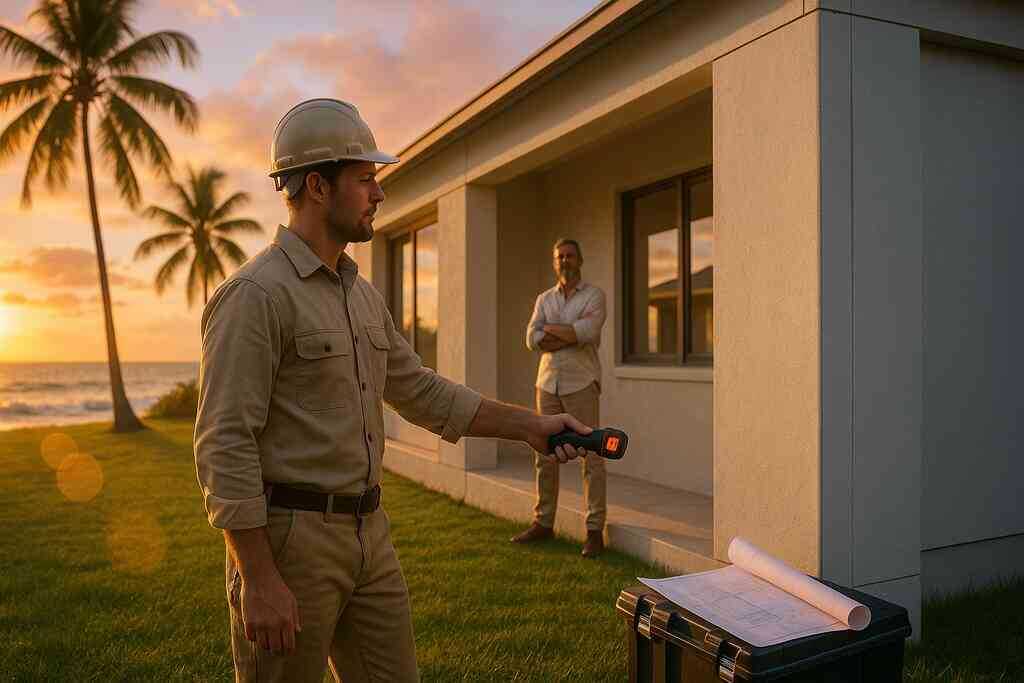
Prefab wall failures can develop quickly in South Florida’s humid, salt-rich climate. This guide outlines how moisture, wind pressure, and workmanship converge to damage modular wall systems—and what local contractors and homeowners can do about it.
Why Humidity and Salt Accelerate Damage
South Florida rarely sees a true dry season. Warm air routinely carries enough water vapor to push relative humidity above 70 percent, even at night. When that vapor meets the cooler interior side of a structural insulated panel (SIP) or other factory wall, it condenses into liquid. Over time condensation leads to:
- Swollen oriented-strand board (OSB) skins that lose strength.
- Rusted screws and splines that loosen under load.
- Degraded foam cores that no longer provide full R-value.
Sea-spray compounds the problem. Chloride ions settle on exterior fasteners and begin corroding them almost immediately. As hardware weakens, storm forces can pry panels apart, opening new pathways for rainwater.
Common Early-Warning Signs
Contractors who specialize in prefab repairs look for small cues well before stains appear on drywall:
- Musty odor at baseboards – often the first sign that panel cavities are damp.
- Hairline caulk cracks around outlets – a hint that internal movement is stressing finish layers.
- Hollow tapping sounds on windy nights – loose clips or screws rattling inside expanded holes.
- Thermal imaging cold streaks – insulation gaps that reveal where water displaced or compressed foam.
Scheduling an inspection when any of these appear can prevent larger structural fixes later.
Moisture Pathways Most Owners Miss
Capillary gaps at panel joints
Factory tape or gasket systems look airtight, yet tiny misalignments allow wind-driven rain to wick inward. Once inside, liquid travels along wood fibers and fastener threads, making localized leaks a building-wide concern.
Wiring and plumbing chases
Every cut through a SIP skin is a potential chimney for moist air. If the gap around the conduit is not fully sealed with an approved vapor retarder, humid air rides pressure differences straight into the core.
Sealant cure windows
High afternoon humidity slows curing of many exterior sealants. When crews apply caulk outside the manufacturer’s recommended dew-point range, adhesion suffers and the joint can fail within a year.
The Role of Workmanship
Climate conditions cannot be changed, but job-site choices can. Experienced South Florida builders integrate building-science data from design through punch-out:
- Scheduling installs at target dew-points: Panels are set when interior and exterior temperatures are closest, reducing moisture drive while seams are still open for inspection.
- Using vapor-permeable WRBs paired with smart retarders: This allows trapped moisture to dry toward either side depending on seasonal conditions.
- Specifying stainless or ceramic-coated fasteners: Added cost is minor compared with opening walls to replace rusted screws.
- Pressure-testing assemblies before cladding: A blower-door or fog test locates leaks while they can still be sealed from the outside.
Hurricane Pressure and Delamination
Storm gusts create rapid pressure flips across exterior walls. In a fraction of a second, the exterior can switch from positive to strong negative pressure, trying to suck panels outward. Each cycle slightly shears adhesive bonds between the foam core and its skins. After several seasons:
- Micro-separations expand into visible cracks.
- Exterior stucco or fiber-cement begins to spiderweb.
- Wind and wind-borne debris find easier purchase on loosened cladding.
Regular torque checks on hold-down screws and periodic infrared scans can catch early delamination and allow epoxy injection or localized re-fastening rather than wholesale replacement.
Maintenance Steps for Homeowners
- Monitor indoor humidity: Keep interior RH below 55 percent with balanced ventilation and a dehumidifier during extended rainy spells.
- Inspect caulks and flashings every spring: Look for shrinkage, gaps, or discoloration and address them before hurricane season.
- Rinse metal hardware: A gentle freshwater rinse of exposed fasteners after coastal storms helps remove chloride deposits.
- Log exterior wall temperatures: Portable infrared thermometers can identify hot or cold spots that betray wet insulation or missing foam.
Selecting the Right Contractor
Price alone rarely predicts performance when dealing with prefabricated walls in this climate. Consider asking candidates:
- Do you track dew-point forecasts when scheduling sealant work?
- Which moisture meters do your crews carry, and how are results documented?
- What fastener coatings and warranty terms do you specify for coastal projects?
- Can you provide thermographic reports from past installations?
Contractors who answer confidently and show data from similar jobs demonstrate the depth of experience needed to keep panel systems dry and tight.
Key Takeaways
- South Florida’s warm, salty air finds its way into even tightly built prefab wall systems.
- Early red flags—odors, small cracks, or thermal anomalies—should trigger immediate investigation.
- Proper sequencing, pressure testing, and corrosion-resistant hardware extend wall life far better than any single “maintenance-free” marketing claim.
- Homeowners who track indoor humidity, inspect joints regularly, and hire builders versed in hygrothermal science significantly reduce long-term repair costs.
Understanding how moisture migrates and how storms stress factory panels allows informed decisions. With proactive maintenance and science-based construction practice, prefab walls can serve South Florida homes reliably for decades, even in the face of relentless heat, humidity, and hurricanes.
Prefab Wall Failures Near Me And South Florida Contractors


Comments
Post a Comment