Project Management Tips South Florida Contractors Swear By
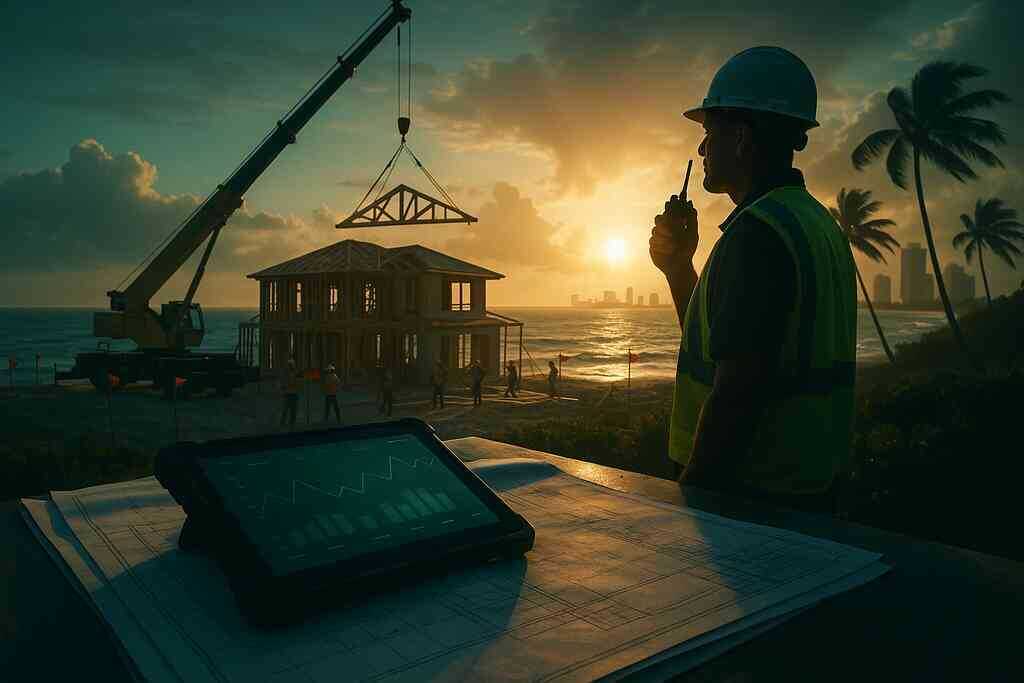
South Florida Contractors’ Playbook for On-Time, On-Budget Builds
Coastal codes, sudden squalls, and fast-changing permit windows make South Florida one of the toughest places to run construction projects. Yet the region’s best contractors routinely hand over keys before hurricane season and with minimal change-order drama. This guide breaks down the scheduling habits and field hacks they rely on every day.
1. Build the Schedule Backward From Final Inspection
Seasoned superintendents start by circling the target certificate-of-occupancy date, then work backward to map every predecessor activity. The method forces clear durations, float, and dependencies before the first shovel of sand is moved.
- Allocate at least two weeks of weather float during June–November, the core of the 2026 hurricane season.
- Anchor structural inspections early so trades are not idled waiting for sign-offs.
- Treat supply lead times—especially impact windows and mechanical equipment—as critical path items, not secondary tasks.
The outcome is a living roadmap that highlights risk points well before they threaten the timeline.
2. Pull-Planning: Turning the Calendar Into a Conversation
A schedule only works when every foreman buys in. Weekly pull-planning sessions translate the master Gantt into granular, two-week sprints.
- Trade partners commit in person to start and finish dates.
- Constraints (permit reviews, HOA rules, material ETA) are surfaced early and assigned an owner.
- Color-coded sticky notes or digital boards make progress visual for non-technical stakeholders.
Because commitments are made publicly, accountability rises and finger-pointing drops. Clients also gain confidence when they see their Boca Raton remodel broken into bite-size deliverables instead of an abstract bar chart.
3. Micro-Phasing to Outrun Afternoon Storms
Moisture-laden sea breezes often trigger rain by 2:00 p.m. Rather than lose half a day, South Florida builders split floor plans into two-day micro phases.
- Foundation and slab: Place concrete at dawn, install temporary covers by lunch, and inspect the next morning.
- Framing: Stand and shear one structural bay at a time; immediately fasten a peel-and-stick membrane to protect exposed corners.
- MEP rough-in: Run mechanicals in completed bays while framing continues elsewhere.
This leapfrog approach keeps every crew productive even when clouds build in the afternoon.
4. Spec Materials for Salt, Sun, and Supply Chains
Weather is only half the equation; material selection and procurement complete the picture.
- Corrosion control: Double-galvanize exterior fasteners and wrap exposed rebar to resist salt spray.
- UV defense: Opt for lighter roof colors and high-reflectance paints that slow heat transfer and reduce cooling loads.
- Early release packages: Issue purchase orders for long-lead items (custom glazing, HVAC condensers) as soon as design is 70 percent complete. Waiting for 100 percent drawings often adds 8–12 weeks.
Proper specs protect both the structure and the schedule from surprises.
5. Rolling Three-Week Look-Ahead Calendars
Condos in Boynton Beach limit elevator use; HOAs in West Palm Beach lock gates on weekends. A static baseline cannot capture those moving targets. Project managers therefore publish a rolling three-week look-ahead every Friday.
- Upcoming inspections and deliveries are highlighted in bold.
- Special notes—street closures, holiday work restrictions—appear next to the affected task.
- The document lives in the cloud so supers, estimators, and owners can view it on a phone.
Small, frequent updates drive proactive adjustments instead of reactive apologies.
6. Lean Handoffs Between Trades
Delays rarely happen at the task level; they appear in the gaps between tasks. South Florida contractors close those gaps with lean handoff rules:
- The outgoing trade phones the incoming crew two days before completion.
- Work areas are swept, labeled, and photo-documented before the next trade mobilizes.
- A 30-minute overlap meeting clarifies punch items so rework is minimized.
When a framer hands a dust-free zone to the electrician, productivity jumps and morale follows.
7. Digital Field Tools That Enforce Discipline
Tablets and mobile apps are now standard issue on coastal jobsites.
- Daily logs auto-populate weather data, giving objective proof when storms slow production.
- Geo-tagged photos simplify remote quality checks for owners who may be out of state.
- Push notifications remind subs of safety meetings, inspection times, and material deliveries.
Because data moves in real time, decision-makers steer the project instead of reconstructing events days later.
8. Change-Order Triage to Protect Margin
Coastal builds carry more unknowns—soil variance, permit revisions, surprise corrosion—than inland projects. Smart teams grade every potential change order within 24 hours:
- Must do now: Code-driven fixes that stop work receive immediate pricing.
- Negotiate: Owner upgrades move forward only when funding is confirmed.
- Defer: Non-critical tweaks are logged for end-of-phase bundling, avoiding death by 100 signatures.
Clear triage prevents margin erosion and keeps trust levels high.
9. Hurricane-Ready Contingency Plans
With storms, the question is when, not if. Proactive steps include:
- Stocking tie-down hardware and water pumps on site by June 1.
- Pre-cutting plywood for window protection, labeled by opening.
- Training crews on a 24-hour demobilization checklist that covers cranes, scaffolding, and loose material.
When tropical alerts hit, the project is locked down in hours, not days.
10. Post-Completion Feedback Loop
The final walkthrough is not the end of project management—it is the start of continuous improvement.
- Schedule a 30-day and 11-month warranty review; capture lessons on what weathered well and what did not.
- Feed those insights into the estimating database so the next proposal is more accurate.
- Share distilled takeaways with trade partners to strengthen the entire delivery ecosystem.
Over time, the collective knowledge reduces risk and speeds up every subsequent build.
Key Takeaways
- Start with a backward plan and generous weather float.
- Use weekly pull-planning to align every stakeholder.
- Break scopes into micro phases to keep crews moving during stormy afternoons.
- Combine digital field tools with lean handoffs for friction-free execution.
- Triage change orders and maintain a standing hurricane contingency kit.
Master these habits and South Florida’s climate shifts from unpredictable enemy to manageable variable. Whether you are breaking ground on a custom coastal home or renovating a downtown condo, disciplined project management is the surest path to delivering on time, on budget, and ahead of the next storm.
Top Project Management Hacks By South Florida Contractors


Comments
Post a Comment