South Florida Flooring: Comparing 2026 Contractor Picks
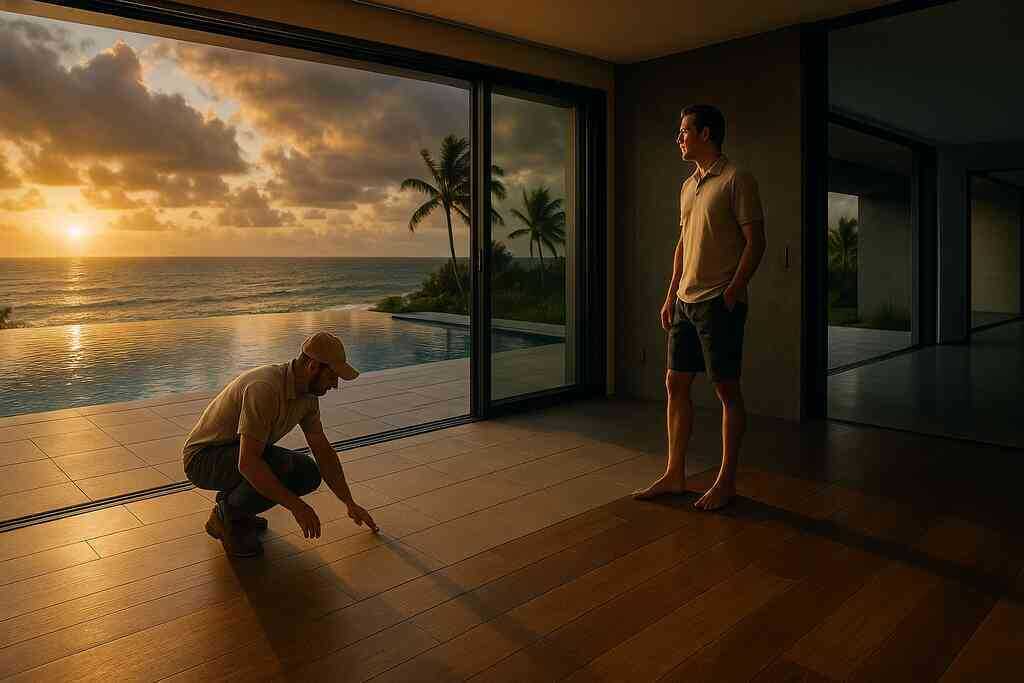
Flooring That Survives South Florida’s Climate
The moment a contractor steps into a home from Jupiter to Key West, one question matters most: can this floor outlast tropical humidity, salt air, and storm season? The materials discussed below dominate 2026 renovation plans because they balance style with proven moisture-management science.
Why Climate Analysis Comes First
South Florida’s average relative humidity hovers near 75 percent, and afternoon showers can soak patios in minutes. When flooring is specified without acknowledging those facts, even premium planks can cup, grow mildew, or separate at the seams. Local pros routinely:
- Review dew-point data before recommending underlayments.
- Design expansion gaps wide enough for seasonal swelling.
- Pair moisture barriers with HVAC zoning so hidden vapor escapes.
A beautiful floor is pointless if it fails the first August heat wave. Every product review below assumes these best practices are in place.
Engineered Hardwood: Real Wood With Hidden Armor
Many homeowners still dream of oak or walnut underfoot, and engineered hardwood makes that possible in a coastal setting.
Construction basics
- Multiple cross-laid veneers resist twisting.
- Factory-applied marine-grade sealant guards all six sides of each plank.
- Tongue-and-groove edges are glued with waterproof adhesive during installation.
2026 design notes
- Wide-plank formats (7–9 in.) remain popular because fewer seams equal fewer weak points.
- Matte UV finishes reduce glare inside glass-heavy rooms and slow color fade.
- Lighter “salt-washed” stains now outpace espresso tones, mirroring beach sand while hiding pet hair.
Pros
- Authentic wood warmth.
- Can be refinished once or twice if surface wear appears.
Cons
- Higher cost than synthetic alternatives.
- Still sensitive to standing water; leaks must be addressed fast.
Luxury Vinyl Plank (LVP) and Rigid-Core SPC: Waterproof Workhorses
LVP earned its reputation by shrugging off pool drips and sand tracked in from the Intracoastal. Stone-plastic composite (SPC) cores take that performance further.
Construction basics
- A photographic layer delivers realistic wood or stone visuals.
- The rigid core is dimensionally stable up to 150 °F, perfect for sunrooms.
- Attached foam backing offers modest sound control—important in multi-story condos.
2026 design notes
- Subtle wire-brushed textures disguise scratches from beach chairs.
- Extra-long planks (up to 72 in.) create coastal loft vibes.
- Seamless indoor-to-lanai transitions use matching exterior-grade nosing.
Pros
- 100 percent waterproof.
- Click-lock edges speed up installs.
- Wide price range fits starter homes and luxury builds alike.
Cons
- Can sound hollow without premium underlayment.
- UV exposure over many years may dull lower-end finishes.
Porcelain Tile: Stone Resilience, Endless Looks
When clients ask for the most durable option possible, many contractors pivot to large-format porcelain.
Performance highlights
- Water absorption rate under 0.5 percent stops swelling.
- High PSI rating withstands rolling patio doors and heavy gym equipment.
- Grout lines now as thin as 1⁄16 in. reduce cleaning headaches.
2026 design notes
- Driftwood and bleached-coral graphics mimic planked wood without warping risk.
- Rectified edges allow tight, modern layouts.
- Outdoor-rated textures let the same tile run from great room to pool deck.
Pros
- Near-zero maintenance beyond routine sweeping.
- Excellent thermal mass for homes using radiant cooling slabs.
Cons
- Hard underfoot; area rugs become necessary in play zones.
- Professional installation required to avoid lippage on oversized formats.
Terrazzo Revival: Mid-Century Style Meets Modern Science
Terrazzo once defined Miami’s art-deco hotels. In 2026 it is back, boosted by greener binders and faster polishing equipment.
Performance highlights
- Continuous pour eliminates seams, blocking water intrusion.
- Shell, marble, or recycled-glass chips create unique patterns.
- Low-VOC epoxy options support healthy indoor air ratings.
Pros
- Can last half a century with periodic resealing.
- Reflective surface brightens deep floor plates, reducing lighting costs.
Cons
- Highest upfront cost on this list.
- Crack-isolation membranes are a must on older slabs.
Bamboo: Sustainable Strength for Modern Builds
Strand-woven bamboo is compressed under extreme heat and pressure, giving it a Janka hardness that rivals Brazilian cherry without the deforestation baggage.
Performance highlights
- Engineered formats feature cross-ply backing to tame humidity.
- Factory sealing keeps moisture out while emitting negligible VOCs.
2026 design notes
- Wide boards in muted caramel finish complement biophilic interiors.
- Pairing with cork underlayment satisfies strict condo sound codes.
Pros
- Fast-growing resource earns LEED points.
- Comparable price to mid-tier hardwood.
Cons
- Color can lighten near large windows unless UV-protective shades are used.
- Requires diligent wipe-ups after major spills to prevent edge swelling.
Choosing the Right Underlayment: The Unsung Hero
Even the best surface will fail without the proper foundation. Contractors typically choose among three systems:
- Rubberized moisture membranes – Channel condensation toward drains while adding sound deadening.
- Cementitious self-levelers – Create perfectly flat slabs for large-format tile.
- Foam or cork acoustical pads – Essential in high-rise buildings governed by IIC and STC requirements.
Tip: Ask your installer to perform a calcium-chloride or relative-humidity test on the slab before finalizing material selection.
Quick Comparison Chart
| Feature | Engineered Hardwood | LVP/SPC | Porcelain Tile | Terrazzo | Bamboo |
|---|---|---|---|---|---|
| Waterproof? | Resistant | Yes | Yes | Yes | Resistant |
| Refinishable | Limited | No | No | Yes (re-polish) | Limited |
| Typical Warranty | 25 yrs | 10–30 yrs | Lifetime | 40+ yrs | 25 yrs |
| Comfort Underfoot | Warm | Moderate | Hard | Hard | Warm |
| Eco Score | Medium | Medium | High (if recycled) | High | Very High |
Final Thoughts
South Florida’s flooring playbook in 2026 is less about one perfect material and more about pairing the right surface with smart moisture management. Engineered hardwood delivers timeless charm when paired with marine-grade sealers. LVP and SPC rule busy households that flow from kitchen to pool. Porcelain provides bulletproof performance for luxury towers, while terrazzo and bamboo satisfy clients who rank sustainability alongside style.
Before signing a contract, confirm that your installer has:
- Conducted slab moisture testing.
- Specified an underlayment that addresses both vapor and sound.
- Planned appropriate expansion gaps around every perimeter.
With those details locked in, the materials above will not just look good on move-in day—they will still be earning compliments long after the next hurricane season has come and gone.
Flooring Types Compared By South Florida Contractors 2026
Comments
Post a Comment