South Florida Hurricane-Ready Roofing: How Contractors Decide
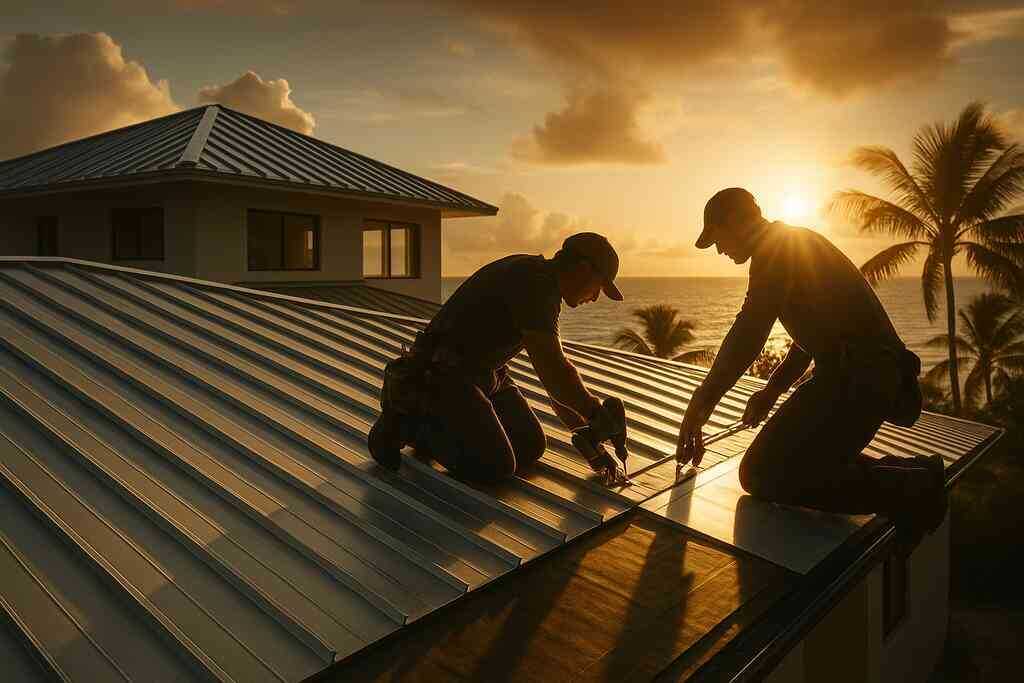
Why Roof Selection Matters in South Florida
Hurricanes are not a once-in-a-while threat along Florida’s lower peninsula; they are a design condition. Gusts regularly top 150 mph, and building codes evolve after every storm. Homeowners, builders, and remodelers therefore start every project by asking a simple question: is the roof engineered to stay put when the next cyclone arrives? This guide explains how experienced South Florida contractors answer that question, from reading local wind maps to choosing fasteners that will still grip ten years from now.
Reading the Wind Zone Before Ordering Materials
Contractors open the Florida Building Code to the wind-borne debris section before they open a catalog. Miami-Dade and Broward counties sit in the state’s highest pressure zones, so designs must withstand corner pressures that can double what inland roofs see. Professionals verify:
- Ultimate design wind speed for the exact street address.
- Exposure category (most coastal homes are Exposure C or D).
- Uplift pressure at roof corners, edges, and field.
With those numbers in hand, they can calculate decking thickness, fastener spacing, and the uplift rating the finished assembly must meet.
Anatomy of a Hurricane-Ready Roof System
A storm-resistant roof is not a single product; it is a layered system. Contractors typically break the work into four critical components.
1. Structural Decking
Plywood or oriented-strand board must be thick enough to resist flexing under suction. In many coastal neighborhoods 5⁄8-inch sheathing is now standard even when the code allows 7⁄16-inch further inland. Crews glue the panels to trusses with APA-rated construction adhesive, then secure them with screws long enough to penetrate the truss chord. The adhesive creates a continuous diaphragm, helping the house act as one unit when wind pulses hit.
2. Mechanical Anchoring
Nails alone are no longer acceptable near South Florida’s shoreline. Stainless or hot-dipped ring-shank screws hold better over time, and galvanized hurricane clips complete the load path. The typical schedule is:
- One clip at every truss-to-wall joint.
- Additional straps at high-pressure corners.
- Documentation of clip brand and lot number for inspection records.
By photographing each connection before it disappears under insulation, builders earn wind-mitigation credits that can reduce the owner’s insurance premium.
3. Secondary Water Barrier
Even the best shingles can lift momentarily in a severe gust. To prevent water intrusion during that split-second, contractors lay a peel-and-stick underlayment directly over the wood deck. The membrane self-seals around each fastener and meets FEMA recommendations for coastal Zone V construction. In valleys and along eaves, a wider strip of membrane adds redundancy where water is most likely to back up.
4. Surfacing Material
Homeowners still see asphalt shingles and metal panels, but they should look beyond color to performance labels:
- ASTM D3161 Class F for shingles confirms they passed a 110 mph fan test and may be rated to 130 mph with proper fastening.
- Metal panels with a 0.032-inch minimum aluminum core or 24-gauge steel core resist both impact and uplift.
- Tile roofs can qualify, but only when set in high-strength foam adhesive and supported by mid-span batten systems
Staying Aligned With the 2026 Florida Building Code
The code is a living document, and coastal chapters change faster than most trades can memorize. Leading contractors keep a printed copy on site and subscribe to electronic updates. Before a permit application leaves the office, a project manager checks:
- Fastener pattern tables match the site’s wind speed.
- Peel-and-stick membrane is listed as a secondary water barrier, not just "ice and water" protection.
- Ridge and soffit ventilation comply with new energy provisions. Proper airflow actually lowers uplift by reducing internal pressure spikes.
Missing any one of these items almost guarantees a plan-review rejection and lost time on the schedule.
Inspection Day: What Officials Look For
Building departments in Miami-Dade, Broward, and Palm Beach have refined their roof inspections into a predictable routine:
- In-progress check while decking is still visible. Inspectors verify screw length, clip placement, and photographic records.
- Dry-in inspection after underlayment is complete but before surfacing begins. They confirm membrane adhesion and flashing prep.
- Final sign-off once the finished roof is installed, including verification of manufacturer required edge metal.
Passing on the first visit protects both budgets and reputations. Crews therefore stage ladders, documentation, and even spare hardware so an inspector can see corrections immediately if needed.
Insurance Incentives for Storm-Ready Roofs
Premiums along the Atlantic coast continue to rise, but policy underwriters reward resilience. Typical savings come from:
- Verified secondary water barrier (often 5-10 % reduction).
- Roof-deck attachment upgrades (another 5-10 %).
- Impact-rated covering (credits vary by carrier).
While exact numbers differ, most homeowners recoup the added construction cost within several policy cycles, especially when deductibles for wind claims exceed those for fire or theft.
Questions Homeowners Should Ask a Prospective Contractor
- Do you calculate ASCE 7-16 pressures for each project or rely on a default table?
- Which peel-and-stick membrane brand do you install, and does it carry Miami-Dade Notice of Acceptance?
- How do you document hidden hardware for the wind-mitigation inspection form?
- What is your track record for first-pass roof inspections in my municipality?
- Can you show current licensing, insurance, and wind-mitigation endorsements?
Clear answers demonstrate preparedness and protect your investment long after the contract is signed.
Key Takeaways
- South Florida roofs must resist extreme uplift; design starts with accurate wind-zone data.
- A hurricane-ready assembly combines stronger decking, engineered clips, self-adhering underlayment, and impact-rated surfacing.
- Compliance with the 2026 Florida Building Code and local amendments is non-negotiable.
- Proper documentation earns both inspection approvals and insurance discounts.
Understanding these fundamentals equips homeowners and builders to craft a durable, code-compliant shield over every room—one that is ready when the next hurricane season arrives.
How South Florida Contractors Select Hurricane Ready Roofing


Comments
Post a Comment