2026 Commercial Construction Trends Shaping Delray Beach
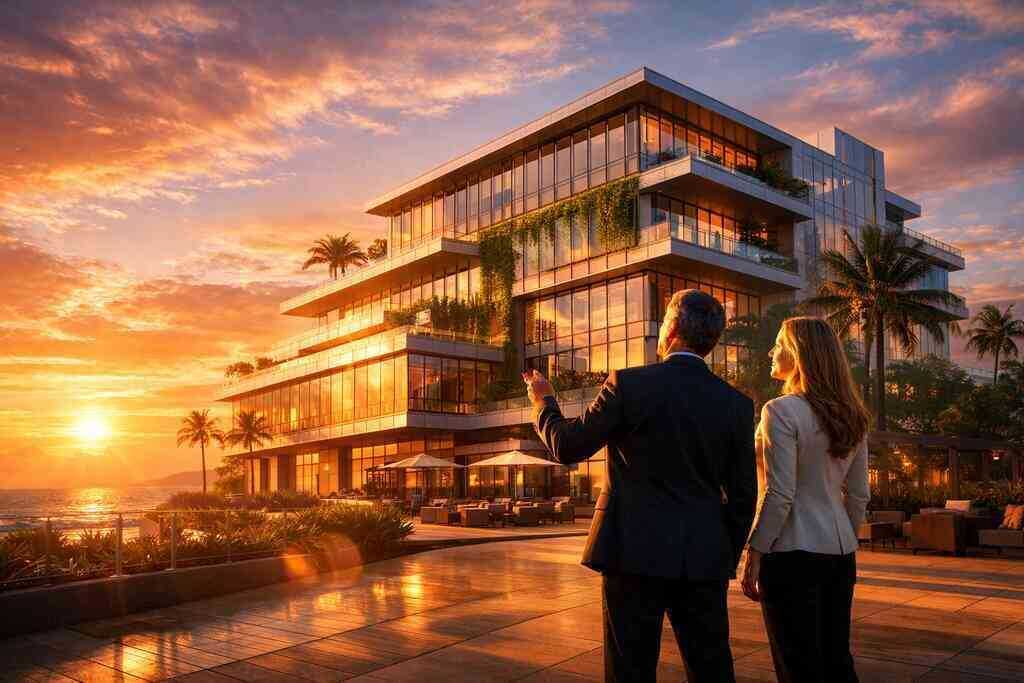
The commercial landscape of Delray Beach is transforming, driven by innovation and a deep understanding of South Florida's unique environment. For business owners and developers, staying ahead of these trends is key to creating resilient, efficient, and future-proof spaces. This guide explores the five dominant trends defining the city's evolving skyline in 2026.
Why Delray Beach Leads in Construction Innovation
Delray Beach is a hub for architectural advancement due to its vibrant economy and desirable coastal location. The community values both historic preservation and contemporary innovation, creating a dynamic environment that encourages builders to adopt new technologies. Navigating this market requires a contractor with specialized local expertise, from mastering stringent building codes to coordinating complex projects.
1. The Rise of Resilient and Hurricane-Resistant Building Systems
The foremost trend is an uncompromising focus on resilience. Advanced materials are now fundamental, moving beyond basic code compliance to true fortification.
Advanced Materials for Storm-Ready Structures
Innovations include impact-resistant glazing, reinforced concrete forms, and structural systems designed for extreme wind loads. These materials ensure business continuity during severe weather and often lead to lower insurance premiums and long-term maintenance savings. This proactive approach is a wise investment in any commercial property's longevity and security.
Integrating Holistic Resilient Standards
Resilience is a holistic process starting at the design phase. It involves thorough planning for water runoff, flooding risks, backup power systems, and protecting critical components. Adherence to South Florida's rigorous building codes ensures every element, from the foundation to the façade, contributes to the structure's overall durability.
The Critical Role of the Building Envelope
The building envelope is the first line of defense. Modern commercial roofing systems are engineered for maximum wind uplift resistance. Exterior finishes are formulated to resist cracking, moisture, and salt-air corrosion. Commercial paving contributes with reinforced surfaces that handle heavy loads and water saturation. Together, these elements create a robust shell that safeguards the interior.
2. Sustainable Building Practices and Green Construction
Sustainable practices have transitioned from a niche preference to a standard expectation in Delray Beach.
Energy-Efficient Design as Standard
Energy-efficient commercial design is now the baseline. This includes high-performance HVAC systems, advanced insulation, and smart building automation that optimizes energy use. The goal is to significantly reduce operational costs and a building's carbon footprint from day one.
Embracing Renewable Energy Integration
On-site renewable energy generation, particularly solar power, is increasingly common. Integrating photovoltaic panels into building designs or utilizing solar-ready roofing systems provides long-term energy independence and cost stability. This trend aligns with both economic incentives and a growing commitment to environmental stewardship.
Sustainable Site Development and Materials
Green construction extends to the site itself. Strategies include using permeable paving to manage stormwater, selecting locally sourced and recycled construction materials, and incorporating native landscaping that requires less water and maintenance. These practices minimize environmental impact and create healthier surroundings.
3. Smart Technology and Building Automation Integration
The modern commercial building is an intelligent ecosystem. Integrated smart technology enhances efficiency, security, and occupant experience.
Connected Systems for Operational Efficiency
Building Management Systems (BMS) centrally control lighting, climate, security, and energy use. These systems can learn patterns and adjust settings automatically, leading to substantial utility savings and streamlined facility management.
Enhanced Security and Access Control
Advanced access control systems using biometrics or mobile credentials improve security. Integrated surveillance and smart sensors provide real-time monitoring, creating a safer environment for tenants and assets.
Data-Driven Maintenance and Management
IoT sensors embedded in equipment enable predictive maintenance. They monitor performance and alert managers to potential issues before they cause downtime, reducing repair costs and extending the lifespan of critical building systems.
4. Flexible and Adaptive Workspace Design
The way we work continues to evolve, and commercial spaces must adapt. Flexibility is a key design principle for 2026.
Modular and Reconfigurable Interiors
Buildings are being designed with open floor plans, movable walls, and modular furniture systems. This allows tenants to easily reconfigure space to meet changing needs, whether for collaborative projects, private offices, or event hosting.
Supporting Hybrid Work Models
Designs now prioritize robust technological infrastructure to support seamless hybrid work. This includes enhanced acoustics for video conferencing, ample power and data ports, and dedicated collaboration zones that are both functional and comfortable.
Health and Wellness-Focused Amenities
Employee well-being is a major consideration. New constructions often feature improved indoor air quality systems, abundant natural light, biophilic design elements, and amenities like fitness centers or outdoor break areas. These features attract and retain top talent.
5. Experiential and Community-Oriented Commercial Spaces
Commercial buildings are no longer just places to work; they are becoming destinations that engage the community and enhance the user experience.
Creating Engaging Ground-Floor Experiences
There is a strong emphasis on activating street-level spaces. Designs incorporate retail frontage, public plazas, outdoor seating, and art installations. This approach blends the building into the fabric of Delray Beach, fostering pedestrian activity and community connection.
Mixed-Use Development as the Norm
Mixed-use projects that combine office, retail, dining, and sometimes residential units are increasingly popular. This model creates vibrant, walkable environments where people can live, work, and socialize, reducing congestion and supporting local businesses.
Architectural Distinctiveness and Sense of Place
While embracing modern trends, new constructions are also mindful of Delray Beach's character. Architects are blending contemporary materials with design cues that reflect the area's coastal heritage, ensuring new buildings feel integrated rather than intrusive.
Navigating Your Project with Expert Insight
Understanding these trends provides a crucial foundation for any commercial construction project in Delray Beach. Successfully implementing them requires a partner with deep local expertise and a forward-thinking approach. A knowledgeable contractor can guide you through the complexities of resilient design, sustainable practices, and smart technology integration, ensuring your investment is built for the future. The city's skyline is being reshaped by a commitment to longevity, efficiency, and human-centric design, defining an exciting new era of development.
Top 5 Commercial Construction Trends in Delray Beach for 2026


Comments
Post a Comment