Understanding Design-Build Firms: A Guide for South Florida
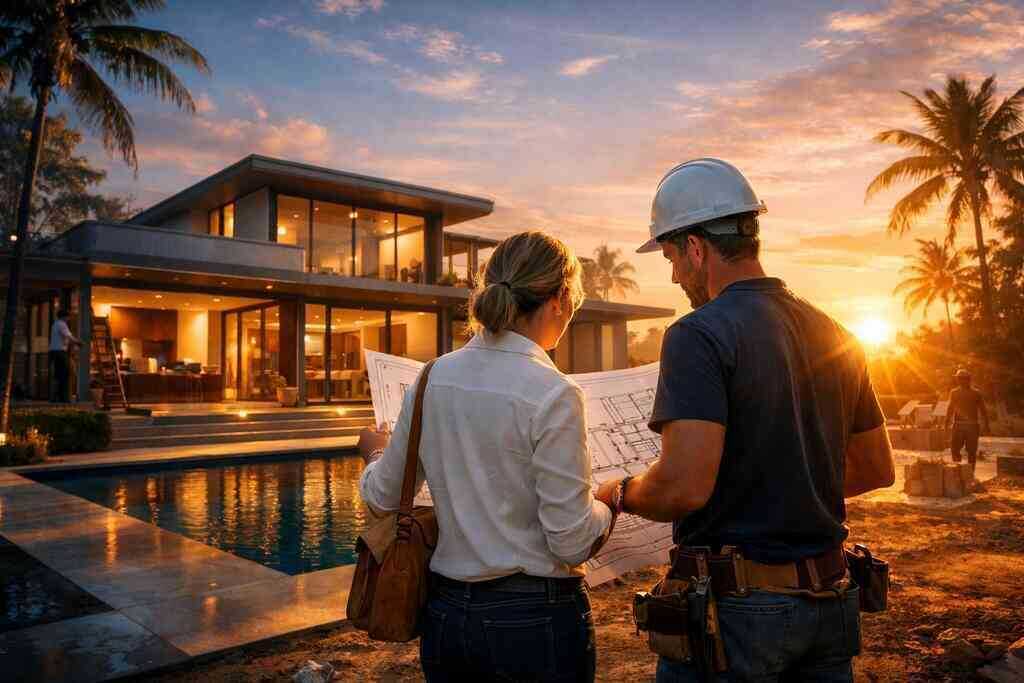
If you're planning a construction project in South Florida, you've likely heard the term "design-build." This guide explains what a design-build firm is and why its integrated approach can be a superior choice for homeowners and developers. It deconstructs the traditional, fragmented process and outlines the benefits of a unified team from start to finish.
Deconstructing the Design-Build Paradigm
The traditional construction path often involves separate contracts with an architect and a builder, leading to potential communication gaps and finger-pointing. The design-build model reimagines this journey by unifying architectural vision and physical construction under one cohesive leadership structure. This methodology represents a significant shift, fostering collaboration from the very first sketch. The entire project lifecycle benefits from synchronized expertise, which reduces conflicts and aligns all stakeholders toward a common goal. For complex projects in South Florida, this holistic approach transforms a challenging undertaking into a more manageable and predictable experience.
The Holistic Construction Philosophy
The design-build philosophy is more than just bundling services; it embodies an integrated project delivery mindset. It operates on the principle that brilliant design must be informed by practical buildability and real-world budgeting from day one. This holistic perspective ensures that aesthetic choices are continuously evaluated against structural requirements, material availability, and labor realities. Creative visions are not developed in a vacuum, only to encounter costly revisions later. Instead, construction wisdom is injected early in the design process, ensuring the final blueprint is both beautiful and executable. This synergy between imagination and implementation is the core of a seamless process that aims to save time, money, and frustration.
The Single-Source Accountability Advantage
Perhaps the most profound benefit for clients is single-source accountability. With a design-build firm, you have one contract with one entity responsible for everything from initial concepts to handing over the keys. This eliminates the common "blame game" between separate architects and builders, as there is no division of responsibility. You have a single point of contact accountable for the project's overall success, quality, schedule, and budget. This model dramatically simplifies communication, as you consult with one project leader instead of managing multiple independent parties. For homeowners seeking clarity and reduced stress, this approach is a game-changer.
The Anatomy of a Seamless Construction Process
The celebrated efficiency of design-build is engineered through a deliberate, phased workflow. This process coordinates each stage, from abstract concept to tangible completion, under unified management. It is designed to identify and resolve potential issues during planning, where changes are least expensive and disruptive. As a result, the construction phase becomes more of a predictable execution rather than a continuous discovery of problems. This end-to-end coordination is a hallmark of integrated construction services.
From Vision to Reality: The Integrated Design Phase
The design phase within a design-build framework is a dynamic, iterative dialogue. It begins with intensive client consultations to understand lifestyle needs, aesthetic preferences, and investment goals. Designers and builders collaborate in real-time, often using tools like 3D modeling to help clients visualize spaces. Crucially, cost estimating runs parallel to design development. This allows for informed trade-offs and value-based decisions before plans are finalized. This integrated approach ensures the design is not only inspiring but also financially and structurally sound from the outset, preventing the common pitfall of a beautiful design that is prohibitively expensive to build.
The Critical Role of Preconstruction Planning
Once a conceptual design is approved, the project moves into a critical preconstruction phase. This is where the firm's expertise truly shines, conducting thorough feasibility analysis and detailed planning. Specialists perform comprehensive site evaluations, develop precise material takeoffs, and create a master project schedule. Value engineering sessions explore alternative materials or methods that maintain design integrity while optimizing cost. Engaging in robust preconstruction services is key to establishing budget certainty and timeline reliability before construction begins. This diligent upfront work is what transforms the building phase from a potentially chaotic endeavor into a coordinated, streamlined operation.
Why This Model Suits South Florida
The design-build approach is particularly well-suited to the South Florida environment. The region presents unique challenges, including specific building codes for hurricanes and flooding, complex soil conditions, and a distinct architectural style. Having a unified team that understands these local nuances from both a design and construction perspective is a major advantage. It ensures that your project is not only aesthetically pleasing but also resilient, compliant, and adapted to the local climate from the very first drawings.
In summary, a design-build firm offers a streamlined, collaborative alternative to traditional project delivery. By unifying design and construction under one contract and one team, it promotes efficiency, enhances communication, and provides clear accountability. For anyone considering a new build or major renovation in South Florida in 2026, understanding this integrated model is an essential first step in planning a successful and less stressful project.
What Is A Design Build Firm? South Florida Contractors Explain


Comments
Post a Comment