What Does a Custom Home in Delray Beach Really Cost in 2026?
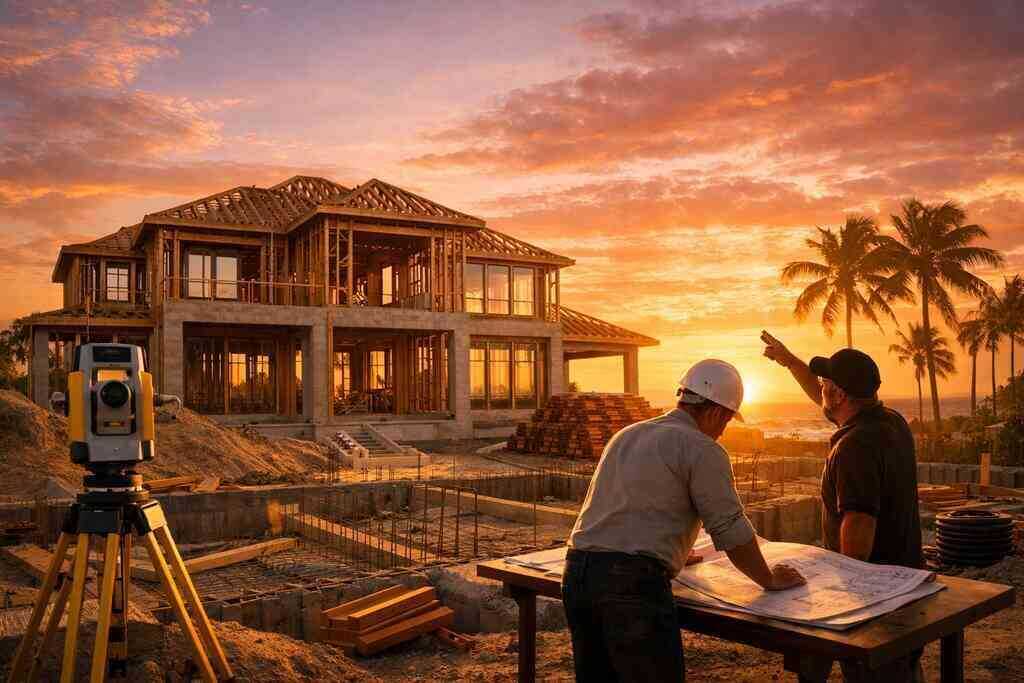
South Florida's coastline continues to attract discerning homeowners, and Delray Beach remains a standout community for custom builds. As 2026 unfolds, knowing what a ground-up home truly costs here goes beyond a simple square-foot price. This guide breaks down every major expense, from the land purchase to the final walkthrough, so you can plan with confidence.
Why Delray Beach Custom Homes Command a Premium
Location is the single biggest cost driver. Delray Beach offers walkable Atlantic Avenue, well-maintained beaches, and a year-round climate that keeps demand high. Lots in desirable areas consistently trade at a premium, and the builders who understand this market charge accordingly. Compared with interior Florida markets, you can expect to pay anywhere from 10 to 15 percent more just based on where you are building.
Then there is the building code. South Florida’s hurricane-mitigation standards are among the strictest in the nation. Impact-resistant windows, reinforced roof-to-wall connections, and engineered structural systems are not optional upgrades — they are mandatory. Meeting these requirements adds cost to the engineering, materials, and on-site labor.
Skilled labor also plays a role. The construction industry in this region remains highly competitive for experienced trades. When a limited pool of electricians, plumbers, and finish carpenters are in high demand, their rates rise. The builders who consistently deliver high-quality work build that cost into their estimates. Working with a contractor who knows the local permitting and inspection landscape can help avoid delays, but it does not eliminate the underlying market dynamics.
The All-Inclusive Cost: What You Pay Beyond the Build
A realistic budget accounts for far more than the hammer-and-nails construction. Before you even select a floor plan, you need to secure the land. Depending on proximity to the water or downtown, the lot can take 20 to 30 percent of your total project spend. Soil conditions, existing vegetation, and site topography will also affect preparation costs.
Soft costs follow. Architectural design, structural engineering, permit fees, and legal expenses typically make up 12 to 18 percent of the base construction price. Cutting corners here often leads to expensive change orders later. Many experienced builders recommend that you have your lot under contract before finalizing architectural plans, so the design can be adapted to the site — not the other way around.
Then come the carrying costs during construction. Most projects in Delray Beach take 12 to 18 months from breaking ground to move-in. During that time, you are paying builder’s risk insurance, liability coverage, property taxes on the land, and interest on your construction loan. If you sell your current residence before the new home is finished, short-term rental or storage fees might apply. A good rule of thumb is to add at least 15 percent to the quoted construction price for unanticipated expenses, including weather delays and material price swings.
Where Exactly Your Budget Goes
When you look at the builder’s estimate, the numbers fall into three broad buckets.
- Structure and shell (about 40 percent): Foundation, framing, roofing, exterior finishes, and impact-rated openings. This is the biggest single category, and it is where local codes have the greatest influence.
- Interior finishes (about 30 percent): Cabinetry, countertops, flooring, trim, paint, and plumbing and lighting fixtures. This is also the area where personal taste has the widest cost range.
- Mechanical systems, labor overhead, and profit (about 30 percent): HVAC, electrical, plumbing rough-ins and final connections, insulation, drywall, and the builder’s operational costs and margin.
Breaking costs down this way helps you make trade-offs. If you want to upgrade to custom millwork and imported stone, you will need to either increase the overall budget or find savings in another area. An experienced local builder can show you where shifting dollars yields the biggest visible impact without sacrificing durability.
Cost Per Square Foot: Standard vs. Luxury Finishes
Price per square foot is a useful starting point, but the range in Delray Beach is wide. In 2026, a well-executed custom home with standard finishes generally lands between $350 and $500 per square foot, excluding the land. Standard means stock cabinetry, mid-range tile and carpet, and contractor-grade fixtures. Move into semi-custom territory and that number climbs toward $600 per square foot and beyond. Fully custom luxury homes with high-end appliances, natural stone, custom lighting, and intricate architectural details can exceed $700 per square foot.
An interesting dynamic emerges once you look closely at square footage. Larger homes often have a lower per-square-foot cost because fixed expenses — such as site prep, utility connections, and permit fees — get divided across more area. A smaller, impeccably finished home can actually carry a higher per-square-foot price for the same reason. The final number alone rarely tells the whole story.
Additional Factors That Shape Final Pricing
Several other variables affect your bottom line. Pool construction, outdoor kitchens, seawalls, or elaborate landscaping are usually priced separately from the main build. If your site requires deep pilings, extensive fill, or tree removal, those line items can add noticeably to the initial excavation phase. In coastal neighborhoods, elevation requirements may also demand additional steps that standard inland lots do not face.
Supply-chain stability plays a quieter but real role. While the disruptions of the early 2020s have largely smoothed out, certain specialty items — custom windows, imported tile, complex lighting orders — can still carry long lead times. Those lead times rarely stop construction, but they can shift schedules and, if you are trying to lock in a fixed-price contract, can influence the contingency line.
Planning for the Unexpected
Nobody likes surprises when building a home. One of the most effective ways to protect your budget is to build a healthy contingency into every phase. Your builder should walk you through a detailed estimate that separates hard costs from soft costs and clearly identifies allowances for finishes. If an allowance seems low for what you have in mind, adjust it before signing anything. After the foundation is in, it is much harder to rework the budget.
It also helps to look at your custom home as a long-term asset. The Delray Beach market has historically shown strong resilience and appreciation. While the upfront premium can feel steep, these properties tend to hold their value and often outperform other markets over time. That perspective does not lower the check you write today, but it can make the investment decision clearer.
By understanding each layer of cost — land, soft costs, structural shell, interior selections, and carrying expenses — you move beyond the sticker shock and into a confident, informed position. Whether you are building a modest coastal retreat or a full-scale luxury residence, knowing exactly where your dollar goes is the foundation of a successful project.
The Real Cost of a Delray Beach Custom Home in 2026


Comments
Post a Comment