Winter HVAC Strategy: How South Florida Contractors Succeed
When 70° Feels Like a Cold Front
South Florida enjoys year-round sunshine, yet even a modest winter breeze can leave a condo or office feeling drafty. The reason is not the temperature alone—it is the way coastal humidity, wind pressure, and aging building envelopes combine to stress mechanical systems. This guide explains how experienced South Florida contractors diagnose and solve those mild-season challenges.
1. Winter Comfort Starts With the Envelope
Before any discussion of heat pumps or variable-speed motors, professionals focus on the structure itself.
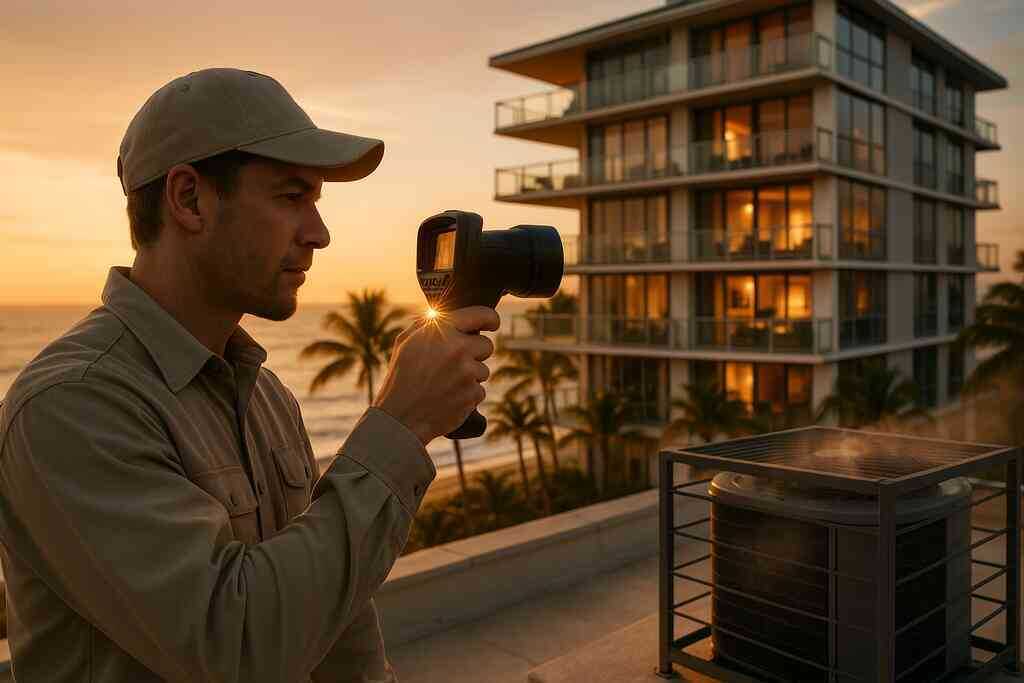
- Infrared imaging uncovers missing insulation behind drywall and around window headers.
- Blower-door testing quantifies how many cubic feet of air leak through gaps at doors, light switches, or recessed lights.
- Humidity probes sit in wall cavities and attic spaces to verify that moisture is not migrating inward.
Sealing a half-inch gap around a sliding door often cuts more winter load than upgrading to a larger air handler. Contractors typically recommend low-cost weather-stripping, foam gaskets, or attic air-sealing before proposing new equipment.
2. Why Humidity Still Matters After Hurricane Season
Water vapor does not read the calendar. Warm Gulf Stream currents keep dew points high, and interior relative humidity frequently sits above 60 percent on January mornings. High humidity makes occupants feel cooler and prompts thermostat bumps that increase energy spend.
Key tactics used by local HVAC teams include:
- Dedicated dehumidifiers tied into the return plenum to run independently of heating calls.
- Low-speed reheat coils that allow a heat pump to run longer cycles, wringing out moisture without overshooting the setpoint.
- Duct boot mastic sealing to prevent attic moisture from being drawn into conditioned space.
The payoff is twofold: a drier, more comfortable living area and reduced risk of mold growth in closets and behind millwork.
3. Rethinking Load Calculations for a Low-Delta-T Climate
Traditional Manual J tables assume a 30-degree or greater temperature difference between inside and out. In Miami or Fort Lauderdale, contractors may see only an 8- to 12-degree drop on a typical winter evening. That smaller differential shifts the design focus away from sensible heat loss and toward infiltration and latent load.
Seasoned pros rely on hourly weather files and cloud-based modeling tools that factor in:
- Prevailing wind directions that change pressure on the windward side of a building.
- Occupancy patterns—beach rentals often sit empty midweek, altering internal gains.
- Real-time blower-door data so the software reflects actual leakage, not a default guess.
By refining the inputs, contractors avoid oversizing equipment, ensuring quieter operation and longer component life.
4. Matching Equipment to South Florida’s Mild Winter Profile
Once building leaks and humidity are under control, the mechanical conversation becomes straightforward.
Variable-Speed Heat Pumps
A modern, high-SEER2 inverter heat pump can modulate from 20 to 100 percent of capacity. That flexibility is ideal for the region’s narrow temperature swings. The system idles at low speed during a 68° night, yet still has headroom for the occasional 50° cold snap.
Smart Thermostats and Zoning
Because winter load is light, zoning pays dividends. A smart thermostat can close dampers to rarely used guest rooms, reducing run time while keeping occupied zones comfortable. When sensors detect humidity creeping upward, a dedicated dehumidification call can be issued without turning on strip heat.
Corrosion-Resistant Components
Salt air never takes a season off. Coated coils, stainless-steel fasteners, and sealed electrical connections ensure that outdoor units survive brackish mist blown in from the Intracoastal.
5. Cost-Benefit Priorities That Build Client Trust
Property managers and homeowners want comfort but still watch the electric bill. Contractors build credibility by presenting improvements in order of payback:
- Air sealing and insulation upgrades – typically the fastest ROI because material costs are low and labor is minimal.
- Attic radiant barriers – valuable when the winter sun still heats roof decks by midday.
- Equipment replacement – recommended only after envelope fixes show clear limitations or when the existing unit is nearing the end of its life cycle.
Clear sequencing minimizes upfront spending and prevents the common mistake of oversizing a system to mask air leaks.
6. Maintenance Tips to Preserve Winter Performance
Even the best system loses efficiency if neglected. South Florida contractors emphasize:
- Quarterly filter changes—sea-salt particles clog media faster than inland dust.
- Semi-annual coil cleaning with freshwater rinses to remove salt residue.
- Thermostat schedule reviews every season; winter setpoints often drift upward over time.
Routine checkups keep static pressure within design limits and ensure that dehumidification remains effective at lower winter airflow rates.
7. Looking Ahead: Code and Grid Considerations
County building departments continue to tighten energy codes, especially around duct leakage and envelope air-tightness. At the same time, utilities are piloting demand-response programs that offer bill credits for small winter load reductions. Contractors who integrate smart thermostats with utility portals help clients capitalize on those incentives while supporting grid stability.
Key Takeaways
- Minor temperature swings can feel significant when infiltration and humidity are high.
- Air sealing and moisture control almost always precede equipment upsizing.
- Variable-speed heat pumps and zoning excel in low-delta-T climates.
- Regular maintenance and salt-resistant materials safeguard winter efficiency.
- A sequenced, data-driven approach delivers comfort, savings, and code compliance.
South Florida may never see blizzards, but winter comfort still demands careful planning. Contractors who combine envelope science with right-sized, humidity-aware HVAC strategies keep homes cozy, energy bills stable, and equipment running smoothly all season long.
How South Florida Contractors Decipher Winter HVAC Demands


Comments
Post a Comment